
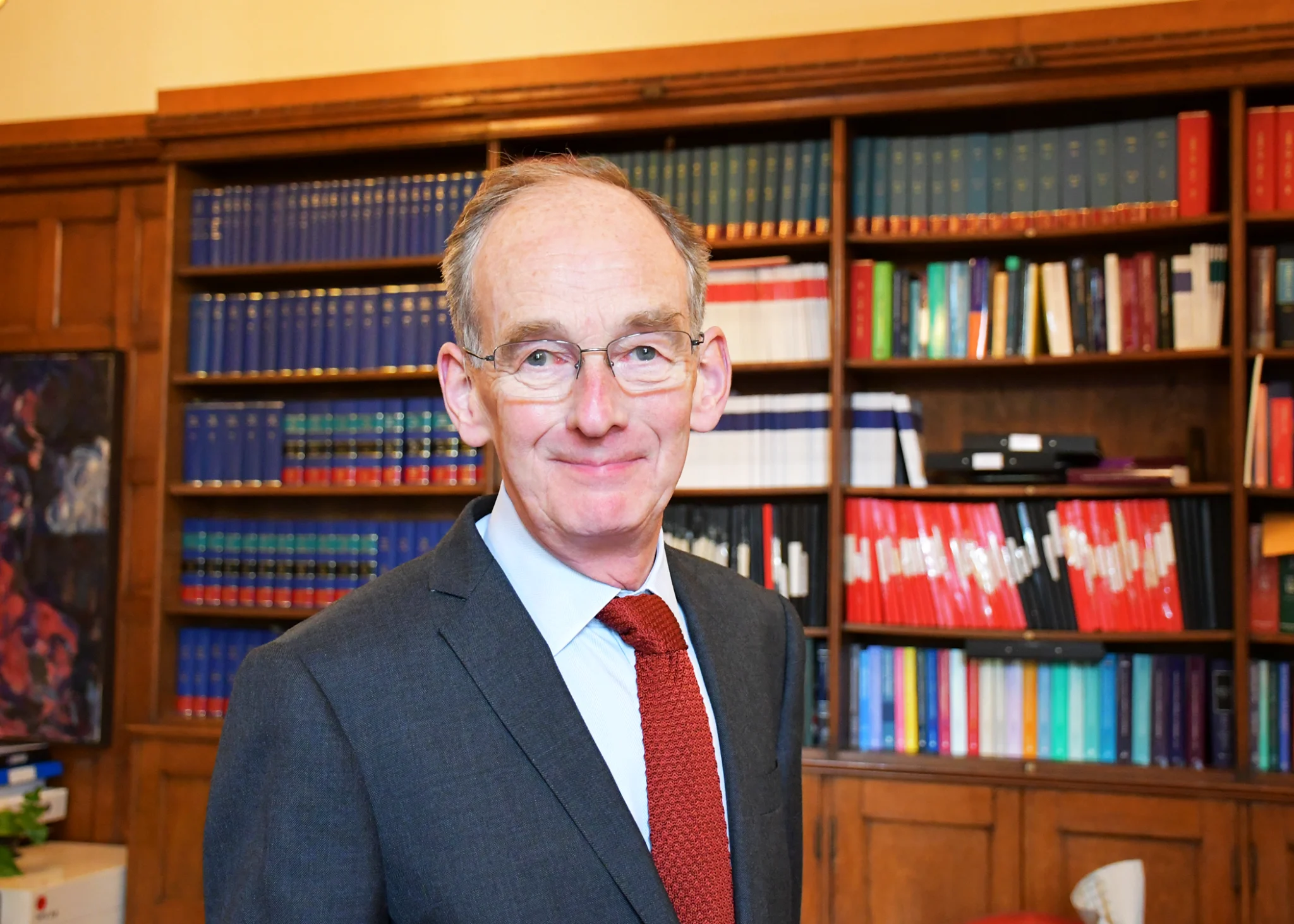

Sir Andrew McFarlane steps down after nearly eight years leading family justice reform and transparency initiatives across England and Wales
Sir Andrew McFarlane has retired from the judiciary, stepping down as President of the Family Division, President of the Court of Protection and Head of Family Justice.
He formally left office on 14 April 2026, bringing to an end a judicial career spanning more than two decades, including nearly eight years leading the family justice system in England and Wales.
Sir Andrew became President in 2018 and played a central role in guiding the family courts through a period of significant change and reform. The Family Court itself is designed to resolve disputes involving families as quickly as possible, with minimal disruption and in a less adversarial way, a principle that underpinned much of his work.
A major focus of his tenure was improving transparency in family justice. In 2021, he published a report exploring whether greater openness was needed in family proceedings. This led to a reporting pilot in 2023, which was extended nationwide in January 2025 in what he described as a “watershed moment”, allowing greater media access while maintaining safeguards for confidentiality.
He also led the courts through the Covid-19 pandemic, ensuring they remained operational at a time of acute pressure. His 2020 plan, The Road Ahead, set out how remote hearings and digital processes could be embedded into the system, forming the basis of longer-term modernisation.
More recently, Sir Andrew supported the rollout of Child Focused Courts across England and Wales. This model is designed to ensure that the impact of disputes on children is considered at an early stage, helping courts to reduce conflict between parties, minimise the number of hearings and improve outcomes, particularly for those affected by domestic abuse.
In his role, he oversaw the work of High Court judges dealing with a wide range of cases, including care proceedings, private law disputes over children, divorce, financial remedies, adoption, and complex issues such as medical treatment and surrogacy. He also heard appeals and played a key role in shaping procedural rules and policy.
Alongside this, as President of the Court of Protection, he was responsible for decisions concerning individuals who lack capacity, further underlining the breadth of his judicial responsibilities.
Called to the Bar in 1977 and appointed a High Court judge in 2005 before joining the Court of Appeal in 2011, his career reflects a steady progression through the senior judiciary.
His retirement marks the end of a period of sustained reform in family justice, with future challenges likely to focus on maintaining transparency, improving efficiency and ensuring that the system continues to meet the needs of families and children.