
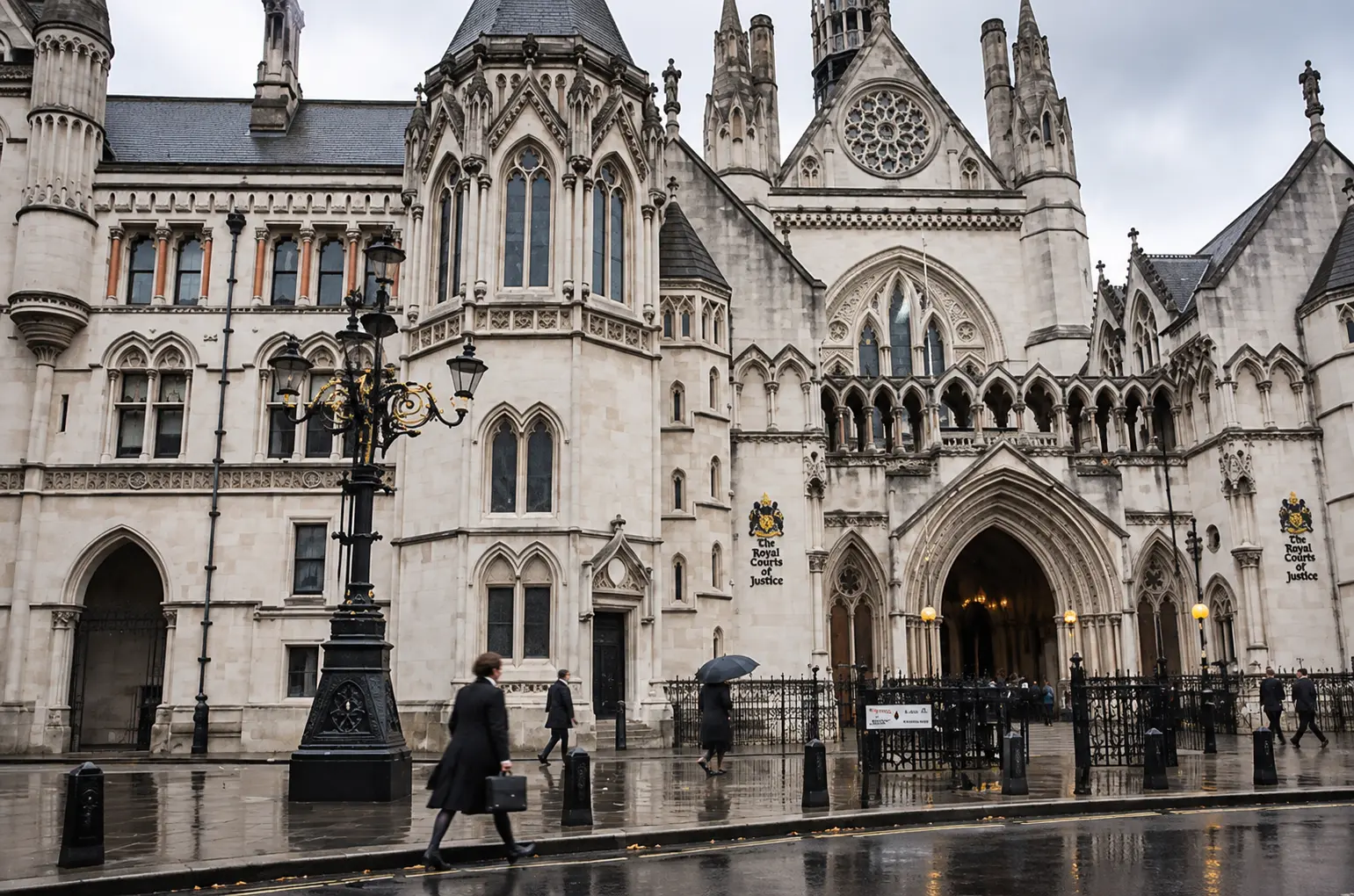

The High Court has refused to prevent two media organisations from publishing the results of investigations into serious allegations concerning an anonymised public figure, finding that the claimant had not established the legal basis required for the wide-ranging injunction sought.
What did the High Court decide?
In PPT v Independent Television News Limited and Guardian News & Media Limited [2026] EWHC 2818 (KB), handed down on 3 November 2026, Mr Justice Nicklin dismissed the claimant’s Part 8 claim following an expedited trial in the King’s Bench Division, Media and Communications List.
The claimant, identified in the proceedings as “PPT”, sought a final injunction restraining Independent Television News Limited and Guardian News & Media Limited from publishing or broadcasting allegations which they had investigated, or substantially similar information. The application was based principally on the contention that publication would expose him to a real and immediate risk of serious harm or death, engaging Articles 2 and 3 of the European Convention on Human Rights and, alternatively, Article 8.
The court concluded that the asserted positive obligations under Articles 2 and 3 did not require it to restrain the proposed journalism. It also found that the claimant had not identified a recognised domestic cause of action or other proper juridical basis supporting the injunction. The Article 8 claim failed for the same fundamental reason and, in any event, the proportionality balance did not justify suppressing the proposed publications.
The judgment is careful to distinguish the decision on the injunction from the separate editorial decisions of the defendants. It does not itself publish the claimant’s identity or determine whether the allegations are true.
What was the dispute about?
The defendants had each conducted journalistic investigations into allegations concerning the claimant’s conduct towards a number of individuals. The proposed reporting concerned alleged abuse of power and status to establish contact with younger women and engage, or seek to engage, in inappropriate sexual activity. The claimant broadly denied the allegations.
On 18 May 2026, the defendants sent detailed invitations to comment setting out the substance of the matters they proposed to publish. The claimant’s case was that the notification and continuing prospect of publication caused a serious deterioration in his mental health. Medical evidence was placed before the court, and the parties relied on expert psychiatric evidence from a Single Joint Expert.
The defendants disputed the legal basis for restraining publication. They relied on their Article 10 rights, the rights of their sources to communicate their experiences and the public interest in reporting serious allegations about a prominent individual. Their evidence described an extensive investigation involving more than 100 people, including more than 30 sources said to have first-hand accounts. Those were the defendants’ evidential submissions; the court was not asked to determine the truth of the allegations.
The central question was therefore a narrow one: whether the court should prohibit publication because of the risks relied upon by the claimant, not whether the underlying allegations were established.
- The defendants sent invitations to comment setting out the allegations they proposed to publish.
- An anonymity and reporting restrictions order required the claimant to be identified in the proceedings by the cipher “PPT”.
- The expedited trial took place before Mr Justice Nicklin.
- The High Court handed down judgment and dismissed the claim.
Why did the Article 2 claim fail?
Article 2 protects the right to life and can impose positive operational obligations on the State where the relevant legal conditions are met. The court accepted an important factual part of the claimant’s case: the decision permitting publication, the anticipation of publication and publication itself would each materially and very substantially increase the risk of suicide. The risk was found to be objectively verified, present and continuing, and to meet the “real and immediate” threshold for Article 2.
That finding did not, however, answer the separate question of which State institution bore the relevant operational responsibility. Mr Justice Nicklin held that the established authorities do not impose a general duty on every public authority aware of a real and immediate risk to take every measure within its powers that might reduce it. The duty depends on State responsibility for the particular risk and on the institutional role, powers and responsibilities of the authority concerned.
In this case, the psychiatric hospital and mental-health services had assumed responsibility for the claimant’s immediate safety. The hospital had direct responsibility for his care, observation, treatment, access to means of self-harm, leave and eventual discharge. The evidence was that inpatient treatment provided significant protection, even though it could not eliminate the risk entirely.
The court held that it had not assumed responsibility for the claimant’s psychiatric treatment or safety in the same sense. Nor did its adjudication of the dispute turn the defendants’ proposed publication into an act of the State. The fact that the court could prevent the publication trigger did not itself transfer responsibility for the underlying risk to the court.
The judge also considered that the claimant’s proposed approach would create a new category of positive operational duty not recognised in the Strasbourg authorities. The Article 2 claim was therefore dismissed.
What did the court say about Article 3?
Article 3 prohibits torture and inhuman or degrading treatment or punishment. The court accepted the seriousness of the anticipated mental suffering and the claimant’s psychiatric vulnerability. It nevertheless rejected the contention that the proposed publications or the court’s refusal to restrain them amounted to treatment by the State for Article 3 purposes.
The proposed reporting would be the act of private media organisations. The court’s decision not to prohibit that reporting did not convert the publishers’ conduct into State treatment. The psychiatric hospital’s intervention was also characterised as protective and therapeutic: it was intended to reduce suffering and protect life, and was governed by the safeguards applicable to detention and treatment under the Mental Health Act 1983.
For substantially the same reasons as under Article 2, the judge concluded that recognising the operational obligation asserted by the claimant would establish a new principle rather than apply or incrementally develop an existing one. The Article 3 claim was dismissed.
Why was there no legal basis for an injunction?
The judgment identified a separate legal obstacle. Section 37(1) of the Senior Courts Act 1981 gives the High Court power to grant an injunction where it is just and convenient, but that provision does not create a free-standing cause of action. The power must be exercised in accordance with established legal and equitable principles.
The claimant had not advanced a claim against the defendants in breach of confidence, misuse of private information, harassment, defamation, data protection or another recognised domestic cause of action. His case depended directly on the argument that Articles 2 and 3 required the court to restrain publication.
Relying on the principles discussed in Abbasi v Newcastle upon Tyne Hospitals NHS Foundation Trust and other authorities, Mr Justice Nicklin held that section 6 of the Human Rights Act 1998 requires courts to act compatibly with Convention rights when exercising their jurisdiction, but does not create jurisdiction or a cause of action that would not otherwise exist.
The judge distinguished cases in which injunctions had been granted to protect confidential identities or individuals from threats of violence. Those authorities did not establish a general power to restrain public-interest journalism simply because its anticipated consequences might cause grave psychiatric harm to the subject. The court therefore found no proper juridical basis for the injunction sought.
How were Articles 8 and 10 balanced?
The claimant relied alternatively on Article 8, which protects private and family life, including physical and psychological integrity. The judge accepted that the proposed publications would interfere seriously with the claimant’s private life and that the anticipated psychiatric consequences deserved very substantial weight. The effect on his relationship with his son was also relevant to his own family-life interests.
However, the Article 8 claim failed principally because no proper domestic legal basis for the injunction had been established. The claimant did not contend that the allegations themselves were private information in which he had a reasonable expectation of privacy, and he had not pursued a recognised cause of action such as misuse of private information or harassment.
The court nevertheless considered the competing rights. The defendants’ Article 10 rights to investigate and publish, the sources’ rights to communicate their experiences and the public’s right to receive information were substantial. The proposed publications concerned serious allegations about the conduct of a prominent person and the alleged use of status, influence and access in dealings with women and girls. The judge considered that reporting particular investigations and experiences could make a significant contribution to public debate.
The judge stressed that the court was not deciding whether the allegations were true. Equally, their disputed status did not mean that they had no public-interest value. The defendants would remain subject to their duties and responsibilities, including the need to report the claimant’s denials fairly and to act responsibly.
The injunction sought would have been comprehensive and potentially indefinite. It would have prevented the defendants from publishing the substance of their investigations and would also have affected the ability of sources to communicate their own experiences. In the circumstances, the judge concluded that the very substantial Article 8 interests relied upon did not outweigh the Article 10 rights of the defendants, their sources and the public. The Article 8 claim was dismissed.
What does the judgment mean for publishers and litigators?
The decision underlines the need to identify the precise legal foundation for an injunction against a private publisher. Convention rights are relevant to the way courts exercise existing powers, but they do not automatically create a new cause of action or confer a free-standing jurisdiction to prevent publication.
For claimants seeking publication restraints, the judgment highlights the importance of identifying an established domestic cause of action or recognised equitable interest, rather than relying solely on the seriousness of the anticipated consequences of publication. The court will also examine which public authority has assumed responsibility for managing the particular risk and what protective measures are available within that institution.
For publishers, the judgment confirms the substantial weight that may attach to Article 10 rights where proposed reporting concerns serious matters of public interest. It does not remove the need for responsible journalism, fair treatment of responses and careful consideration of foreseeable harm. Nor does it determine the lawfulness of any particular future publication beyond the injunction claim before the court.
The judgment also makes clear that anonymity and reporting restrictions remain legally effective until discharged or varied in accordance with the court’s order. The claimant is identified in the public judgment by the cipher “PPT”; reporting must not include information likely, directly or indirectly, to identify him in breach of the order while it remains in force.
Frequently asked questions
Did the High Court allow the media organisations to publish the allegations?
The court dismissed the claimant’s application for an injunction restraining publication. The judgment did not itself determine what either defendant would publish or the precise form of any future reporting.
Did the court decide whether the allegations against PPT were true?
No. The parties agreed that the truth or falsity of the allegations was not an issue for determination in these proceedings. The court expressly declined to conduct a trial of those allegations.
Why did the Article 2 claim fail despite the finding of a real and immediate risk?
The court held that the risk finding was not enough by itself. The operational duty depended on whether the State, and specifically the court, had assumed responsibility for the risk in the relevant sense. The psychiatric services had assumed responsibility for the claimant’s immediate safety through treatment and risk management.
Did the claimant establish a legal basis for the injunction under the Human Rights Act 1998?
No. The court held that section 6 of the Human Rights Act 1998 does not create a cause of action or jurisdiction that would not otherwise exist. The claimant had not advanced a recognised domestic cause of action against the defendants.
Is the claimant’s identity now public?
The judgment identifies the claimant only as “PPT”. The court’s anonymity and reporting restrictions remain effective in accordance with the order and must be observed unless and until they are discharged or varied by the court in accordance with its terms.