

A construction supplier’s attempt to secure summary judgment in a substantial flooring dispute has been rejected by the High Court, which also declined to strike out the claim despite the claimant’s failure to serve particulars of claim within the required time.
What did the High Court decide?
In Loughton Contracts PLC v The Amtico Company Limited [2026] EWHC 2814 (TCC), Mr Justice Constable considered competing applications arising from a claim concerning flooring products supplied by Amtico and installed by Loughton Contracts PLC at residential developments at Wembley Park between 2018 and 2020.
The judgment was handed down on 3 November 2026, following a hearing on 27 October 2026. Amtico sought summary judgment under CPR 24.3 and strike-out under CPR 3.4. Loughton sought a further stay of the proceedings while it awaited clarification of a potential claim by the main contractor, McLaren Construction (Regeneration) Limited.
The judge dismissed Amtico’s summary judgment application. He also refused to strike out the claim and granted Loughton relief from the consequences of its failure to serve particulars of claim by the deadline. However, he did not grant the further six-month stay requested by Loughton.
What is the flooring dispute about?
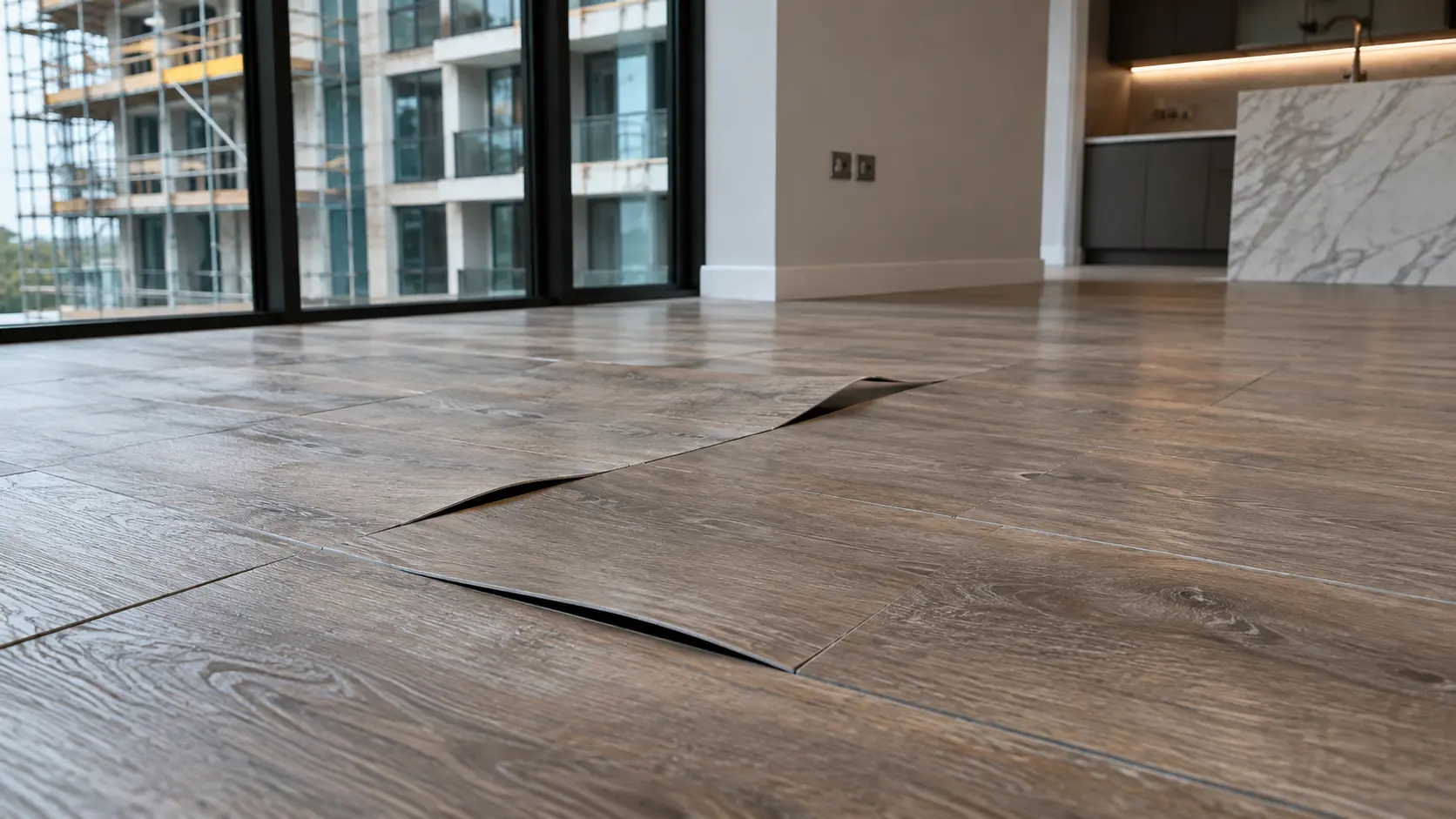
The proceedings concern flooring products supplied by Amtico and installed by Loughton at residential developments at Wembley Park for McLaren. The flooring subsequently failed. In pre-action protocol correspondence, McLaren held Loughton responsible for replacement costs which it put at £2,907,908. At the date of the judgment, McLaren had not commenced proceedings against Loughton.
Loughton issued its claim against Amtico on 15 October 2025 as protective proceedings intended to ensure that any claim was brought within the relevant limitation period. The claim form was deemed served on 23 December 2025, meaning that particulars of claim were due on 7 January 2026. They were not served.
In February 2026, O’Farrell J stayed the proceedings until 5 October 2026 or further order. Loughton later sought a further stay, arguing that its loss could not yet be properly quantified and that any proceedings brought by McLaren should, so far as possible, be managed alongside its claim against Amtico.
- Amtico supplied flooring products which Loughton installed at Wembley Park residential developments.
- Loughton issued protective proceedings against Amtico.
- The claim form was deemed served.
- The deadline for particulars of claim passed without service.
- O’Farrell J stayed the proceedings until 5 October 2026 or further order.
- The competing applications were heard by Mr Justice Constable.
- The High Court handed down its judgment.
Why did Amtico’s summary judgment application fail?
Amtico argued that the claim had no real prospect of success. Its case included that most of the contractual claim was time-barred, that any remaining liability was capped by its terms and conditions, that the terms excluded liability for claims passed on by third parties, and that a contractual two-year time limit had expired. It also raised a notification requirement in relation to warranty claims, although it no longer relied on that point as part of its oral summary judgment application.
The court considered that the evidence did not permit those issues to be determined summarily. In particular, the material before it did not establish the actual dates on which the relevant flooring consignments had been delivered. The evidence relied upon by Amtico principally identified scheduled delivery dates. The judge considered that delivery records, invoices or other documents could have provided a clearer evidential basis, but that material had not been put before the court.
The judge also identified unresolved questions about the contractual terms said to govern the supplies. The versions of the terms exhibited by Amtico were not identical, and the invoices relied upon were duplicate reprints. There were also questions about additional contractual documents referred to in one version of the terms, which had not been produced.
Further, the enforceability of the exclusion and limitation provisions depended on the statutory requirement of reasonableness under the Unfair Contract Terms Act 1977. Amtico had served no evidence addressing the reasonableness of the clauses. As the party seeking to rely on the terms, it bore the burden of showing that they satisfied the statutory test.
The judge therefore concluded that Loughton had a real prospect of resisting Amtico’s reliance on the clauses and that the relevant issues required further evidence and investigation. The application for summary judgment was dismissed.
What was the limitation issue?
Amtico argued that any contractual breach occurred, at the latest, when the relevant goods were delivered. On that basis, it relied on the six-year limitation period under section 5 of the Limitation Act 1980 and submitted that claims relating to goods delivered before 15 October 2019 were time-barred.
Amtico’s order and invoice records indicated that only 18 orders, worth £18,677.95, had scheduled delivery dates after 15 October 2019. The remaining orders, totalling £578,071.54, were scheduled for delivery before that date. Amtico said this meant that approximately 97 per cent of the orders were affected by the limitation defence.
However, the judge distinguished scheduled delivery dates from proof of the dates on which the consignments actually arrived. The evidence did not include a complete delivery audit trail or witness evidence establishing that each delivery took place on or around its scheduled date. The judge considered that the missing documentation could materially alter the evidential picture and held that Amtico had not established the extent of its statutory limitation defence to the standard required for summary judgment.
The court also declined to determine summarily the viability of the negligence and contribution claims. Although Amtico raised difficulties concerning claims for pure economic loss, the claims had not yet been particularised. The judge considered it premature to decide whether the alleged duties of care and contribution claim had no real prospect of success before Loughton had pleaded the material facts on which they were based.
- Replacement costs asserted by McLaren£2.9mClaimed in pre-action correspondence
- Orders scheduled before 15 October 2019£578,071.54Amtico’s limitation case
- 18 later scheduled orders£18,677.95Amtico’s figures
These figures summarise Amtico’s evidence and submissions as recorded in the judgment; they are not findings that the corresponding sums are recoverable or irrecoverable.
Why were the contract terms in dispute?
Amtico relied on standard terms and conditions which it said governed its dealings with Loughton. Its witnesses described a course of dealing under which Loughton submitted purchase orders, Amtico issued order confirmations, and the terms and conditions were appended to invoices sent after shipment.
Loughton challenged whether the documents produced by Amtico reliably established which terms had been supplied during the relevant period. The judge noted that the sample order acknowledgements did not refer to terms and conditions, while the invoices relied upon were marked “DUPLICATE” and contained details which differed from the order acknowledgements. There was also a discrepancy between an order number on an acknowledgement and the number on the corresponding duplicate invoice and Amtico’s order list.
The court further noted that the invoice terms differed from the separate versions initially relied upon by Amtico. The invoice terms referred to a flooring specialist agreement and a customer account application form as part of the contract, but neither document was before the court. The judge was not satisfied that the applicable contractual terms had been established with sufficient certainty for the contractual defences to be determined summarily.
Even assuming that the terms relied upon by Amtico had been incorporated, the court considered the Unfair Contract Terms Act 1977. Sections 3, 6 and 13 were relevant to the restrictions on liability relied upon. Under section 11(5), the party claiming that a term satisfies the reasonableness requirement must show that it does. Amtico had provided no factual evidence on that issue, including matters relevant to the statutory assessment.
The court could not conclude, on the evidence available, that Loughton had no real prospect of resisting the contractual exclusions and limitations on grounds of unreasonableness.
Why was the claim not struck out?
Amtico also sought to strike out the claim because Loughton had failed to serve particulars of claim by 7 January 2026 and had not made a formal application for relief from sanctions. Loughton had also commenced proceedings without first engaging with the Pre-Action Protocol for Construction and Engineering Disputes or applying for directions under paragraph 12.1 of that Protocol.
The judge accepted that the failure to serve particulars by the deadline, or to seek an extension or stay before the deadline expired, was serious and significant. The explanation was not a good one: Loughton’s non-compliance was linked to its intention to obtain a stay while awaiting clarification of McLaren’s position, and the application for a stay should have been made at the outset.
However, the court considered all the circumstances under the three-stage approach in Denton v TH White Ltd [2014] EWCA Civ 906. From 5 February 2026, the continuing failure to serve particulars coincided with a court-ordered stay. Amtico had elected not to apply to vary or discharge that stay. The judge also took account of the fact that there was no trial date at risk and that striking out the claim could prevent Loughton from pursuing claims which were not time-barred when the proceedings were issued.
In those circumstances, the judge concluded that striking out the claim would be disproportionate. He granted Loughton relief from the consequences of its failure to serve particulars of claim within time and extended time for their service, with the period of the extension to be considered as part of the next steps.
What happens next?
Loughton had asked for a further six-month stay until 5 April 2027, with particulars of claim to be served within 28 days after the stay ended. It also proposed sending Amtico a letter of claim under the Pre-Action Protocol within 28 days, after which Amtico would have the period allowed by the Protocol to respond.
Mr Justice Constable was not persuaded that a further stay until 5 April 2027 was justified. He said it was not appropriate for the claim simply to remain in its present state for another six months. Instead, he indicated that the parties should address whether a shorter and tightly defined stay would be appropriate to allow Protocol correspondence or further clarification of McLaren’s position.
The judge also identified the potential value of resolving issues at an early stage, including the actual dates of delivery relevant to limitation and the enforceability of the contractual limitations under the 1977 Act. He indicated that the parties should address directions for pleadings, targeted disclosure and evidence, and whether one or more preliminary issues should be determined.
The judgment does not itself set out a final timetable for those next steps. The judge said he would hear the parties on the appropriate short stay and directions.
Frequently asked questions
Did the High Court give summary judgment to Amtico?
No. Mr Justice Constable dismissed Amtico’s application because the evidence did not allow the key limitation and contractual issues to be determined summarily.
Was Loughton Contracts’ claim struck out?
No. The judge refused to strike out the claim and granted Loughton relief from the consequences of its failure to serve particulars of claim on time.
Was the flooring claim found to be within the limitation period?
No final determination was made. The judge found that Amtico had not established the actual delivery dates sufficiently to obtain summary judgment on its limitation defence.
What did the court say about Amtico’s terms and conditions?
The court was not satisfied that the relevant terms had been established with sufficient certainty. It also considered that the reasonableness of the exclusion and limitation clauses under the Unfair Contract Terms Act 1977 could not be decided without evidence.
Did the court grant Loughton a further six-month stay?
No. The judge was not persuaded that a stay until 5 April 2027 was justified. He indicated that a shorter, tightly defined stay and directions for the next stages should be considered.