
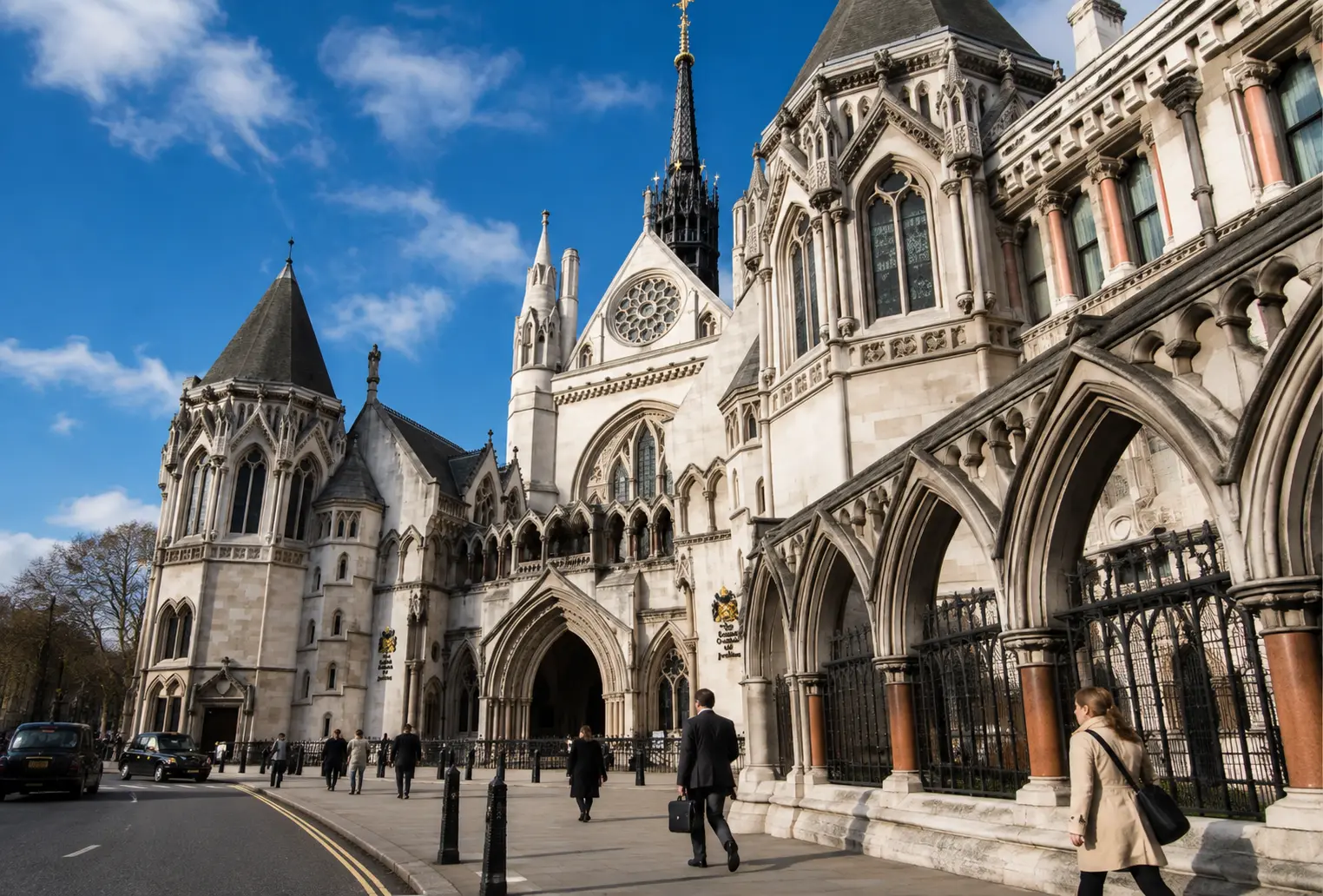

A long-standing route used by a neighbouring property owner has not become a legal right of way simply through decades of use, after the Court of Appeal ruled that the doctrine of lost modern grant could not be used to presume a grant made before the relevant use began.
What did the Court of Appeal decide?
In The Kingdom Hall Trust v Peter Robert Davies [2026] EWCA Civ 1377, handed down on 2 November 2026, the Court of Appeal allowed the Kingdom Hall Trust’s appeal. Lord Justice Lewison gave the leading judgment, with Lord Justice Males and Lord Justice Miles agreeing.
The central issue was whether a prescriptive right of way could be acquired under the doctrine of lost modern grant when the land over which the route ran had been held on charitable trusts throughout the entire period of proven use. The parties proceeded on the basis that there had been no court order or Charity Commission consent authorising a grant, and therefore no competent grantor during that period.
The lower tribunals had accepted that a fictional grant could be presumed at an earlier point, between 1958 and 1967, before the land became charitable property and around ten years before the proven use began. The Court of Appeal rejected that approach.
What was the dispute about?
Peter Robert Davies claimed pedestrian and vehicular rights of way over a car park behind the Telford Kingdom Hall of Jehovah’s Witnesses. He said the route benefited his property at Pleasington, Plough Road, Telford.
The two properties had originally been in common freehold ownership. Pleasington was sold on 10 February 1958, while the property that later became Kingdom Hall remained in separate ownership. On 17 July 1967, Kingdom Hall was conveyed to trustees to be used as a place of worship and held on express charitable trusts. In 1997 it was transferred to the Kingdom Hall Trust Co as custodian trustee; following a 2020 merger, the Trust became the sole legal owner.
The First-tier Tribunal found that Mr Davies and his predecessors had used the claimed route openly and as of right from 24 August 1977 to 11 February 2021. It rejected the claim to any earlier use.
- Pleasington is sold, ending the common freehold ownership of the two properties.
- Kingdom Hall is conveyed to trustees and becomes land held on charitable trusts.
- The period of proven use of the claimed right of way begins.
- The period of proven use ends.
- The Court of Appeal allows the Trust’s appeal.
Why did the charitable status of the land matter?
For most of the relevant period, section 29 of the Charities Act 1960 restricted the disposal of land forming part of a charity’s permanent endowment or occupied for its purposes without an order of the court or the consent of the Charity Commissioners. Later legislation modified the regime, but the relevant restrictions continued to regulate dispositions of charitable land.
It was common ground that the grant of an easement, whether an actual grant or one presumed by legal fiction, would be caught by those restrictions. The tribunals accepted that after 17 July 1967 there was no person competent to grant the right of way without the required authority. No lost court order or Charity Commission consent was alleged as a means of validating a presumed grant.
The Trust therefore argued that the claimed right could not be established by counting use against an owner who lacked legal capacity to grant it. It also argued that the court could not place the fictional grant before the use began, outside the period in which the alleged right was exercised.
How did the court interpret lost modern grant?
The doctrine of lost modern grant is a legal fiction used to recognise long-established enjoyment of a right where the circumstances justify presuming that a valid grant was once made and later lost. The court emphasised that prescription is rooted in acquiescence. As the judgment explained, the owner must have knowledge, or the means of knowledge, of the use and the ability to stop it or bring proceedings, but refrain from doing so.
Lord Justice Lewison examined authorities including Daniel v North, Barker v Richardson, Roberts v James, Pugh v Savage, Oakley v Boston and Tehidy Minerals Ltd v Norman. He concluded that the relevant authorities did not support the proposition that a grant could be presumed at any convenient earlier date, even where no use was occurring at that time.
“The basis of the presumption is the proved usage.”
— The principle discussed by the Court of Appeal in its review of the authorities
The presumed grant must fit the essential features of the use relied upon. In the court’s analysis, a grant made before the use began would have no corresponding activity to which the landowner could acquiesce, and no use for which the supposed grant could provide a lawful origin.
The court distinguished the facts in Tehidy Minerals. There, the period in which the presumed grants were placed fell within the period of proven use. The case did not give courts a general power to select a date decades earlier, when no relevant use had yet taken place.
The Court of Appeal also considered the relationship between a competent grantor and the period of use. It held that the two concepts could not be separated as sharply as the Upper Tribunal had suggested: the owner’s capacity to grant and the acquiescence on which prescription depends are closely connected.
What happens to the prescription claim?
The Court of Appeal held that the lower tribunals had been wrong to presume a grant made between 1958 and 1967, before the proven use began. During the actual period of proven use, Kingdom Hall was held on charitable trusts and there was no competent grantor, on the agreed basis of the appeal.
Lord Justice Lewison therefore concluded that the appeal should be allowed. Lord Justice Males and Lord Justice Miles agreed. The judgment records that it may seem harsh for a route used openly and as of right for almost half a century not to be recognised, but the legal requirements governing the lost modern grant doctrine remain part of English law.
The court did not decide every possible variation of the competent-grantor issue. In particular, it left open whether a right might arise where use begins while the land is held by a competent grantor and continues after an owner without capacity takes over. The court considered that question unnecessary to decide on the facts before it.
What does the judgment mean?
The decision is relevant to property owners, charities and practitioners dealing with claims to private rights of way and other easements acquired by prescription. It underlines that long use alone is not enough: the legal conditions for presuming a valid grant must be satisfied, including a proper connection between the period of use and the date of the supposed grant.
For charities, the case illustrates the significance of statutory restrictions on dealings with charitable land. Where the necessary authority to grant an easement was absent, a claimant cannot avoid that problem by placing a fictional grant at a time before the use relied upon had started.
For those bringing or defending prescriptive easement claims, the factual chronology is therefore critical. Evidence must address not only how long and in what manner a route was used, but also the ownership and legal capacity of the person or body controlling the land during the relevant period.
Frequently asked questions
What is a lost modern grant?
It is a legal doctrine under which a court may presume that a valid grant of a right, such as an easement, was made and subsequently lost, where the required long use and other legal conditions are established.
Why did Mr Davies’s right of way claim fail?
The Court of Appeal held that the presumed grant could not be placed before the use began. During the entire period of proven use, the land was held on charitable trusts and there was no competent grantor on the agreed facts.
When did Kingdom Hall become charitable land?
The freehold was conveyed to trustees to be held on charitable trusts on 17 July 1967.
Did the Court of Appeal decide every issue about use against an incompetent grantor?
No. It left open the question of a case where use begins against a competent grantor but continues after the land passes to an owner who is not competent to grant the easement.
Who decided the appeal?
The appeal was heard by Lord Justice Lewison, Lord Justice Males and Lord Justice Miles. The judgment was handed down on 2 November 2026.