
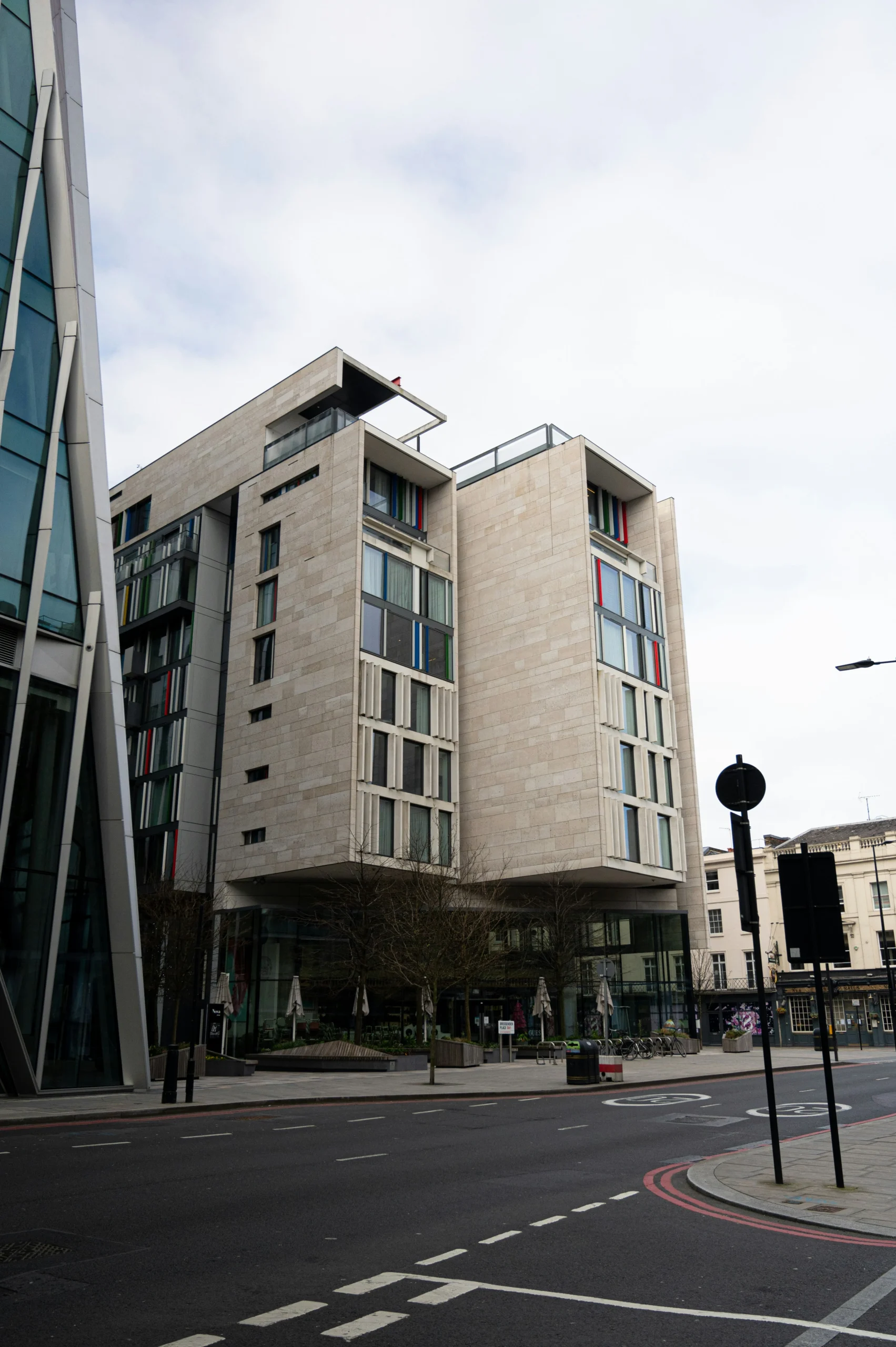

A dispute over fire-safety defects and latent defects insurance has reached the Court of Appeal, with judges rejecting an insurer’s attempt to obtain summary judgment against a housing provider. The decision examines how the words “imminent” and “immediate remedial measures” should be applied where alleged building defects create a risk of fire and consequential damage.
What is the dispute about?
In Vivid Housing Limited v Allianz Global Corporate & Specialty SE [2026] EWCA Civ 1389, the Court of Appeal considered an appeal brought by Allianz against a decision of Mrs Justice Jefford in the Technology and Construction Court. The underlying proceedings concern a block of 72 flats at Collins Place, 189 Victoria Road North, Portsmouth, owned freehold by Vivid Housing Limited.
Vivid was insured under a Housing Warranty Insurance Policy issued by Building LifePlans Ltd, acting as cover-holder under a binding authority granted by Allianz. The policy period ran from 22 May 2008 to 21 May 2020. On or about 19 May 2020, Vivid notified a claim alleging several defects in the development.
On 16 December 2025, Jefford J dismissed the majority of Allianz’s application for summary judgment in respect of the defects still in dispute. Allianz appealed that decision, arguing that Vivid’s case could not satisfy the policy’s requirements for an imminent threat of damage and immediate remedial measures.
What fire-safety defects were alleged?
Four alleged defects were relevant to the appeal. They concerned the external cladding, cavity barriers and debris within the building cavities. Vivid’s case was that these conditions could allow fire or smoke to spread through the building, or permit water to enter the flats.
- Rockpanel cladding: Vivid alleged that combustible cladding panels had been installed on a building over 18 metres high in an untested arrangement with combustible foam insulation, with absent or defective cavity barriers and combustible debris in the cavities.
- Vertical cavity barriers: Vivid alleged that barriers were missing at required locations, including between the external cladding and inner cavity and between floors.
- Horizontal cavity barriers: The claim concerned missing or defective barriers at party walls, slab edges and window openings.
- Building debris: Vivid alleged that debris left inside building cavities could provide an ignition source, assist the spread of fire or create a route for water to enter flats.
The primary evidence included a CBRE report entitled “Façade Fire Risk Assessment”. It assigned orange, medium-priority status to the Rockpanel cladding and workmanship issues, while the absence of compartmentation was given red, high-priority status. The report identified the absence of compartmentation as increasing the risk of fire spreading within the façade cavity.
One of the five defects originally notified was not in issue in this appeal. The Court of Appeal was concerned with the remaining defects identified in the proceedings.
What was the insurance policy test?
The dispute centred on clause 3(a) of the policy. It provided indemnity for the cost of repairing, replacing or strengthening the premises following a defect that became manifest and was notified during the period of insurance, where the defect caused one of the specified events.
Those events included destruction of the premises, physical damage to the premises, or “the threat of imminent destruction or physical damage to the Premises which requires immediate remedial measures” to prevent destruction or physical damage within the insurance period.
“The threat of imminent destruction or physical damage to the Premises which requires immediate remedial measures”
Clause 3(a)(iii) of the Housing Warranty Insurance Policy
The Court of Appeal considered the ordinary meaning of “imminent” in the context of the policy. It referred to the approach in Gerling General Insurance Co and others v Canary Wharf plc, under which the question is assessed prospectively and objectively: whether a reasonable person, on the information available at the relevant time, would regard the damage as sufficiently likely to happen sufficiently soon to be described as imminent. The assessment is a question of fact and degree.
Why did Allianz challenge the decision?
Allianz argued that the first-instance judge had failed to give proper effect to the words “imminent” and “immediate” in clause 3(a)(iii). It submitted that the policy required a threat of destruction or physical damage that was both likely to happen and likely to happen sufficiently soon, and that remedial measures had to be required before the end of the insurance period.
In Allianz’s case, the alleged passive fire-safety defects did not establish that a fire was about to break out. It also relied on the fact that Vivid’s claim notification did not identify urgent repairs and that, apart from a waking watch, no remedial works had been undertaken following the CBRE report.
Allianz therefore contended that Vivid had no real prospect of succeeding in its claim under the relevant policy wording and that summary judgment should have been granted.
Why did the Court of Appeal dismiss the appeal?
The Court of Appeal, in a judgment delivered by Lord Justice Stuart-Smith, concluded that the first-instance judge had applied the relevant test for imminence. The judge had considered whether, at the relevant time, the risk of fire was sufficiently serious and would eventuate sufficiently soon. That was consistent with the objective and prospective approach identified in Gerling.
The Court accepted that the insured event was not simply a threat of fire. It was a threat of imminent destruction or physical damage to the premises caused by a defect. However, the first-instance judge had assessed the risk in that context and was entitled to conclude that Vivid had a real prospect of establishing that a reasonable observer would have regarded the fire risk and consequent threat of damage as sufficiently imminent.
The Court also rejected the suggestion that the policy could respond only if there was evidence of a particular feature making the ignition of a fire imminent. The judge was entitled to consider the nature of fire and the various ways in which it may occur, as well as the evidence Vivid said it wished to develop at trial, including a schedule of fires at its properties.
On the requirement for immediate remedial measures, the Court said there was an obvious relationship between the severity of the risk and the urgency of proposed repairs. The notification’s reference to no urgent repairs was not determinative. The CBRE report’s high-priority assessment of the compartmentation defects was more informative, and it was at least arguable that the waking watch was itself a remedial step because it reduced the risk of fire spreading.
The Court considered these matters to be appropriate for resolution at trial, where the evidence about the risk, remedial steps and timing could be examined fully. They were not suitable for final determination on a summary judgment application.
- The Housing Warranty Insurance Policy period begins.
- Vivid notifies its claim under the policy.
- The stated policy period ends.
- Jefford J dismisses the majority of Allianz’s summary judgment application.
- The Court of Appeal hears Allianz’s appeal.
- The Court of Appeal hands down judgment and dismisses the appeal.
What does the ruling mean for insurers and property owners?
The decision confirms that the application of policy language such as “imminent” and “immediate remedial measures” will depend on the wording and the evidence in the particular case. The court must consider both the likelihood of damage and whether it is likely to occur sufficiently soon, while assessing the urgency of remedial action in light of the seriousness of the risk.
For insurers, the judgment is a reminder that arguments about the absence of an imminent fire or the lack of completed remedial works may not be enough to obtain summary judgment where the evidence raises issues of fact and degree. For property owners and housing providers, the findings underline the potential importance of detailed fire-risk assessments, evidence of compartmentation defects and records of interim safety measures such as waking watches.
The ruling does not determine the ultimate coverage dispute. The Court of Appeal dismissed Allianz’s appeal because Vivid’s case had a real prospect of success and the relevant issues were matters for trial. It did not make a final finding that the policy responds to the defects or that Allianz is liable to indemnify Vivid.
Frequently asked questions
What did the Court of Appeal decide in Vivid Housing v Allianz?
The Court of Appeal dismissed Allianz’s appeal against the refusal of summary judgment. It held that the first-instance judge was entitled to conclude that Vivid had a real prospect of establishing that the policy’s requirements were met.
What were the alleged defects at the Portsmouth development?
The appeal concerned alleged defects involving Rockpanel cladding, vertical and horizontal cavity barriers, and debris within building cavities. Vivid said these defects created risks involving the spread of fire or smoke and water ingress.
What does “imminent” mean under the policy?
The relevant assessment is objective and prospective. The question is whether a reasonable person, considering the facts available at the relevant time, would regard the damage as sufficiently likely to happen sufficiently soon to be described as imminent.
Did the Court of Appeal decide that Allianz must pay the insurance claim?
No. The appeal concerned whether Vivid’s claim should be stopped by summary judgment. The Court of Appeal held that the case had a real prospect of success and that the disputed factual matters should be determined at trial.
Why was the waking watch relevant?
The Court considered it at least arguable that the waking watch was a remedial measure because it reduced the risk of fire spreading. The existence of that measure did not, by itself, establish that immediate remedial action was unnecessary.
When was the judgment handed down?
The Court of Appeal handed down its approved judgment on 3 November 2026. The appeal hearing had taken place on 20 October 2026.