

The court found breaches of Companies Act duties over company funds and a director’s loan account.
Director duty breaches have resulted in a £190,153.99 compensation award against Dr Marek Stobinski after the High Court found that he failed to act in the interests of his company while it was bordering on insolvency.
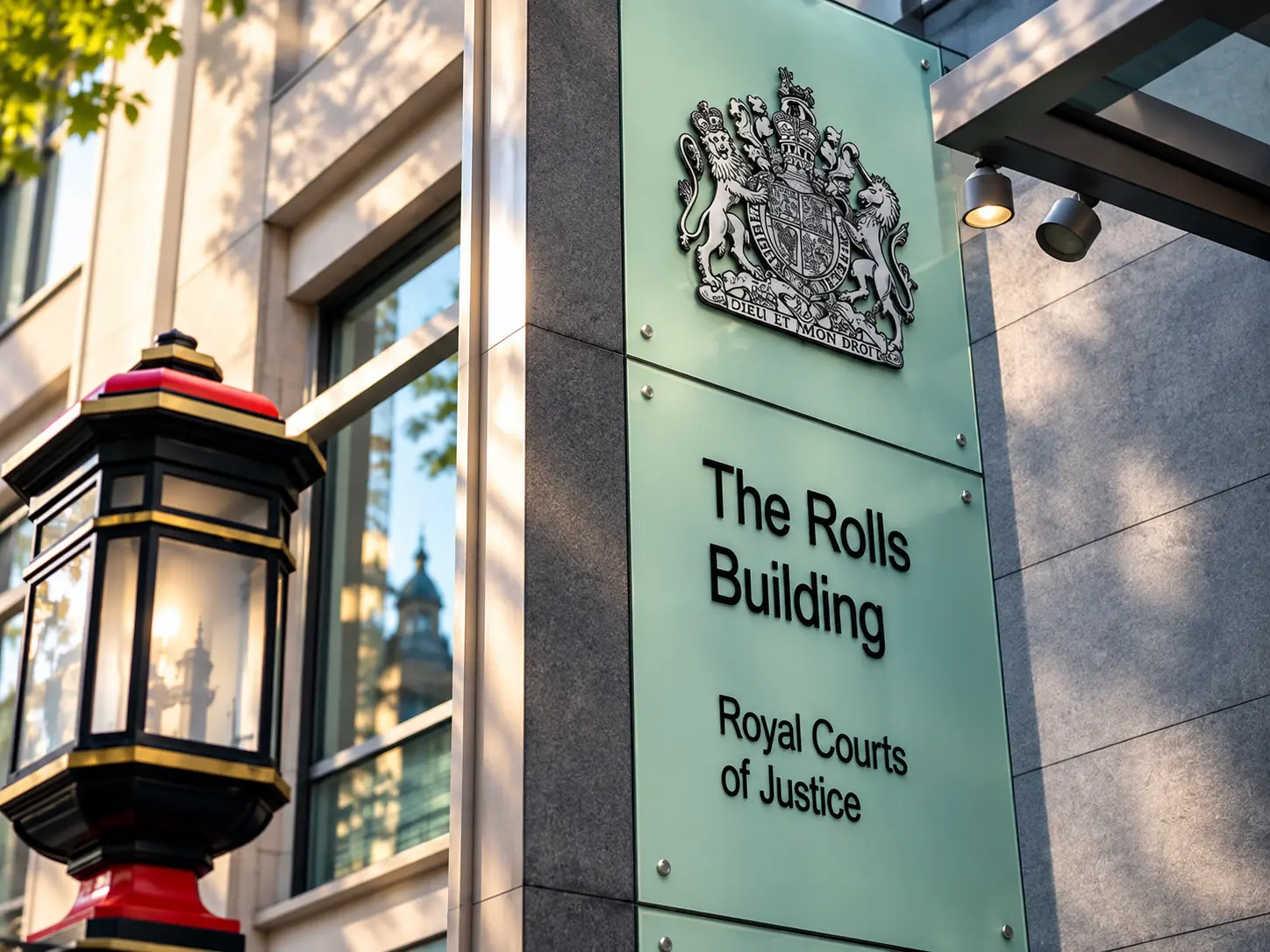
Deputy ICC Judge Curl KC handed down judgment on 22 September 2026 in Hinton v Stobinski [2026] EWHC 2386 (Ch), ordering Dr Stobinski to compensate St Mark Lions Limited following claims brought by its liquidator, Lloyd Edward Hinton. The case was heard in the Insolvency and Companies List of the High Court’s Business and Property Courts.
The company entered creditors’ voluntary liquidation on 12 October 2022. Dr Stobinski was its sole director and shareholder. The company appeared principally to operate as a service company for some of his activities as a doctor. The judgment noted that there was an almost complete absence of company books and records.
The liquidator originally sought £214,195.29 plus interest. The claim comprised an alleged overdrawn director’s loan account of £112,506, £63,189.29 in other payments made from the company’s bank account, and £38,500 in payments made directly to Dr Stobinski described on bank statements as “MGMT CHARGE”.
The liquidator argued that the company was insolvent or at least bordering on insolvency from 2 December 2019. A significant part of the case concerned corporation tax liabilities which had accumulated while company funds were being used for other purposes. The judgment recorded that the company’s corporation tax debt had reached £79,000 by October 2022.
A procedural issue arose over the liquidator’s use of section 212 of the Insolvency Act 1986 to pursue the director’s loan account. The court held that a straightforward contractual debt could not itself be pursued by a liquidator through section 212 because the liability to repay arose from the loan contract rather than from a duty attached to the director’s office.
However, the court found that this did not determine the outcome. Dr Stobinski was liable to compensate the company for the same £112,506 because his treatment of the loan account amounted to breaches of his duties under sections 172 and 175 of the Companies Act 2006 and his common law duty of care under section 174.
The court also rejected the argument that the improperly commenced debt claim was a nullity. It held that the liquidator had been properly appointed and had been asserting a claim belonging to the company; the problem concerned the procedure used to bring the claim. Had it been necessary, the judge said the proceedings could have been rectified under CPR rules 19.2 and 3.10.
[sN-newsletter]
On the substantive claims, the judge found that Dr Stobinski should have taken steps to recover the director’s loan account once the company was bordering on insolvency, particularly because the company needed the asset to address its corporation tax liability. Instead, he continued to draw on the account.
The court held that this was a clear breach of sections 172 and 175 of the Companies Act 2006, applying an objective standard. Alternatively, the failure to recover the asset and continued exposure to an unreliable debtor amounted to negligence and a breach of section 174.
The court also considered £63,189.29 in other payments from the company’s bank account. These included payments to individuals, purchases through Amazon, eBay and PayPal, subscriptions, payments to auctioneers, payments to other companies and entertainment spending. The judge ultimately found that the payments were not made for the benefit of the company.
The court accepted that there was a risk of double-counting between these payments and the director’s loan account. It therefore awarded £39,147.99 under this head rather than the full £63,189.29 claimed.
The final £38,500 related to nine payments made directly to Dr Stobinski between May 2020 and January 2021 and described as management charges. The judge found that the liquidator’s case concerning these payments was made out. Given the company’s financial position and the interests of its creditors, the court concluded that a reasonable director acting in good faith would not have made the payments. The payments therefore breached sections 171, 172, 174 and 175 of the Companies Act 2006.
The court declined to determine an alternative claim concerning transactions at an undervalue under section 238 of the Insolvency Act 1986 because it would not have affected the total award.
The liquidator’s claim therefore succeeded for £190,153.99, made up of £112,506, £39,147.99 and £38,500. The court said it would hear the parties on interest and costs to the extent these could not be agreed.