
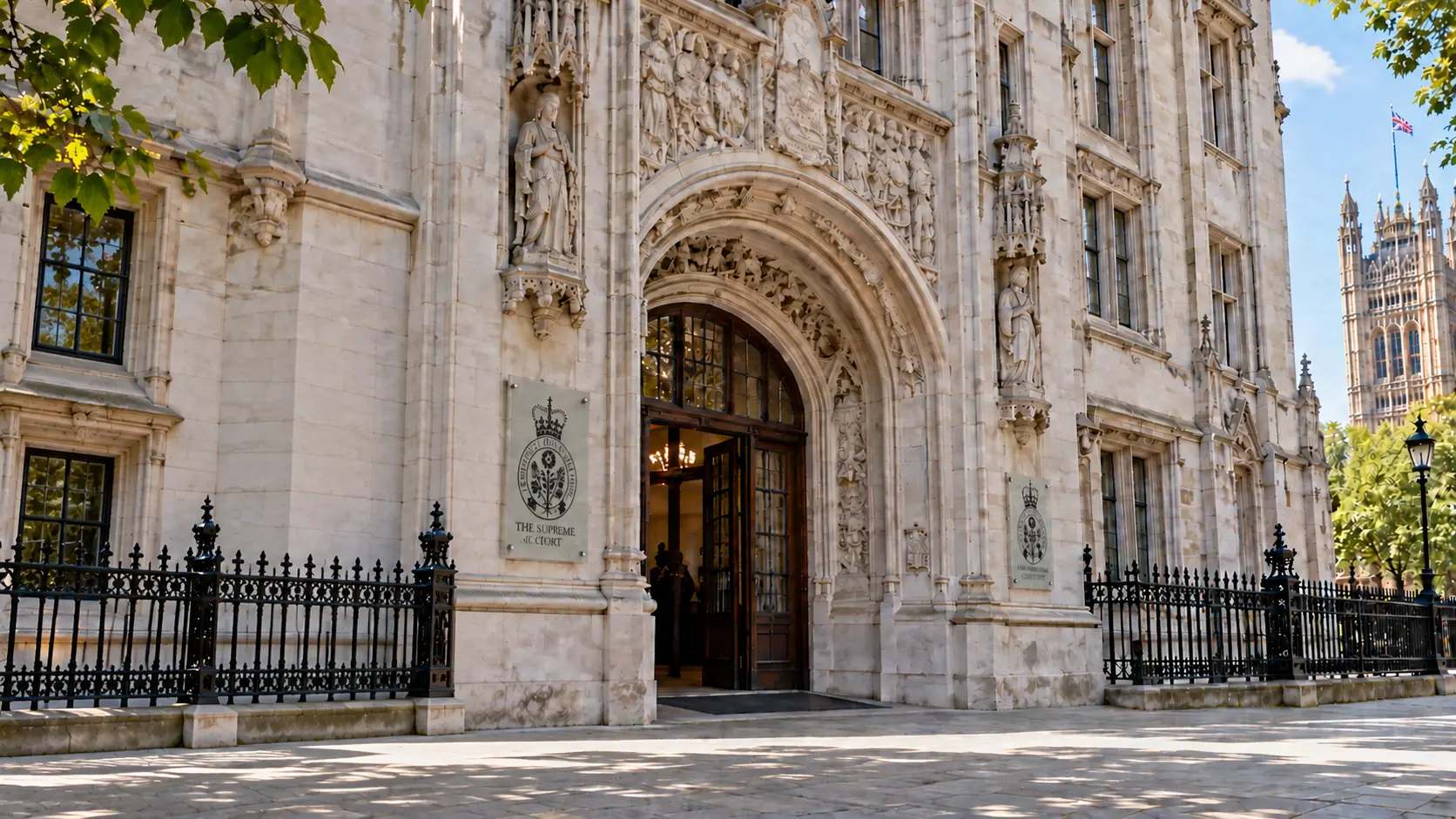

One Justice will be selected from Northern Ireland and one from England and Wales.
The Independent Selection Commission has launched competitions to appoint two new Supreme Court Justices, with one position intended for a candidate with knowledge and experience of the law of England and Wales and the other for a candidate with knowledge and experience of the law of Northern Ireland.
The recruitment comes as the Supreme Court seeks candidates for roles involving some of the most complex and high-profile legal appeals heard in the UK. The Supreme Court and the Judicial Committee of the Privy Council (JCPC) hear appeals that can have a considerable impact across the United Kingdom and beyond.
The selection commission said it welcomes applications from the widest range of people who are eligible to apply. Candidates appointed to the Court are expected to demonstrate exceptional intellectual and legal ability, together with sound judgment and decisiveness.
Two jurisdiction-specific positions
The recruitment is structured around the requirement for the Supreme Court to include judges with knowledge of, and experience of practice in, the law of each part of the United Kingdom.
For the current competitions, the commission is therefore seeking two candidates with different jurisdictional experience. One candidate must have knowledge of, and experience of practice in, the law of England and Wales, while the other must have equivalent knowledge and experience relating to Northern Ireland.
The Supreme Court’s appointment information states that candidates are expected to be able to address the full range of legal subjects. No particular area of legal expertise is specified for the role.
Candidates are also expected to demonstrate an ability to contribute to the Court’s collegiate decision-making, sensitivity to the needs of different communities and groups, and an ability and willingness to undertake the wider representational and leadership responsibilities associated with being a Justice. The selection criteria also refer to an appreciation of the developing nature of the constitution and law across England, Scotland, Northern Ireland and Wales.
Role extends beyond hearing cases
The work of a Supreme Court Justice extends beyond the Court’s legal proceedings.
According to the Supreme Court, Justices take part in activities designed to promote understanding of the Court and engage members of the public in educational activities. These activities include judging moots, answering questions from school pupils and delivering public speeches and addresses on legal topics.
The Court’s wider appointment information also describes the role as involving representational and leadership responsibilities, alongside participation in the collegiate decision-making of the Court.
Eligibility and selection process
The Supreme Court’s published appointment information sets out three statutory routes through which a person may qualify for appointment.
A candidate may be eligible if they have held high judicial office for at least two years. Alternatively, eligibility can arise through at least 15 years of qualifying legal practice as a solicitor, barrister or advocate in the relevant jurisdictions. A third route applies to people who have held a relevant legal qualification for at least 15 years and gained experience in law for at least 15 years while holding that qualification.
The Court states that, given the complexity and importance of cases decided by the UK Supreme Court, applicants are expected to have substantial judicial or equivalent experience.
The appointment process is overseen by an independent selection commission. Applications are sought from a wide range of eligible candidates, including those who are not currently full-time judges. The process includes shortlisting and interviews before the commission makes its selection and submits a report to the Lord Chancellor.
The formal appointment process involves further consultation before the successful candidate’s appointment is ultimately made by HM The King.
Applications close in October
The Supreme Court has published information packs setting out the skills and experience required for the two roles, together with details of how to apply.
The closing date for applications is 9am on 19 October 2026.
The recruitment will fill two forthcoming positions on the Court. The published vacancy information states that the vacancies arise following the retirement of Lord Lloyd-Jones in January 2027 and Lord Stephens in April 2027.
The two competitions therefore form part of the Court’s process for appointing new Justices while maintaining the required representation of legal knowledge and experience from different parts of the United Kingdom.
For eligible legal professionals considering an application, the Supreme Court’s information packs provide the detailed requirements and application arrangements for each of the two positions.