
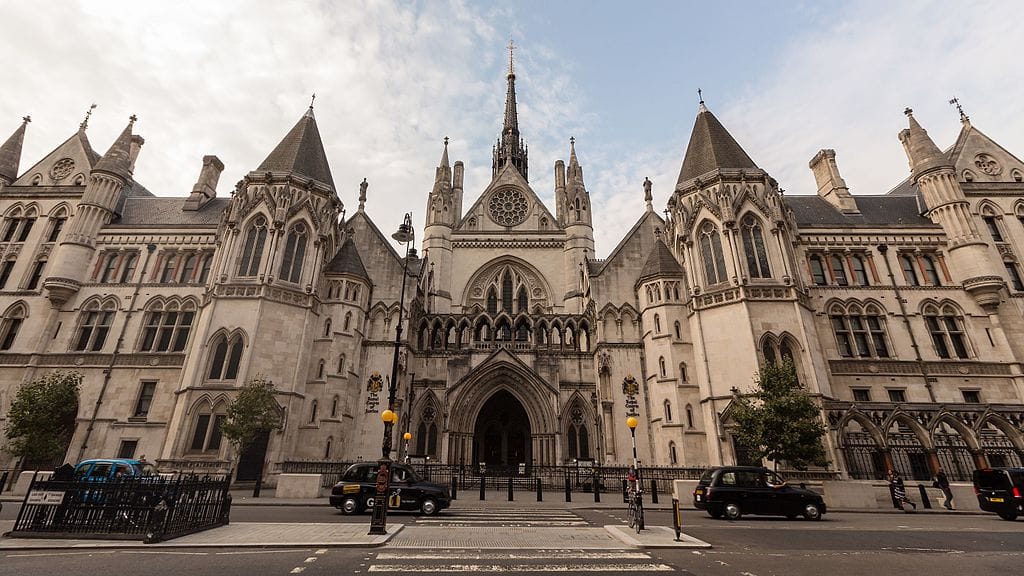


Judge says requested documents were not shown to be relevant, controlled by respondent or proportionate
The High Court has dismissed Richard Padun’s specific disclosure application in his unfair prejudice proceedings concerning Interactive Media Group Ltd (IMG), finding that he had not established that the additional documents sought were relevant to a pleaded issue and within Neil Dickinson’s possession or control. ICC Judge Barber also concluded that granting the application would not be proportionate.
The judgment, In the Matter of The Interactive Media Group Ltd; Richard Padun v Neil Dickinson & Anr [2026] EWHC 2308 (Ch), was handed down on 11 September 2026. The court had already dismissed the application by order on 18 May 2026, with the judgment providing the reasons.
Padun and Dickinson had both been directors and shareholders of IMG. Padun’s surviving section 994 petition alleges that Dickinson excluded him from management in March 2022 and subsequently orchestrated IMG’s insolvency and the transfer of business and assets to another company, Arcstream Systems Ltd (ASL). Dickinson disputes those allegations. IMG entered creditors’ voluntary liquidation in June 2022.
The disclosure application sought extensive financial and other documents relating to IMG, its subsidiaries and other companies. The requests covered areas including accounts, bank records, tax documents, customer information, contracts, payroll, property and intellectual property. The court noted that the requests initially covered a period from 2019 onwards and extended to companies including ASL and Loop Associates Ltd.
Judge Barber applied the requirements of CPR 31.12, under which specific disclosure must be directed to relevant and proportionate documents. The court must also be satisfied, at least prima facie, that the documents are or have been within the control of the party from whom disclosure is sought.
The judge found that significant material had already been disclosed, including management accounts and cashflow information for IMG and certain subsidiaries. Other requested material either did not exist, was already disclosed or was in the control of the liquidator rather than Dickinson.
A further issue was the scope of the requests. Judge Barber held that the disclosure sought could not be used as a “fishing” exercise to discover facts or construct a case beyond the pleadings. The court also found that post-liquidation acts relied upon by Padun did not, on the pleaded case, constitute conduct of IMG’s affairs by Dickinson for the purposes of section 994. Following the liquidator’s appointment, the directors’ powers had ceased and the conduct of IMG’s affairs had passed to the liquidator under section 91(2) of the Insolvency Act 1986.
The court also rejected the proposed wider disclosure connected with an “add-back” approach to valuation. Judge Barber said that before such disclosure could be ordered, the petitioner needed to identify the conduct said to have affected share value, explain how it affected that value and provide, at least in outline, the proposed valuation methodology.
The practical point for practitioners is clear: a specific disclosure application must be closely tied to the pleaded issues, supported by a coherent explanation of relevance and limited to what is proportionate. The court concluded that Padun had failed to establish that threshold and that the application had widened rather than narrowed despite opportunities to refine it.
Judge Barber said submissions on costs and any consequential matters would be heard following judgment.