
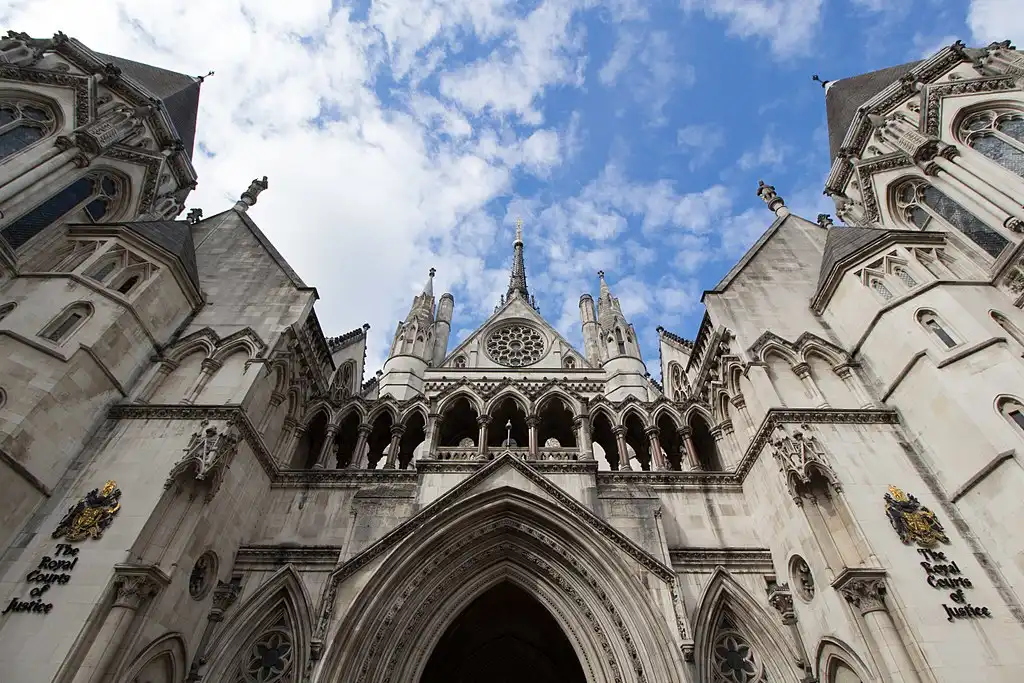


The court said threshold criteria and proportionality should have been addressed before the SGO.
SGO proportionality assessment was central to a Court of Appeal ruling that overturned a special guardianship order (SGO) placing a six-year-old child with her foster carer.
In Re E (A Child) (Special Guardianship Order: Public Law Proceedings), the Court of Appeal held that the first-instance judge had applied the wrong legal approach when deciding that the child should remain with her foster carer under an SGO. The court said the judge should have considered whether the proposed order was necessary and proportionate and, in the circumstances of the case, should also have determined the threshold criteria under section 31(2) of the Children Act 1989. The case was remitted for a rehearing.
The child, referred to as E in the judgment, was born in March 2020. Earlier care proceedings concluded in July 2021 with an SGO in favour of her maternal grandmother. E subsequently lived with her grandmother and mother until March 2024, when she was removed from the family home and placed in foster care.
Care proceedings followed. E initially lived with one foster carer, but that placement ended abruptly in August 2024 after the foster carer was arrested for drink driving and told police that she had left E, then aged four, alone at home. E was subsequently placed with her current foster carer, where she had lived for nearly 18 months by the time of the final hearing. During her time in care, she continued to have regular contact with her mother and maternal grandmother.
At the final hearing, the local authority and Children’s Guardian supported an SGO in favour of the foster carer. E’s mother sought her return to her care, or joint care with the maternal grandmother. The grandmother similarly sought E’s return to her care or joint care with the mother. Both indicated that they would accept a supervision order.
The local authority’s final threshold case included concerns about the mother’s mental health, conflict between the mother and grandmother, inappropriate discipline and the circumstances immediately before E’s removal. However, several serious allegations made at the beginning of the proceedings were not pursued at the final hearing.
The first-instance judge concluded that E should remain with her foster carer under an SGO. His approach focused on deciding which course would best serve E’s welfare. He did not expressly determine the section 31(2) threshold and did not address proportionality. He concluded that the risks associated with returning E to her mother and grandmother were too great.
The Court of Appeal found that this was not sufficient. Lord Justice Moylan said that, although the section 31(2) threshold does not technically apply where the court makes an SGO rather than a care or supervision order, the court should typically determine whether the threshold criteria have been established before making an SGO at the conclusion of care proceedings. The court recognised that there may be cases where this is unnecessary or inappropriate, but found that the circumstances of E’s case required such an assessment.
The court placed particular emphasis on the nature of an SGO. A special guardian has parental responsibility and, subject to other orders, is entitled to exercise it to the exclusion of other people with parental responsibility. The Court of Appeal therefore described an SGO of this kind as a significant and intrusive interference in the family life of the child and her birth family.
As a result, the judge was required to consider the necessity and proportionality of the proposed order. The Court of Appeal said the exercise could not simply be a balance of which placement appeared to offer the greatest welfare benefits.
Instead, the court should consider issues including the type and likelihood of harm, the consequences if harm occurred, whether risks could be reduced or managed, the comparative welfare advantages and disadvantages of the realistic options and, where Article 8 rights are affected, whether the proposed intervention is necessary and proportionate.
The Court of Appeal also highlighted the importance of clear findings about disputed matters and a proper factual foundation for assessing future risk. It noted, in particular, the absence of any assessment of the mother since 2024 and said there was considerable force in the argument that the risks relied upon by the local authority required proper analysis based on clear findings.
The court concluded that the first-instance judge’s approach was flawed. The mother and maternal grandmother’s appeals were therefore allowed and the case was remitted for rehearing. Lord Justice Singh and Lord Justice Phillips agreed with Lord Justice Moylan.
For practitioners involved in care proceedings, the judgment underlines the need for the court’s reasoning to address the legal significance of an SGO where it would permanently place a child outside their birth family. In cases of this kind, the Court of Appeal said the court should ordinarily address the section 31(2) threshold and undertake a proper assessment of necessity and proportionality before deciding whether an SGO should be made.