
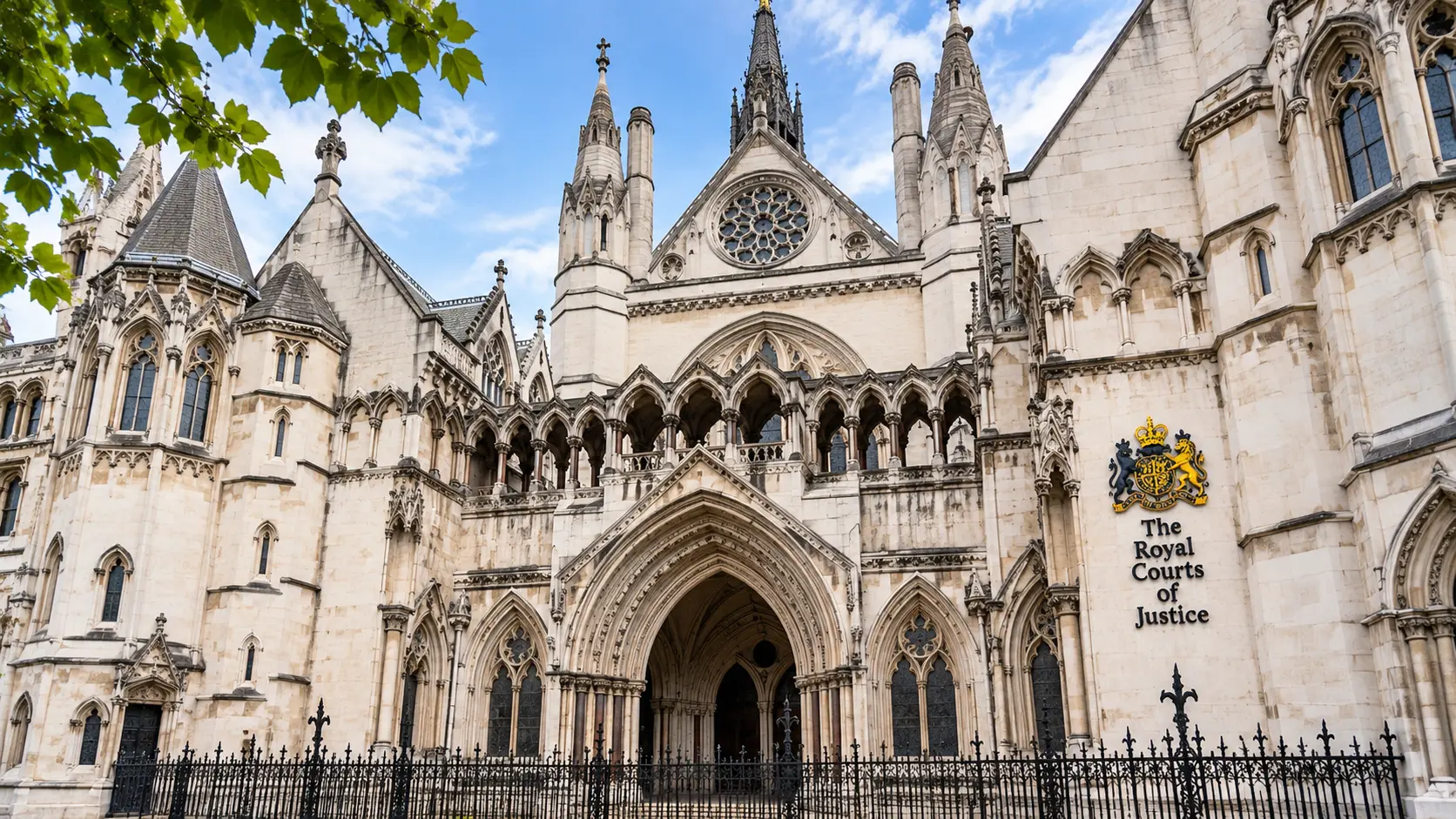

The Court of Appeal has clarified how inflation adjustments operate in confiscation proceedings where criminal assets have been frozen for years. The judgment confirms that the statutory uplift is generally concerned with preserving the real value of the benefit obtained through crime, rather than tracking the investment performance of the particular assets restrained by the authorities.
What did the Court of Appeal decide?
In R v Ibori; R v Patel & Patel [2026] EWCA Crim 1396, handed down on 3 November 2026, the Court of Appeal (Criminal Division) considered whether the change-in-value-of-money (CVM) uplift should be applied to criminal benefit represented by bank accounts or other property that had been frozen under restraint orders.
The appeals raised a common issue under the confiscation provisions of the Criminal Justice Act 1988 and the Proceeds of Crime Act 2002 (POCA). The defendants argued, in different ways, that applying an inflation adjustment to assets which had not themselves kept pace with inflation during restraint was disproportionate and interfered with their property rights.
The court rejected that argument. It held that the statutory scheme requires the criminal benefit to be valued in money’s worth when obtained, with an adjustment to reflect the change in the value of money by the time the confiscation order is made, unless the value of the property or its traceable proceeds has increased by more.
The judgment was given by Lord Justice Popplewell, Mr Justice Bryan and His Honour Judge Nicholas Dean KC following a hearing on 23 October 2026.
What is the change-in-value-of-money uplift?
The relevant provisions require the court to assess the value of property obtained through criminal conduct. Under section 80 of POCA 2002, the value at the time the confiscation decision is made is generally the greater of the original value adjusted to account for later changes in the value of money, or the value at the material time of the property representing the original benefit.
The corresponding provisions in the Criminal Justice Act 1988 applied to Mr Ibori. The court explained that the purpose is to ensure that a defendant is required to pay a sum representing the real value of the criminal benefit when it was received. Confiscation orders are commonly made long after the offending, because investigations, proceedings and disputes over the assets can take many years.
The uplift is therefore not intended as an additional penalty. It is part of a value-based system designed to prevent a defendant from retaining the real economic value of criminal proceeds simply because the confiscation order is made later.
The statutory scheme is directed at the real value of the criminal benefit when it was obtained, not simply the later performance of the particular asset in which it was held.
The court considered the Supreme Court’s approach in R v Waya [2012] UKSC 51 and R v Andrewes [2022] UKSC 24. Those authorities recognise that confiscation must be proportionate to its legitimate purpose, including avoiding double recovery where the benefit has genuinely been restored to the victim.
Why did the restraint orders not stop the uplift?
The defendants argued that restraint orders had deprived them of the ability to use, invest or otherwise increase the value of the assets. In their submission, it was unfair to apply an inflation adjustment during a period when they could not control the property.
The Court of Appeal held that the existence and effect of a restraint order did not, by itself, make the CVM uplift disproportionate. It gave several reasons:
- The benefit is valued when obtained: the confiscation regime focuses on the value received through criminal conduct, with the later adjustment reflecting the real value of that sum when the order is made.
- The form of the assets reflects the defendant’s choices: the defendant chose how to hold or invest the proceeds before restraint, including whether to keep money in accounts that generated little or no interest.
- Restraint follows the criminal conduct: the court regarded the restraint order as a consequence of the offending and the risk that assets might otherwise be dissipated.
- Disclosure could have avoided restraint: the court observed that a defendant could identify the criminal benefit and agree to its return, removing the need for a restraint order.
- There was no double recovery: freezing property is not equivalent to restoring the benefit to the victim. The narrow proportionality exceptions recognised in earlier cases did not apply.
The court also noted that property values do not necessarily move in line with the Consumer Prices Index. A commercial property may rise or fall differently from the general change in the value of money. That fluctuation is part of the ordinary risks associated with the form of asset chosen.
What was decided in Ibori’s appeal?
James Ibori, the former Governor of Delta State in Nigeria, had pleaded guilty to offences including conspiracy to defraud and money laundering. He was sentenced in April 2012 to a total of 13 years’ imprisonment. His criminal proceeds had been channelled through a complex network of companies and bank accounts in different jurisdictions.
A confiscation order was made against him on 21 July 2023 in the sum of £101,514,315.21. His appeal focused on the application of the CVM uplift to certain bank-account proceeds which, he argued, had been frozen and had not generated a corresponding increase in value.
The Court of Appeal found that the evidence did not clearly establish whether four Nigerian bank accounts had been effectively restrained, or for what period. The accounts had only been specifically identified by a variation to the restraint order in 2014, and it appeared more likely than not that Mr Ibori had been able to use them for years after the fraud.
The court also rejected reliance on seven other accounts identified in the submissions. Those accounts were not part of the criminal benefit figure used to make the confiscation order and had not been subjected to the CVM uplift. The relevant benefit for that item had instead been identified by reference to sums first paid into three Access Bank accounts in Nigeria in 2006.
Ultimately, the court held that the restraint order did not make the uplift disproportionate. It also considered that the lengthy delay was attributable to Mr Ibori’s persistent resistance to the confiscation process. His appeal was therefore dismissed.
What was the outcome for Arif Patel?
Arif Patel had been convicted in 2023 of offences including false accounting, conspiracy to cheat the public revenue, conspiracy involving counterfeit branded goods and conspiracy to launder money. The offending involved VAT fraud, false documentation and the movement of proceeds through overseas companies and accounts.
On 3 December 2024, the Crown Court assessed his criminal benefit at £52,793,179.09 before the CVM adjustment. A confiscation order of £90,503,211.96 was made on 28 August 2025.
Mr Patel argued that the uplift was disproportionate because a management receiver had controlled the restrained assets since 2010, the property portfolio had not increased in value in line with inflation, and the receivership had incurred substantial costs. He also argued that rental income and the inflation uplift resulted in double counting.
The Court of Appeal rejected those arguments. It held that the lack of control over the restrained assets did not distinguish his case from Mr Ibori’s. The uplift on rental income had been applied from the time each sum was received, so the treatment did not amount to double recovery. The decline in the value of the receivership estate reflected market movements and properly incurred management costs, rather than a basis for disapplying the statutory uplift.
The court granted leave on the CVM ground but dismissed the appeal on that ground. It also refused leave to appeal on Mr Patel’s renewed challenge to the finding that he had sufficient available assets to meet the confiscation order. His application therefore failed.
Why was Sabina Patel’s property appeal dismissed?
The judgment also dealt with an appeal by Sabina Patel, Arif Patel’s former wife, against the rejection of her claimed beneficial interests in two properties: 107–109 Fletcher Road and 5 & 6 Cheapside, Preston.
Her application under section 10A of POCA had concerned several assets. The Crown Court had recognised her 50% beneficial interest in the outstanding equity of the former matrimonial home at 3 Sharoe Green Park, but rejected her claims to the two properties challenged on appeal.
As to 107–109 Fletcher Road, the Court of Appeal held that the judge was entitled to find that the registration of the property in family members’ names did not reflect the true beneficial ownership. The evidence supported the conclusion that the arrangements were a sham and that the family members were not intended to exercise the rights of beneficial owners.
As to 5 & 6 Cheapside, the court considered documentation relating to a directors’ pension scheme. It concluded that the evidence did not establish that Sabina Patel was a beneficiary under the scheme or had a beneficial interest in the property. The court also rejected the challenge concerning the judge’s treatment of her decision not to give oral evidence.
All three grounds of Sabina Patel’s appeal were dismissed. The decision recognising her 50% beneficial interest in the matrimonial home was not the subject of her appeal.
What does the judgment mean for confiscation proceedings?
The decision provides important guidance for defendants, prosecutors, receivers and practitioners dealing with long-running confiscation proceedings. A restraint order does not automatically prevent the application of an inflation adjustment simply because the restrained property has failed to keep pace with inflation.
The court reaffirmed the distinction between a defendant losing control of assets through restraint and a defendant restoring criminal benefit to the victim. The latter may engage the proportionality principle against double recovery; the former does not ordinarily do so.
For practitioners, the judgment highlights the importance of identifying precisely which assets and receipts form the criminal benefit figure, when that benefit was obtained, and the periods to which any CVM adjustment has been applied. It also demonstrates that arguments based on restraint, asset performance and receivership costs will need to be supported by the statutory framework and the evidence, rather than by the passage of time alone.
Frequently asked questions
Can inflation be added to criminal benefit where assets have been frozen?
Yes. The Court of Appeal held that a restraint order does not, by itself, make the change-in-value-of-money uplift disproportionate. The statutory calculation generally preserves the real value of the benefit when it was obtained.
Does a defendant have to retain the original criminal proceeds for a confiscation order to be made?
No. The confiscation regime is value-based. The benefit obtained through criminal conduct can remain relevant even if the original property has been spent, transferred or is no longer held by the defendant, subject to the applicable statutory rules and proportionality principles.
When can a confiscation order be disproportionate?
The authorities recognise a narrow category of cases, including circumstances where the criminal benefit has genuinely been restored to the victim or its equivalent has been provided. The court held that the restraint of assets did not amount to restoration or double recovery.
Did James Ibori succeed in his appeal?
No. The Court of Appeal dismissed his appeal against the £101,514,315.21 confiscation order.
Did Arif Patel obtain permission to appeal?
He was granted leave on the CVM issue, but his appeal on that ground was dismissed. The court refused leave on his renewed ground concerning the available-assets calculation, so his application failed.
Did Sabina Patel establish a beneficial interest in the two disputed properties?
No. Her appeal concerning 107–109 Fletcher Road and 5 & 6 Cheapside was dismissed. The separate finding that she held a 50% beneficial interest in the outstanding equity of the former matrimonial home was not challenged in that appeal.