
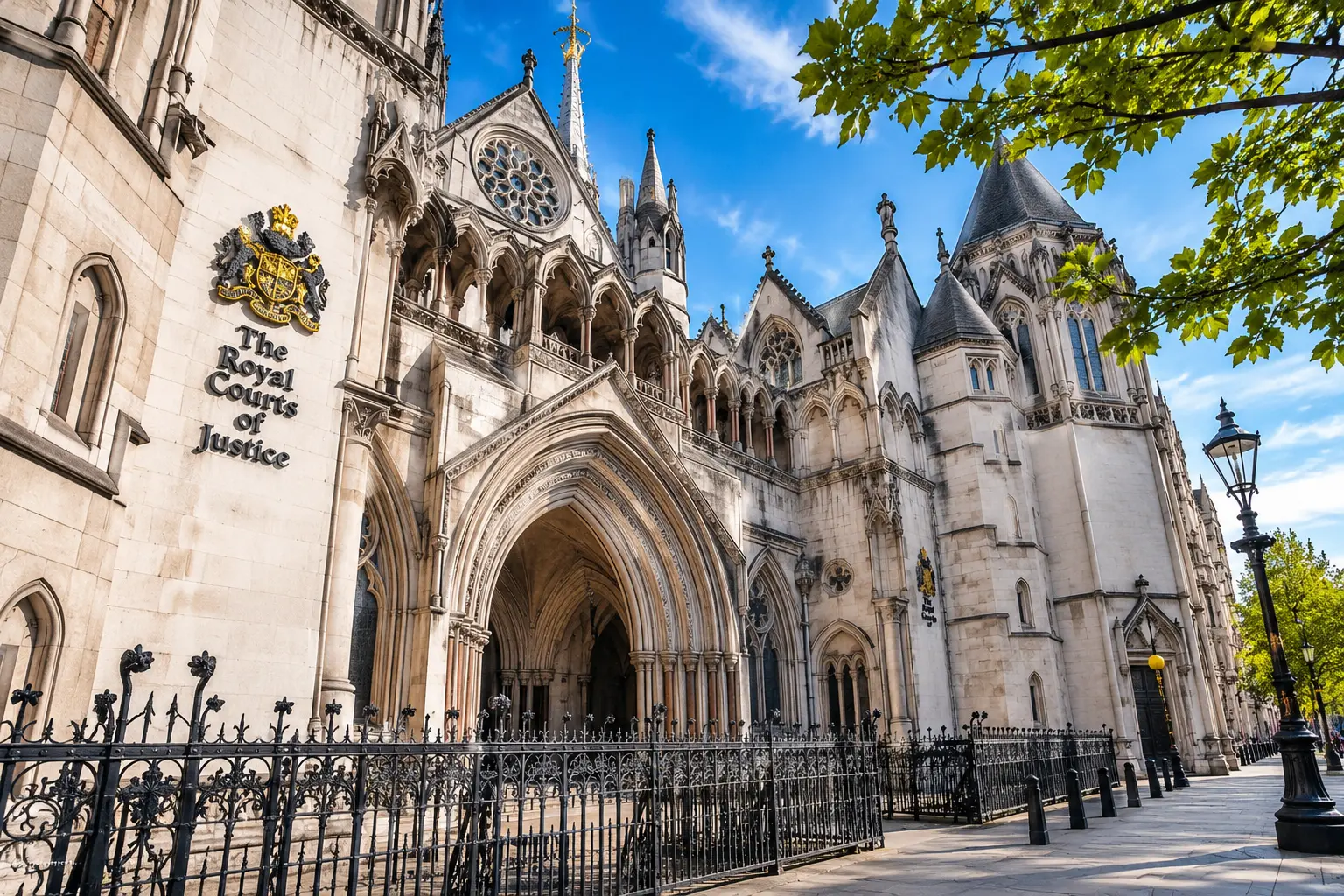

Two companies challenging a Competition and Markets Authority information notice have lost their bid to remain anonymous after the High Court concluded that the public interest in open justice outweighed their concerns about confidentiality and reputational damage.
What did the High Court decide?
In R (HTY and HTN) v Competition and Markets Authority (Anonymity) [2026] EWHC 3075 (Admin), handed down on 24 November 2026, Mrs Justice Steyn considered the CMA’s application to discharge an anonymity order that had been made in March 2026.
The claimants had brought judicial review proceedings challenging an information notice issued by the CMA on 12 December 2025. The authority had issued the notice using statutory information-gathering powers but had not decided whether to open an investigation. The notice itself stated that the CMA had not formed a view on whether there might have been infringements of UK consumer law and was approaching its enquiries with an open mind.
The judge concluded that the anonymity order was not necessary to secure the proper administration of justice or to protect the interests of any person. The test under CPR 39.2(4) was therefore not met, and the order was set aside.
How did the anonymity order arise?
When the claimants filed their judicial review claim on 10 March 2026, they also applied urgently for anonymity. Lang J granted the application on 11 March 2026, directing that their names should be withheld from public proceedings and imposing reporting restrictions concerning their identities. An order was also made under CPR 5.4C restricting non-parties from obtaining unredacted statements of case without the court’s permission.
The original application was determined before the CMA had an opportunity to make written submissions in response, although a letter setting out many of its arguments was before the court. The initial decision was based on the view that the claimants had a reasonable expectation of confidentiality and were likely to suffer significant reputational damage if publicly identified.
The CMA later applied to discharge the order. The Press Association supported that application, arguing that the public and media should be able to identify the parties involved in the proceedings. The claimants opposed the application, maintaining that the CMA’s enquiries remained preliminary and confidential.
- The CMA issues an information notice to the claimants as part of its preliminary enquiries
- The claimants file judicial review proceedings and apply for anonymity
- Lang J grants the anonymity order and reporting restrictions
- The court makes an order following which the Press Association obtains a copy of the anonymity application
- Mrs Justice Steyn sets aside the anonymity order
Why was open justice given priority?
The judge began with the principle that hearings should ordinarily take place in public and that parties should be named. Open justice allows the public to understand not only what is happening in court, but also who the principal actors are. Identifying parties gives proceedings context and can make media reporting more concrete, intelligible and useful to public debate.
Mrs Justice Steyn recognised that open justice is not absolute. Courts can anonymise parties, restrict access to documents and impose reporting restrictions where the circumstances justify doing so. However, such departures must be exceptional, strictly necessary and supported by clear and cogent evidence. The burden rests on the person seeking the restriction.
Although the claimants argued that identifying them would add little to the court’s determination of the legal issues, the judge considered that the public still had a right to know who was bringing the challenge. Anonymity was also likely to reduce reporting of the proceedings and public engagement with how the CMA exercises its consumer-protection powers.
“The public has a right to know not only what is going on in our courts, but also who the principal actors are.”
Open justice principle discussed in the judgment
The court therefore gave very substantial weight to open justice and the Article 10 rights engaged by public scrutiny and freedom of expression.
Did Article 8 protect the companies?
The claimants argued that disclosure could damage their reputations and relied, among other matters, on Article 8 of the European Convention on Human Rights. They also referred to the protection of correspondence, which can apply to legal persons as well as individuals.
The judge accepted that companies can enjoy certain Article 8 protections. Business premises may fall within the concept of “home”, and corporate communications may be protected as “correspondence”. However, that did not mean that a company has a private life or an Article 8 right to reputation in the same way as an individual.
Mrs Justice Steyn concluded that the claimants were corporate entities and did not have private lives. The reputational harm they feared therefore did not engage Article 8. She was also not persuaded that setting aside the anonymity order would interfere with any Article 8 right to respect for correspondence. The ordinary rules requiring parties’ names to appear in court documents and public listings did not amount to such an interference.
The judge said that the outcome would be the same whether or not Article 8 was engaged. However, the absence of an applicable Article 8 right was relevant to the balance because the substantial Article 10 and open justice interests remained engaged.
Why was confidentiality not enough?
The claimants emphasised that the CMA’s enquiries were confidential and that the information notice had expressly warned against disclosure. It was marked “Official – Sensitive” and stated that the notice, its contents and the fact of the enquiries should not be disclosed without the CMA’s prior agreement, subject to specified exceptions. It also referred to the possibility of criminal consequences for disclosure of specified information.
The CMA acknowledged that its enquiries had been conducted confidentially and that the wording of the notice could have given a misleading impression about the legal restrictions on disclosure. It said that the template had since been amended. The judge nevertheless held that the confidential character of the notice was wholly insufficient, on its own, to justify an exception to open justice.
The court also rejected the suggestion that anonymity should ordinarily apply to challenges brought before the CMA decides whether to open a formal investigation. Accepting that argument would create a category of claims in which anonymity would routinely be available, amounting to a significant restriction on open justice.
The judge distinguished ZXC v Bloomberg, which concerned media reporting of a criminal investigation, from the different balancing exercise required where the issue is open justice in court proceedings. The CMA’s enquiries concerned the possible exercise of civil enforcement functions, and the court considered the analogy with a criminal investigation in the core sense to be limited.
Finally, the judge considered the evidence of reputational harm to be speculative and to overstate the likely risk. The judgment made clear that the CMA had not decided to open an investigation and had not determined that there was a reasonable suspicion of consumer law infringement. Fair and accurate reporting would need to reflect that position. The claimants could also respond to unfair reporting if necessary.
What does the judgment mean for businesses and litigants?
The decision is a reminder that confidentiality and concern about reputational damage do not automatically justify anonymity in civil proceedings. Businesses seeking to keep their identities out of public court records must establish, with clear and cogent evidence, why a departure from open justice is strictly necessary.
It also highlights the distinction between the confidentiality of regulatory enquiries and the principle governing public court proceedings. A regulator’s decision to treat preliminary enquiries as confidential does not, by itself, determine whether parties to litigation should remain anonymous once they bring a claim before the court.
For companies involved in judicial review or other litigation concerning regulatory action, the judgment underlines the importance of preparing specific evidence of harm and addressing the public interest in identifying the parties. General concerns about adverse publicity may not be sufficient, particularly where the reporting can accurately explain that no formal investigation or finding of infringement has been made.
The ruling does not determine whether the CMA’s information notice was lawful. It concerns the separate question of whether the claimants should continue to be anonymised in the proceedings.
Frequently asked questions
What did the High Court decide in HTY and HTN v CMA?
The High Court set aside the anonymity order protecting the two corporate claimants. Mrs Justice Steyn held that anonymity was not necessary under CPR 39.2(4), given the strong public interest in open justice.
Had the CMA opened a formal investigation?
No. The judgment states that the CMA had not decided whether to open an investigation and had not formed a view that UK consumer law had been infringed.
Why did the companies want to remain anonymous?
They argued that the CMA’s preliminary enquiries and information notice were confidential and that public identification could cause significant reputational harm.
Does Article 8 protect a company’s reputation?
The judge held that the corporate claimants did not have private lives and that the reputational harm they alleged did not engage Article 8. The judgment recognised that legal persons may have other Article 8 protections, including in relation to business premises and correspondence.
Does confidential information automatically justify anonymity?
No. The court held that there is no general exception to open justice simply because private or confidential information is involved. Any restriction must be strictly necessary and supported by clear and cogent evidence.
Did the court decide whether the CMA information notice was lawful?
No. This judgment determined the CMA’s application to discharge the anonymity order. It did not determine the substantive judicial review challenge to the information notice.