
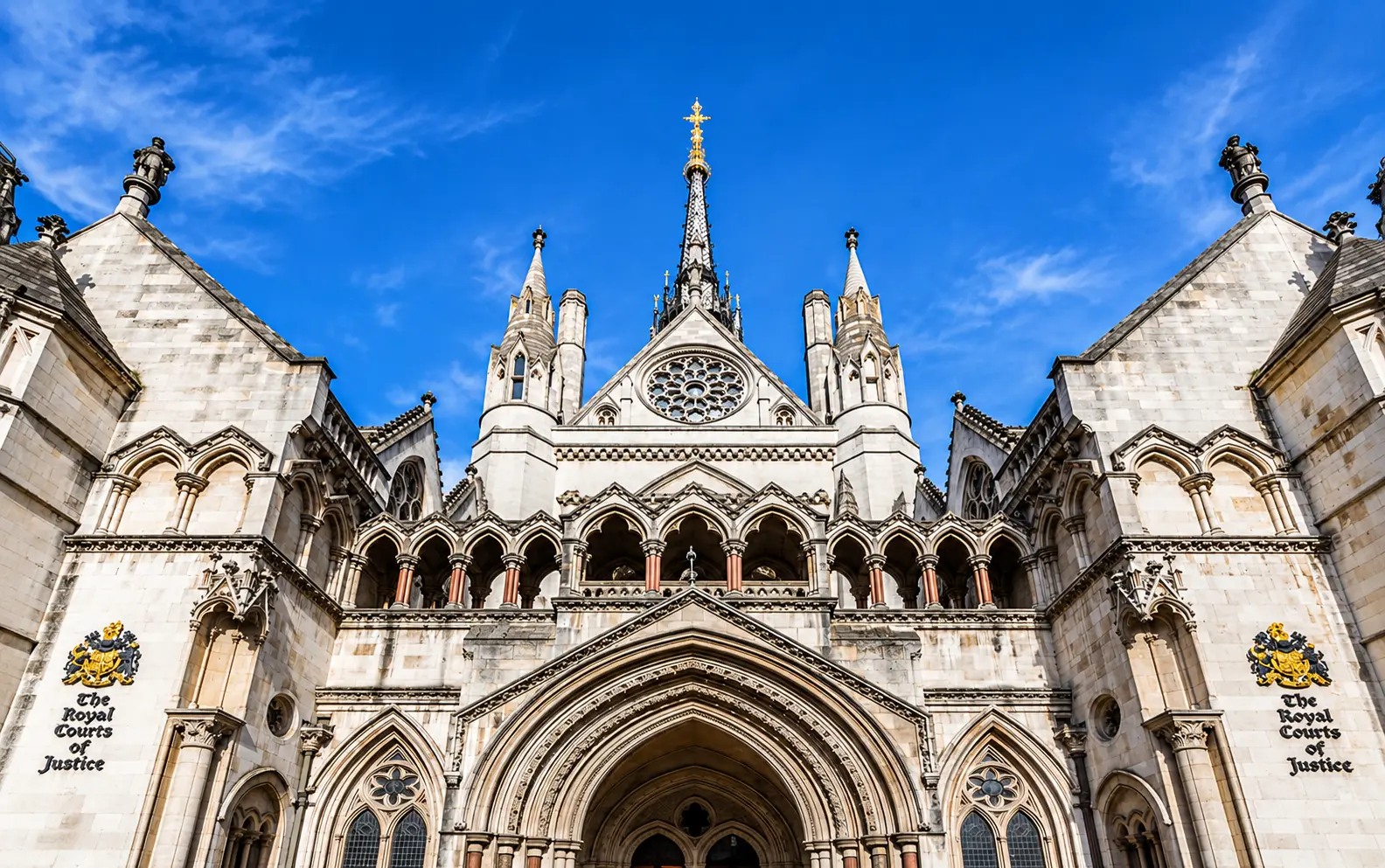

HMRC must reconsider its refusal to reopen a settlement after the High Court found that a trustee had been treated as liable for National Insurance contributions on an incorrect interpretation of the legislation.
What did the High Court decide?
In The King (on the application of Fabrizio Ravanelli) v The Commissioner for His Majesty’s Revenue and Customs [2026] EWHC 3060 (Admin), handed down on 25 November 2026, Mr Justice Eardley allowed the judicial review claim on its principal ground.
The claim concerned HMRC’s decision of 24 February 2025 not to reopen a settlement agreement made with the trustee of an employee benefit trust (EBT). The settlement included sums described as employee and employer Class 1 National Insurance contributions. Ravanelli argued that, because his former employer had ceased to exist, the trustee was not legally responsible for those contributions and he was not personally liable for them either.
The judge concluded that HMRC’s refusal to reopen the settlement had been affected by a material error of law. The decision was quashed, and HMRC was required to make it again without relying on the erroneous view that the trustee was liable to pay the NICs.
How did the tax settlement arise?
Ravanelli played for Derby County between July 2001 and September 2003. During that period, the club’s then owner, Derby County Ltd (DCL), employed him and established an employee benefit trust as a means of remunerating players. DCL contributed £1 million for Ravanelli’s benefit. By July 2021, the relevant sub-trust fund had grown to £2,136,310.
As the trust approached its second ten-year anniversary, the trustee proposed distributing the fund to Ravanelli rather than incurring the inheritance tax charges that would otherwise arise. The trustee, acting through its agent, discussed the tax treatment with HMRC.
On 28 July 2021, HMRC proposed a settlement involving deductions totalling £1,280,834.25. This included £340,195.90 described as NICs: £46,605.04 in employee NICs and £293,590.86 in employer NICs. The balance of £940,638.95 was described as income tax. Although the trustee queried the inclusion of employer NICs, it ultimately signed the offer on 29 July 2021, and HMRC formally accepted it on 5 August 2021.
The trustee paid the agreed sum and distributed the remainder of the sub-trust to Ravanelli. DCL had already been dissolved in 2005. The trustee itself was dissolved on 6 August 2023.
- Ravanelli plays for Derby County, whose then owner DCL establishes the employee benefit trust and contributes £1 million for his benefit
- DCL is dissolved
- HMRC sends the trustee a draft settlement offer including £340,195.90 in NICs
- HMRC accepts the signed settlement agreement
- Ravanelli’s tax adviser asks HMRC to reconsider the NICs element
- HMRC confirms that it will not reopen the settlement or make a repayment
- High Court quashes HMRC’s refusal and requires it to remake the decision
Why was HMRC’s decision unlawful?
Ravanelli’s adviser challenged the NICs element in correspondence beginning in June 2022. He relied, among other matters, on HMRC guidance stating that an employee would not have to pay NICs if the employer no longer existed. HMRC initially maintained that the trustee had become the relevant employer, but its explanations changed during the subsequent correspondence.
HMRC argued that the settlement agreement was legally binding and that its contractual effect was distinct from the underlying tax law. It also relied on the public interest in the finality of settlements. The court accepted that finality was an important consideration and that HMRC had a discretion to vary or set aside a settlement where appropriate.
However, the judge found that HMRC’s understanding of the substantive NICs position had played a part in the actual decision not to reopen the agreement. The contemporaneous correspondence showed that the possibility of a repayment had been considered if HMRC’s analysis proved incorrect. The court was not persuaded that a witness’s later account of his subjective intentions displaced the objective reading of that correspondence.
There was therefore a real possibility that HMRC might have reached a different decision if it had correctly understood whether the trustee was liable for the NICs. The error was material and the refusal to reopen the settlement could not stand.
How did the court interpret the NICs rules?
The central statutory question was whether the trustee could be treated as the “secondary contributor” responsible for employer NICs. Under section 6(4) of the Social Security Contributions and Benefits Act 1992, liability for employee NICs rests with the earner, while liability for employer NICs rests with the secondary contributor. The legislation generally places the initial obligation to pay employee contributions on that secondary contributor as well.
The relevant definition identifies the secondary contributor, in the case of an earner employed under a contract of service, as the earner’s employer. The judge held that the trustee was not Ravanelli’s employer within the meaning of the NICs regime. The employer was DCL, which had ceased to exist before the 2021 distribution.
HMRC argued that regulation 12 of the Income Tax (Pay As You Earn) Regulations 2003 extended the meaning of employer to include an “other payer”, and that this definition should also apply to NICs through regulation 67 of the Social Security (Contributions) Regulations 2001.
Mr Justice Eardley rejected that interpretation. Regulation 67(2) expressly applies selected PAYE provisions listed in Schedule 4 to the NICs regime, but regulation 12 of the PAYE Regulations was not among them. Regulation 67(1), which provides for NICs to be collected in a manner similar to PAYE income tax deductions, did not import the PAYE definitions wholesale.
The judge considered that HMRC’s interpretation would create confusion by introducing overlapping and potentially inconsistent definitions. The statutory framework allowed HMRC to align the collection systems in specified ways, but the wording used had not extended the definition of secondary contributor to include a trustee in this position.
“I prefer the Claimant’s submissions.”
Mr Justice Eardley, on the statutory interpretation of the NICs provisions
The judge accordingly held that the trustee was not liable for the disputed NICs as a secondary contributor. He also noted that the dissolution of the employer was not one of the prescribed circumstances in which liability for employee NICs reverted to the individual employee. Ground 1 of the judicial review claim succeeded.
The court dealt briefly with Ravanelli’s separate arguments based on HMRC’s published disguised remuneration guidance. It preferred HMRC’s submission that the guidance was directed at settlements entered into directly with employees, rather than agreements entered into only by trustees. Those additional grounds therefore did not add to the successful statutory argument.
What happens next?
The court did not order HMRC to repay the £340,195.90 NICs element to Ravanelli. Nor did it direct that the settlement agreement be varied on particular terms. Instead, the decision refusing to reopen the settlement was quashed and HMRC must reconsider the matter without relying on the erroneous conclusion that the trustee was liable for NICs.
The judge recognised that the position was complicated by the fact that Ravanelli was not a party to the settlement agreement and that the trustee had since been dissolved. However, he considered it premature to conclude that any remedy would be futile. HMRC must now remake its decision, taking account of the correct legal position and the relevant factors surrounding the settlement.
The judgment is a reminder that a public authority’s decision about whether to revisit a settlement may be amenable to judicial review where a material error of law has influenced the decision-making process. The existence of a binding agreement remains an important consideration, but it did not provide a complete answer to the challenge in this case.
Frequently asked questions
Did the High Court order HMRC to refund the NICs?
No. The court quashed HMRC’s refusal to reopen the settlement and required HMRC to remake its decision. It did not order a payment to Ravanelli.
Why did the court find that the trustee was not liable for NICs?
The trustee was not the claimant’s employer or a “secondary contributor” under the NICs legislation. The PAYE Regulations’ extended definition of employer had not been incorporated wholesale into the NICs regime.
Was Ravanelli personally liable for the employee NICs?
The court held that the dissolution of the employer was not one of the prescribed circumstances in which liability for employee NICs reverted to the earner personally.
Did the court set aside the original settlement agreement?
No. The court quashed HMRC’s later decision refusing to reopen the settlement. HMRC must reconsider that question, but the court did not dictate the outcome of the fresh decision.
What was the significance of HMRC’s guidance?
The court did not accept that the guidance relied on by Ravanelli applied to a settlement entered into by the trustee rather than directly by the employee. The claim succeeded on the statutory interpretation ground instead.