
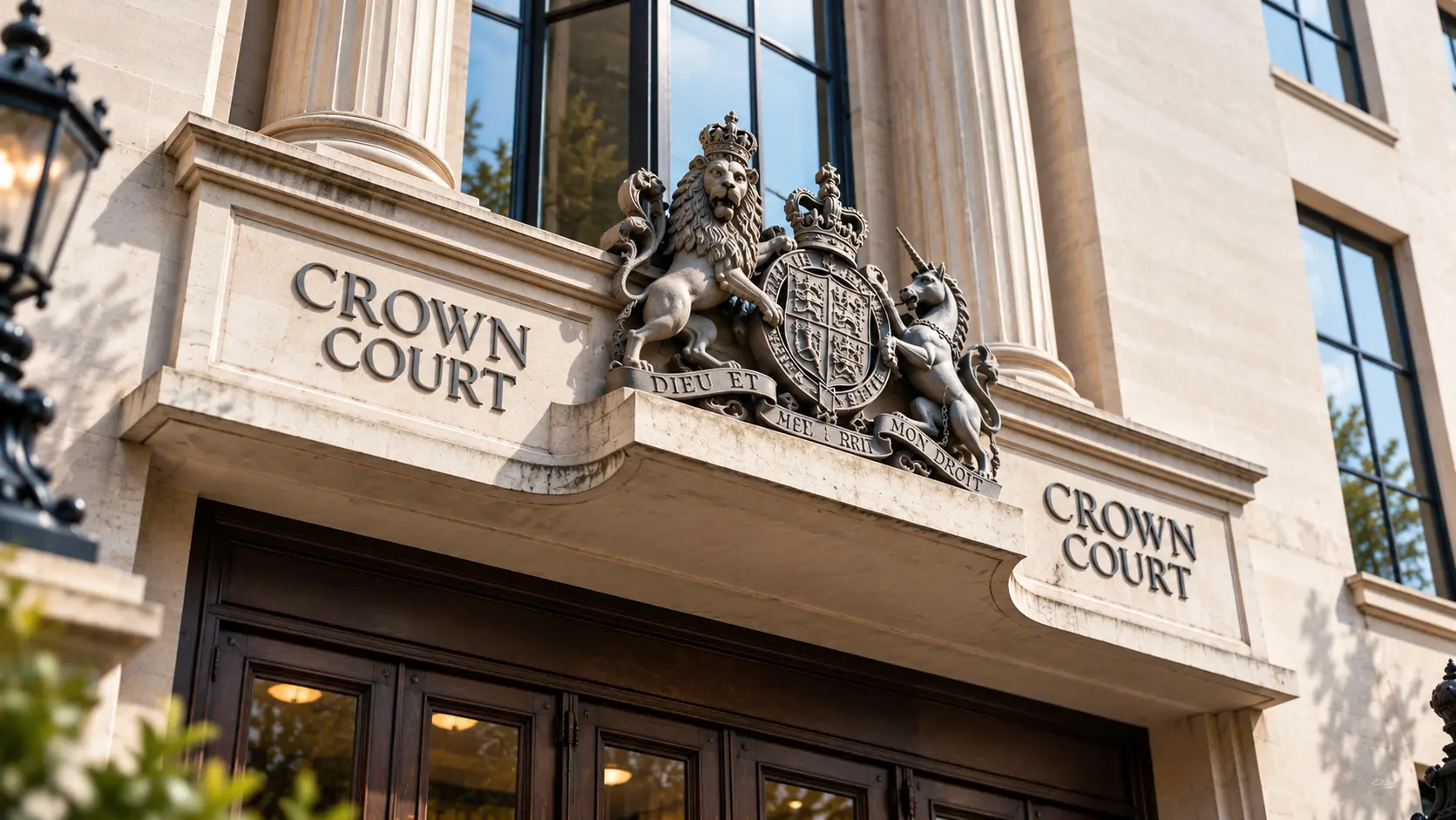

A fraud trial involving a used-car business has been halted after a Crown Court judge found that failures in the handling of seized business records had made a fair trial impossible. The ruling concerns five defendants, all of whom denied the charges.
What did the court decide?
In R (Derby City Council) v Mark Whitfield and others, His Honour Judge James Carter considered a combined defence application to stay the indictment as an abuse of process. The ruling was handed down at Derby Crown Court on 6 October 2026.
The application relied on the first category of abuse of process: that a fair trial was no longer possible. The judge found, on the balance of probabilities, that the prosecution had a clear duty to retain, record, review and disclose relevant material seized during the investigation, and that this duty had been breached.
Judge Carter concluded that the resulting prejudice was identifiable, substantial and permanent. Because neither a jury direction nor attempts to reconstruct the missing evidence could restore the defendants’ ability to challenge the prosecution case, he granted the application and stayed the indictment.
What was the case about?
The indictment arose principally from the activities of Motor House UK (Derby) Ltd, a used-car business. The case also concerned predecessor trading styles and companies, including Derby Car Centre, DCC Derwent Street and Aston Motors, as well as Eaton Investments Derby Ltd.
The prosecution alleged fraudulent trading in counts 1 to 3 and fraud by false representation relating to individual vehicle sales in counts 4 to 35. All charges were denied. The defence position was that the businesses sold many vehicles over an extended period, incurred substantial repair and other expenditure, and had not acted dishonestly.
The abuse-of-process application was heard after the prosecution had closed its case. The judge stressed that this ruling addressed only the abuse application; separate defence submissions that there was no case to answer were to be dealt with separately.
What went wrong with the seized evidence?
On 9 July 2019, Derby City Council Trading Standards officers executed warrants at the business premises and seized substantial documentary and electronic material. The records included vehicle files, workshop and garage invoices, MOT documents, customer and purchase records, expenditure and refund paperwork, accountancy records and business correspondence.
The initial intention was to log and catalogue everything seized, but that process was abandoned. Not all the material was copied or scanned before officers reviewed or returned it, and there was no comprehensive contemporaneous inventory identifying every document. Some sift logs used broad descriptions such as “financial documentation” or “vehicle paperwork” without a full index of their contents.
The judge also identified serious continuity failures. Exhibit bags were not consistently sealed with unique seals, later attempts to reconstruct the records contained errors, and at least one exhibit bag could no longer be located. In one example, a sift log recorded invoices and financial records in exhibit AJK/3, but the original bag was missing and the prosecution could not establish where the material had gone.
A further concern involved Ray Bigg, a contractor who had been heavily involved in the investigation. After his employment ended, original seized documents and other investigation material were returned from his personal possession to Trading Standards. The officer in charge, Donna Dowse, had not known that he had retained the material at home. Some items were returned in unsealed boxes and a carrier bag, and there was no reliable record of what had been removed or whether everything had been returned.
“The Prosecution cannot identify with confidence what was seized, what was copied, what was returned and what has been lost.”
— Summary of the judge’s findings in the approved ruling
The judge found that these were not merely allegations made by the defence. They arose from the evidence of the officer in charge, who accepted that there had been major failings in the logging, sealing and continuity processes.
Why were the missing records important?
The central allegations concerned fraud and dishonesty. Records showing vehicle condition, repairs, MOT work, parts, expenditure, customer complaints and refunds could therefore have helped establish whether work had been carried out and whether representations made during vehicle sales were honestly believed.
The judge rejected the prosecution’s argument that the defence case was speculative. The surviving sift logs showed that categories of documents such as repair invoices, MOT records and expenditure paperwork had existed. The problem was that much of the material could no longer be identified, traced or produced.
One example concerned a letter about a stopped cheque issued to Michael Smith, relevant to count 6. The sift log recorded the letter, but it had not been copied or retained and there was no reliable record that it had been returned. Although the jury bundle included copies of the cheque, the letter explaining the stop could not be found. The defence had to make its own enquiries with the bank, and the information available years later was limited.
Judge Carter considered that the missing records had a significant and demonstrable chance of supporting the defence on live issues, including whether repairs were undertaken, expenditure incurred, refunds were due and trading practices were dishonest. The prosecution retained evidence on which it could rely, while the defendants had lost contemporaneous records that could have been used to challenge it.
Why could the trial not continue?
The prosecution argued that the trial process could still ensure fairness. It suggested that the defence could seek information from garages, suppliers or accountants, use material that had been returned, and rely on a jury direction explaining how the missing documents should be considered.
The judge rejected those proposed solutions. A direction could not identify what was missing, reveal the contents of documents that had disappeared, restore the chain of continuity or perform the disclosure review that should have taken place at the time. Reconstruction from other sources would rely on secondary evidence and could not put the defendants in the position they would have occupied if the original records had been retained.
The judge also found that the failures affected all counts, not only those involving individual vehicle sales. The same missing records and disclosure problems were relevant to the broader allegations of fraudulent trading and to the prosecution’s case about dishonesty across the indictment.
Applying the principles governing limb-one abuse of process, the judge concluded that the defendants had been denied the means of properly challenging the prosecution case. Once he found that a fair trial was no longer possible, no balancing exercise arose: the proceedings had to be stayed.
What does the ruling mean?
The ruling highlights the importance of recording, preserving and reviewing potentially relevant material seized during a criminal investigation. Investigators must be able to account for what they take, what they copy, what they retain and what they return, while meeting disclosure obligations as the case develops.
The decision does not establish that the defendants were innocent of the allegations. It determines that, in the circumstances found by the court, the loss and mishandling of relevant evidence meant the criminal proceedings could not continue fairly. The indictment was therefore stayed as an abuse of process.
Frequently asked questions
Who made the ruling?
His Honour Judge James Carter made the ruling at Derby Crown Court. It was handed down on 6 October 2026.
Why was the indictment stayed?
The court found that relevant seized records had not been comprehensively recorded, copied, reviewed or retained, and that the resulting prejudice to the defence could not be remedied within the trial process.
What kinds of records were missing?
The material included vehicle files, garage and workshop invoices, MOT documentation, expenditure records, refund paperwork and other business records relevant to the fraud allegations.
Could a jury direction have fixed the problem?
No. The judge concluded that directions could not recreate missing documents, establish their contents or restore the disclosure and continuity processes that had been lost.
Does the ruling mean the defendants were found not guilty?
The ruling stayed the indictment because a fair trial was no longer possible. It was not a determination that the defendants were innocent of the allegations.