
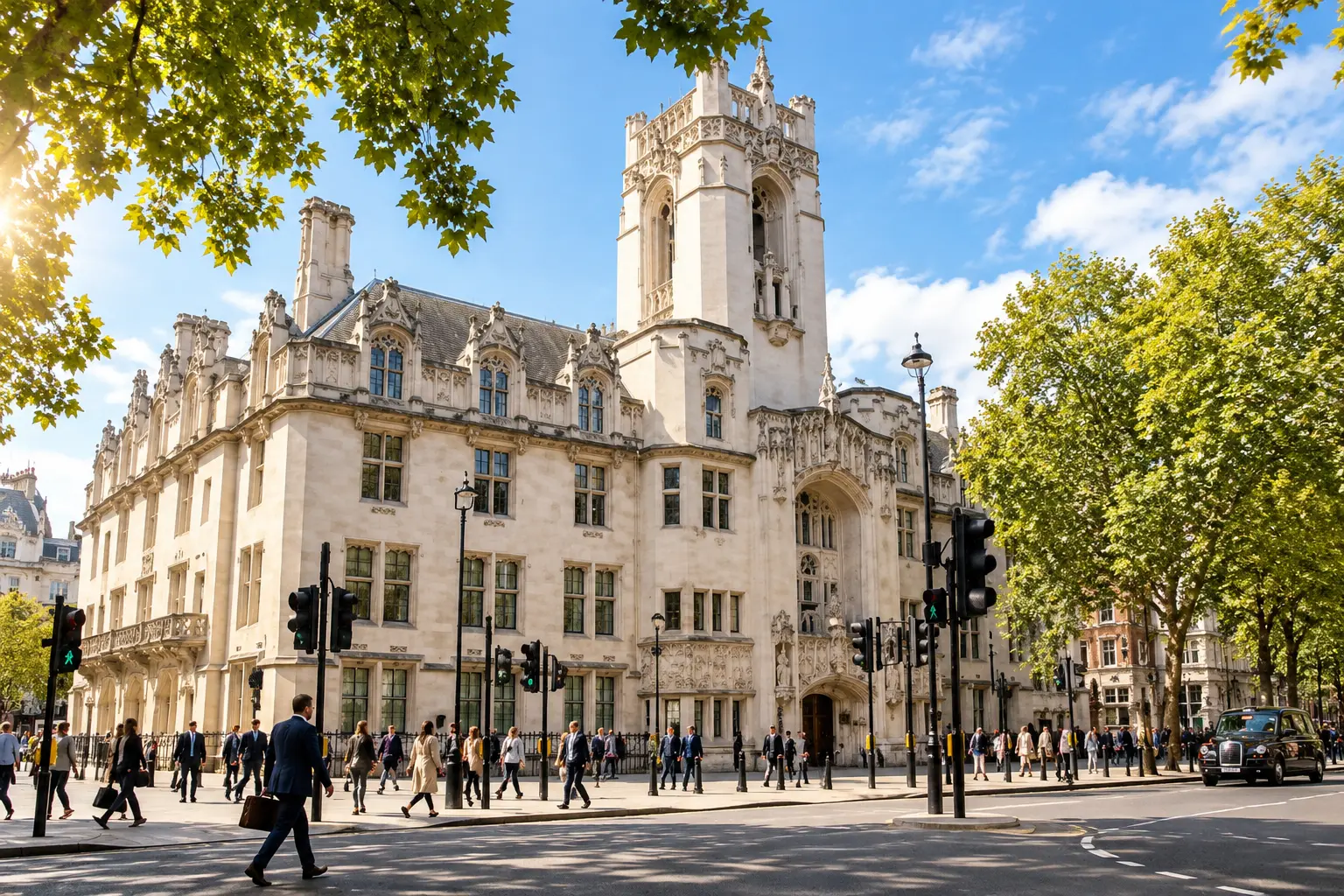

The UK Supreme Court has ruled that ScottishPower could not deduct regulatory redress payments from taxable trading profits where, in substance, those payments were made to avoid substantial financial penalties, in a significant corporation tax decision.
What did the Supreme Court decide?
In ScottishPower (SCPL) Limited and others v Commissioners for His Majesty’s Revenue and Customs [2026] UKSC 35, judgment was given on 21 October 2026. Lady Rose and Lord Doherty delivered the judgment, with which Lord Reed, Lord Stephens and Lady Simler agreed.
The appeal concerned whether ScottishPower could deduct around £28 million in payments made to customers and charities following investigations by the Gas and Electricity Markets Authority (GEMA), acting through Ofgem. The settlements addressed breaches of regulatory obligations relating to sales and marketing, payment-method price differences, energy-saving targets, and customer complaints and billing.
The Court allowed HMRC’s appeal. It held that the redress payments were sufficiently akin to penalties and were not expenses incurred for the purposes of ScottishPower’s trade within section 54(1)(a) of the Corporation Tax Act 2009. The Upper Tribunal’s decision was restored.
What were the redress payments?
Ofgem investigated ScottishPower Energy Retail Limited and other companies in the group over several alleged or admitted regulatory breaches. Rather than face substantial penalties, the companies entered into settlement agreements that required payments for the benefit of consumers and charitable or public-interest organisations. Formal penalties of £1 were imposed under the relevant settlements.
The judgment describes four investigations and their outcomes:
| Investigation | Main issue | Settlement payment or redress |
|---|---|---|
| Mis-selling and marketing | Misleading or inappropriate sales practices, including doorstep and telephone sales | £8.5 million allocated to vulnerable customers and compensation for affected customers, with unused funds directed to a charitable trust |
| Costs reflectivity | Differences between payment methods did not adequately reflect their relative costs | £750,000 to the Energy Best Deal Extra public awareness campaign |
| Community Energy Savings Programme | Failure to meet energy-saving targets under the 2009 Order | £2.4 million paid to a charitable trust |
| Complaints handling and billing | Failures involving complaints handling, billing and related licence conditions | £18 million in consumer redress, including compensation and payments to charities or, if not agreed, the Consolidated Fund |
The judgment explains that the redress payments were made under settlements with GEMA. The key issue was not simply who received the money, but the substance and regulatory context of the payments.
Why did HMRC challenge the deductions?
ScottishPower treated the redress payments as expenses when calculating its trading profits for corporation tax. HMRC disputed that treatment. The parties accepted that if GEMA had imposed fines of the same substantial amounts, those fines would not have been deductible from turnover when computing taxable profits.
ScottishPower argued that the payments were not fines because they were paid to customers, consumer organisations and charities under settlement agreements, while the formal penalties were only £1. The companies said the payments therefore fell within the rules allowing expenses incurred wholly and exclusively for the purposes of a trade.
The case required the Court to consider section 54(1)(a) of the Corporation Tax Act 2009, which prevents a deduction for expenses not incurred wholly and exclusively for the purposes of the trade, and the legal principle that penalties imposed for regulatory breaches are not deductible trading expenses.
Why were the payments treated like penalties?
The Supreme Court focused on the substance of the settlements. It accepted the tribunal’s findings that, if ScottishPower had not agreed to the payments, it was likely to have faced penalties of the same order of magnitude, even allowing for a possible appeal. The payments were therefore made in place of much larger penalties and avoided those penalties being imposed.
The Court rejected the description of the payments as voluntary in a way that would separate them from the penalty process. Although ScottishPower was not compelled to enter into the settlement agreements, the payments arose within a regulatory enforcement process and were closely connected to the penalties Ofgem had indicated it would seek.
Nor did the fact that the money went to consumers or charities, rather than to the Consolidated Fund, change the nature of the payments. The decision notices recorded the regulatory breaches, the consideration of financial penalties, and the role of deterrence and compliance in determining the overall settlement.
“The Redress Payments are sufficiently akin to penalties”
UK Supreme Court, [2026] UKSC 35, paragraph 94
The Court also rejected the argument that payments to directly affected consumers should be treated differently from the rest of the settlement package. It agreed that the £554,013 payment relating to consumers affected by mis-selling formed part of the overall deal negotiated under the threat of a penalty.
What does the judgment mean for businesses?
The decision confirms that tax treatment depends on the substance of a regulatory payment, not merely the label used in a settlement agreement or the identity of the recipient. A payment described as consumer redress may still be non-deductible where it is sufficiently akin to a penalty imposed for breaches of regulatory obligations.
Businesses negotiating regulatory settlements should not assume that payments to customers, charities or consumer organisations will automatically qualify as deductible trading expenses. The relationship between the payment and the regulator’s enforcement powers, the findings of breach, and the penalty that would otherwise have been imposed may all be relevant.
The Court distinguished these payments from ordinary expenditure incurred to improve compliance or resolve operational problems. It noted that there may be cases where the boundary between settlement payments and other compliance expenditure is difficult to draw. However, it considered that the redress payments in this case were identifiable and distinguishable from ScottishPower’s other expenditure.
For tax and regulatory advisers, the judgment is a reminder to examine the legal and factual basis of a payment before treating it as deductible for corporation tax purposes.
Frequently asked questions
Can a company deduct regulatory redress payments from corporation tax?
Not automatically. In this case, the Supreme Court held that the payments were sufficiently akin to penalties and were not deductible trading expenses. The treatment of other payments will depend on their circumstances and substance.
Why were the ScottishPower payments treated like penalties?
The payments were agreed as part of regulatory settlements and avoided the imposition of substantially larger penalties. The Court considered the substance of the arrangements rather than only their formal description.
Did the Supreme Court allow ScottishPower’s appeal?
No. The Court allowed HMRC’s appeal and restored the Upper Tribunal’s decision.
How much money was at issue?
The appeal concerned approximately £28 million in redress payments made to customers and charitable or consumer organisations under four settlements with GEMA.
Which law did the Court apply?
The central provision was section 54(1)(a) of the Corporation Tax Act 2009, which excludes expenses not incurred wholly and exclusively for the purposes of a trade.