
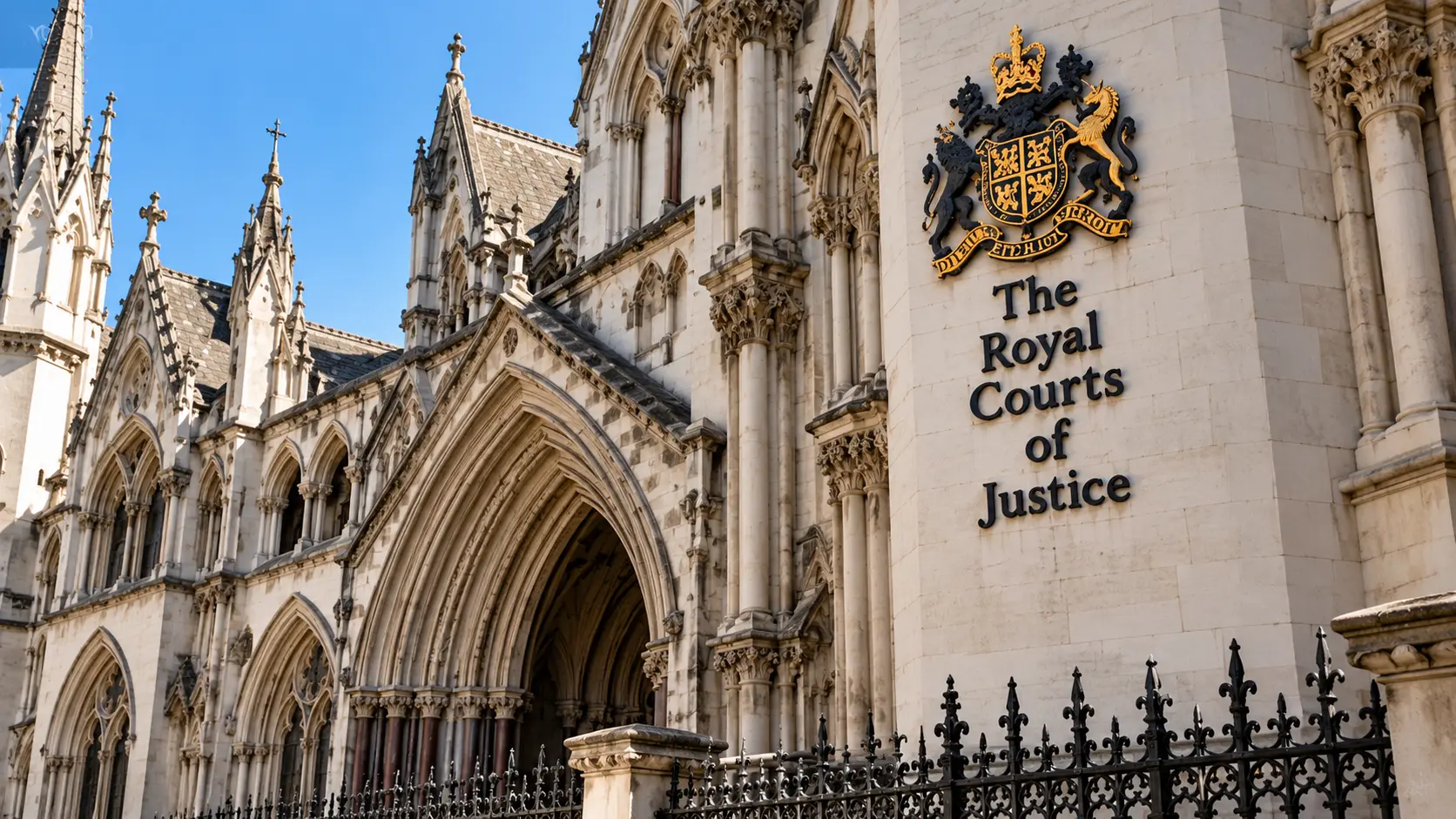

The High Court has dismissed two linked claims against Uber brought by nearly 13,300 London black cab drivers and Justin Peters, who brought a claim as assignee of rights formerly held by two private-hire businesses. The actions alleged that Uber used unlawful means to obtain and operate under a London private-hire operator licence. The claims were rejected on limitation grounds, rather than following a trial of the underlying allegations.
What did the High Court decide?
In Garry White & Ors v Uber London Limited & Ors [2026] EWHC 2651 (Comm), handed down on 19 October 2026, Mr Justice Birt determined a preliminary issue concerning limitation. The question was whether the claimants discovered, or could with reasonable diligence have discovered, the alleged fraud and/or deliberate concealment only after 25 or 26 June 2018.
The judge answered that question in the negative. He found that the claimants could have discovered sufficient facts to plead their case before the June 2018 hearing concerning Uber’s licensing appeal. As the claims were issued more than six years after the relevant period and could not rely on section 32 to postpone limitation, all claims were time-barred.
“They could have discovered it earlier, and more than 6 years before the first of the claim forms was issued.”
— Mr Justice Birt, conclusion
The decision followed a preliminary-issue trial held on 29–30 June and 6 July 2026. The judgment proceeded on the assumption that the claimants’ pleaded allegations were true for the purpose of deciding limitation. That assumption was not a finding against Uber on the merits.
What were the claims about?
The claimants alleged that Uber and companies within its group conspired to cause them loss through unlawful means between mid-2012 and 14 March 2018. The alleged conduct included fraudulent misrepresentations and deliberate, dishonest non-disclosure to Transport for London (TfL) about Uber’s booking and operating system and the use of certain technologies.
The black cab drivers argued that, without the alleged conduct, Uber would not have obtained a private-hire vehicle operator licence and would not have competed with them for journeys in London. Uber denied the allegations in their entirety.
The two claim forms were issued on 2 May 2024 and 24 June 2024. The drivers’ action was brought on behalf of nearly 13,300 individuals. The second action was brought by Mr Peters as assignee of claims connected with Kabbee Exchange Limited, which had been dissolved, and Iride London Limited, which was in liquidation.
Why did the limitation issue arise?
It was accepted that the ordinary six-year limitation period had expired before the claim forms were issued. The claimants therefore relied on section 32(1)(a) and/or section 32(1)(b) of the Limitation Act 1980, which can postpone the running of time in cases involving fraud or deliberate concealment until the relevant facts have been discovered or could, with reasonable diligence, have been discovered.
The claimants argued that the key material became public during the re-determination of Uber London’s licence application in late June 2018. They said that the evidence and judgment from that hearing were important to understanding the alleged misrepresentations and concealment.
Uber’s position was that enough information was already in the public domain, or could have been found through reasonable investigation, before that date. The court’s task was to decide the discoverability question, not to determine whether the alleged conspiracy had actually occurred.
What information was available before 2018?
The judgment reviewed years of public debate and regulatory scrutiny over how Uber accepted bookings in London. Questions had been raised by trade associations and others about whether bookings were accepted by Uber London or by drivers, and whether the arrangements complied with the Private Hire Vehicles Act 1998.
- Solicitors acting for the Licensed Private Hire Car Association wrote to TfL raising alleged regulatory breaches, including concerns about who accepted bookings.
- The High Court ruled in the “Taximeter” litigation that Uber’s apps did not amount to a taximeter under the relevant legislation.
- TfL announced that it would not renew Uber London’s operator licence, finding that it was not satisfied Uber London was a fit and proper person to hold it.
- The Licensed Taxi Drivers’ Association published TfL’s decision letter, which stated that Uber’s explanations about its booking process had been materially false and misleading.
- Press reports discussed allegations that Uber had used “Ripley” software to restrict access to data during raids by authorities.
- The High Court held that the claims were time-barred.
The judge considered the TfL decision letter particularly important. It identified the representations TfL regarded as misleading and described the results of a technical review of Uber’s booking system. The judgment also considered the reporting about Ripley in January 2018. Taken together, the material available by then was sufficient, in the court’s view, to allow the claimants to plead their case without waiting for the later licensing-appeal hearing.
What does the judgment mean?
The ruling highlights the distinction between actually knowing enough to bring a claim and being able to discover the relevant facts by exercising reasonable diligence. Under section 32, limitation is not necessarily postponed until a claimant has gathered every piece of evidence or obtained legal advice confirming the strength of a claim.
Mr Justice Birt concluded that sufficient information was available before 25 June 2018. As that was more than six years before the first claim form was issued, the statutory postponement did not save the claims. The conclusion applied to both actions and led to their dismissal in full.
Importantly, the judgment does not establish that Uber committed the alleged fraud or unlawful means conspiracy. Those allegations were denied, and the court did not determine their truth because the limitation issue was dispositive.
Frequently asked questions
Why were the claims dismissed?
The court found that the claimants could, with reasonable diligence, have discovered the alleged fraud or deliberate concealment before June 2018. The claims issued in 2024 were therefore outside the applicable limitation period.
Did the High Court decide that Uber had misled TfL?
No. The trial dealt with a preliminary limitation issue. The pleaded allegations were assumed to be true only for the purpose of that issue; the court did not make a final finding that Uber committed the alleged wrongdoing.
What is section 32 of the Limitation Act 1980?
Section 32 can postpone the start of a limitation period in certain cases involving fraud or deliberate concealment until the relevant facts are discovered, or could with reasonable diligence have been discovered.
How many claimants were involved?
The main action involved nearly 13,300 London black cab drivers. A separate action was brought by Justin Peters as assignee of rights connected with two former private-hire businesses.
Can the claimants appeal?
The judgment records the High Court’s decision on the preliminary issue. Any later appeal or further procedural development should be checked against subsequent court records and statements from the parties.