
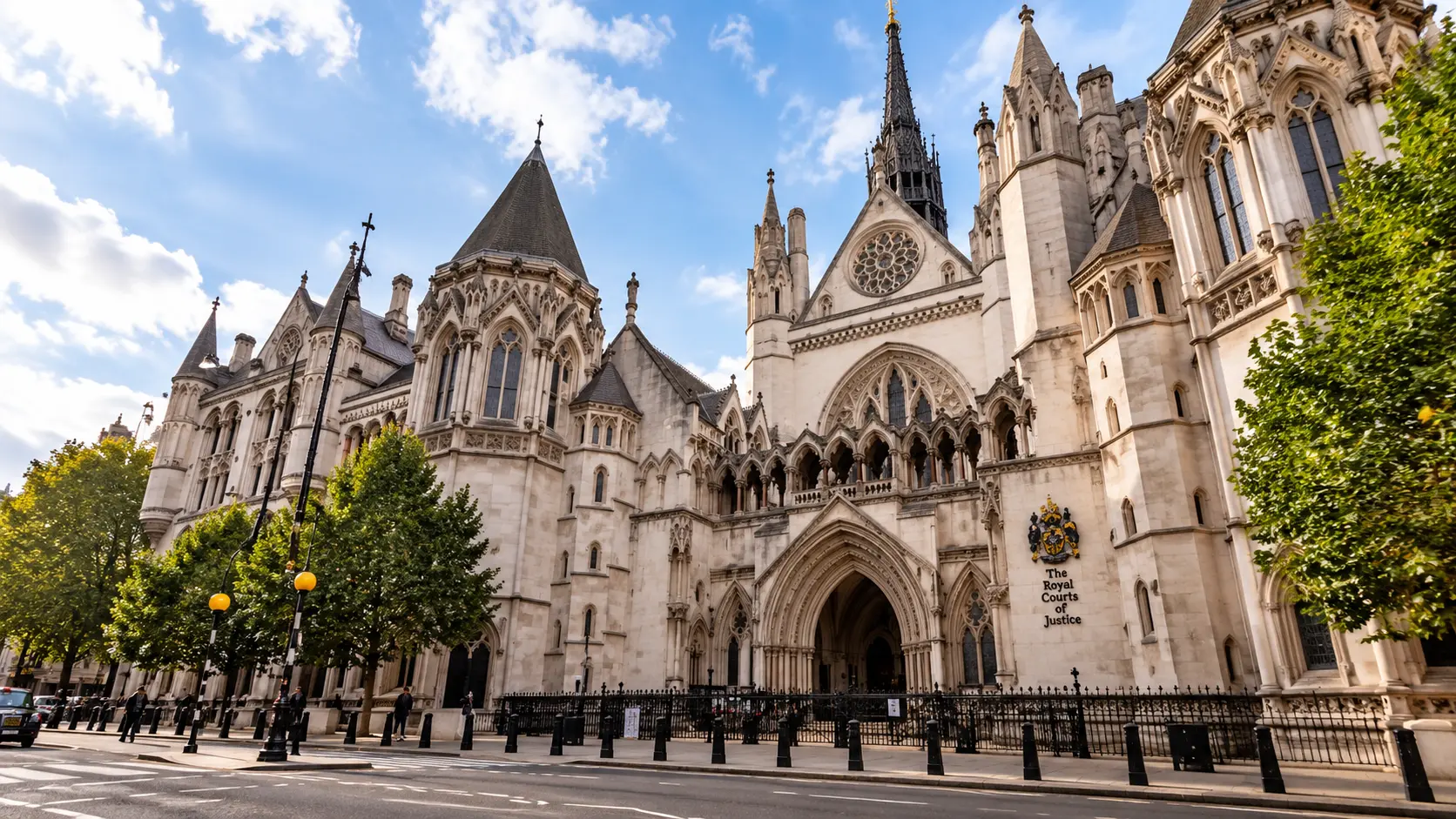

The High Court has ruled that a series of Home Office decisions treating an anonymised asylum claimant, EXR, as an adult were unlawful, finding that the department had unreasonably relied on local authority age assessments and had seriously breached its duty of candour during litigation over his proposed removal to France.
What did the High Court decide?
In R (EXR) v Secretary of State for the Home Department (No. 3) [2026] EWHC 2527 (Admin), handed down on 16 October 2026, Fordham J considered the reasonableness of a series of age decisions and whether the Home Secretary had complied with the duty of candour.
EXR arrived in the United Kingdom by small boat in September 2025 and initially gave a date of birth in July 2000, presenting himself as 25. He later said he was born in July 2008 and was 17. The distinction mattered because unaccompanied children were excluded from the UK-France Treaty 2025 removal scheme for child-safeguarding reasons.
The court found that the initial decisions of 30 September and 13 October 2025 were reasonable in the circumstances then known. However, later decisions relying on Hillingdon Council’s age assessments were unreasonable. The court allowed the judicial review and declared unlawful the relevant decisions maintaining the adult assessment, the inadmissibility decisions and the proposed removals scheduled for 18 December 2025, 5 March 2026 and 26 March 2026.
Why were the age assessments unlawful?
A central issue was whether the Home Office could reasonably treat Hillingdon Council’s assessment as compliant with the principles established in R (B) v London Borough of Merton. The Home Office’s own Assessing Age Guidance required decision-makers to satisfy themselves that a local authority assessment had followed the relevant legal and procedural requirements before relying on it as decisive.
The court identified a fundamental omission in Hillingdon’s November 2025 assessment: it did not address the scanned birth certificate EXR had provided. The Home Secretary ultimately conceded that this made the assessment non-compliant. The assessment also left unanswered whether the claimant had been given the benefit of the doubt, and the court identified concerns about the adequacy of enquiries into information that could have been obtained from his uncle and cousin.
There was also no reasoned Home Office decision explaining why the local authority assessment was accepted. An ATLAS entry dated 24 November 2025 recorded “No” when asked whether there was sufficient evidence that the assessment was Merton-compliant. Despite that record, the Home Office subsequently relied on the assessment. Fordham J considered the entry highly important and said it should have prevented removal until the non-compliance issue had been investigated.
“The SSHD’s decisions on the Claimant’s age are declared unlawful and quashed”
— Order, [2026] EWHC 2527 (Admin)
A later review did not cure the defects. The court found that the process was unfairly restricted to two documents and failed to address other relevant evidence, including a witness statement. The Home Office therefore could not reasonably rely on the local authority assessments as Merton-compliant under its own policy.
What went wrong with disclosure?
The judgment separately examined the Home Office’s duty of candour at the points when removals were being pursued. The duty required relevant information and material facts to be disclosed to the claimant and the court, including at the pre-action stage.
For the proposed removal on 18 December 2025, the department failed to disclose the ATLAS record showing the adverse Merton-compliance finding. For the later proposed removals, the court found that relevant records and correspondence between the Home Office and Hillingdon Council from January 2026 were also not disclosed in time. These materials directly supported the claimant’s challenge to the assessments and the fairness of the review process.
The judge found serious breaches of candour in connection with all three proposed removal dates. The failure to disclose was particularly concerning because the claimant’s representatives continued to seek relevant documents and the Home Office had sought to discharge an injunction restraining removal. The court observed that the consequences could have been disastrous had EXR been removed before the issues were resolved.
What does the judgment mean for removals to France?
The decision underlines that age assessments in removal cases must be reasoned, procedurally fair and attentive to evidence that may affect whether a person is a child. Where a local authority assessment is relied upon, the Home Office must independently consider whether it complies with the applicable legal principles; it cannot treat the assessment as conclusive without that scrutiny.
The case also demonstrates the importance of accurate case records and timely disclosure in judicial review proceedings. An internal record contradicting the position taken in a decision letter, or correspondence that reveals how a review was conducted, may be central to assessing the lawfulness of a decision.
Fordham J acknowledged that there were features that could support the Home Office’s view of EXR’s age, including his initial statements and concerns about the birth certificate evidence. Nevertheless, the court concluded that the identified public-law errors meant the challenged decisions could not stand.
What happens next?
The court’s order allowed the judicial review and quashed the relevant age decisions. It also declared unlawful the decisions to treat EXR’s asylum claim as inadmissible for examination in the UK and the decisions to remove him to France under the treaty. The Home Secretary was ordered to pay the claimant’s costs arising from the age issues, with a 35% payment on account due within 28 days of service of a schedule of costs.
The court directed the Home Secretary to file a witness statement, and any further written submissions, addressing the identified breaches of the duty of candour by 16 November 2026. The claimant may respond by 27 November, and the Home Secretary may reply by 4 December 2026.
Frequently asked questions
What did the High Court rule in EXR’s case?
The court allowed the judicial review challenge and declared unlawful several Home Office decisions treating EXR as an adult, maintaining the inadmissibility decision and proposing his removal to France.
Why was the local authority age assessment considered defective?
Hillingdon Council’s assessment did not address a scanned birth certificate, and the process did not adequately resolve issues about the benefit of the doubt and further enquiries. The Home Office also lacked a reasoned record explaining its reliance on the assessment.
What is the duty of candour in judicial review?
It requires a public authority to provide relevant information and material facts to the court and the other party. The judgment found serious breaches involving the non-disclosure of relevant ATLAS records and correspondence.
Were the proposed removals to France lawful?
No. The court declared the decisions to remove EXR on 18 December 2025, 5 March 2026 and 26 March 2026 unlawful.