
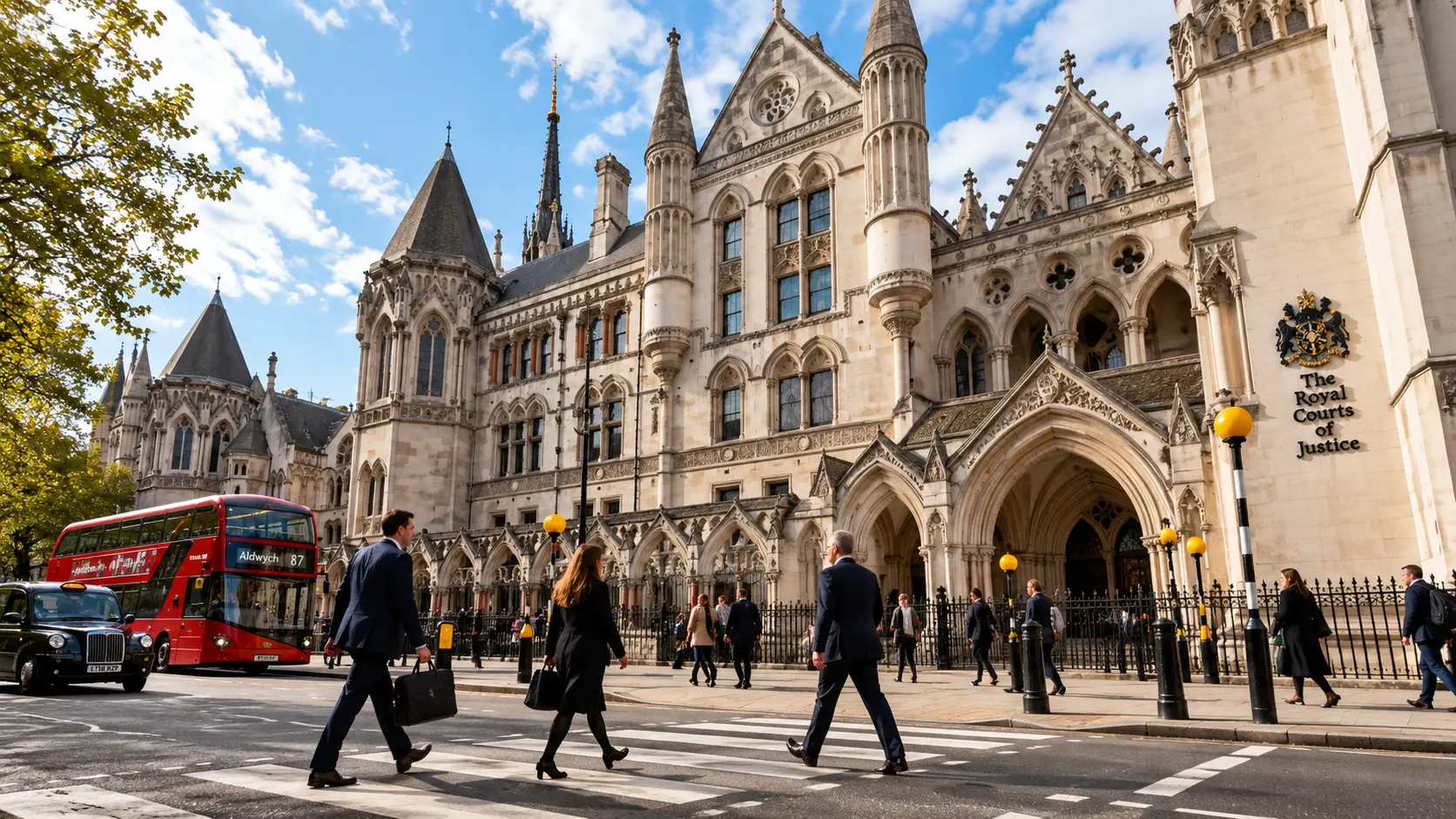

The Court of Appeal has clarified the meaning of “outstanding” in the statutory tax relief available for certain irrecoverable loans to traders, ruling that a debt released in exchange for shares cannot qualify simply because those shares have little or no market value.
What did the Court of Appeal decide?
In Timothy Bunting v The Commissioners for His Majesty’s Revenue and Customs [2026] EWCA Civ 1331, handed down on 16 October 2026, Lord Justice Newey, with Lord Justice Phillips and Lord Justice Miles agreeing, dismissed Mr Bunting’s appeal.
The issue was whether Mr Bunting could claim relief under section 253 of the Taxation of Chargeable Gains Act 1992 (TCGA) for £2.2 million he had lent to a trading company and later released in exchange for shares. Section 253 allows qualifying lenders to be treated as having an allowable capital loss where an outstanding amount of loan principal has become irrecoverable, subject to statutory conditions.
The court agreed with the Upper Tribunal that the amount must remain legally due at the time the relief claim is made. Because the debt had been released as part of the share issue, that portion of the loan was no longer outstanding for the purpose of the provision.
What does “outstanding” mean under section 253?
The central question was whether an “outstanding amount” means money that has not in fact been recovered, or an amount that remains legally payable by the borrower. Mr Bunting argued for the former interpretation, submitting that the provision was intended to help lenders who would never see the money again.
Lord Justice Newey considered that the wording naturally points to a continuing legal liability. A debt described as outstanding ordinarily remains due and has not been discharged or released. If a lender has released the debt, it is difficult to say that the same amount remains outstanding, even if the lender received shares that were economically worthless.
The judgment also referred to other parts of section 253. These provisions address the claimant’s right to recover the amount and the treatment of later recoveries of money or money’s worth. In the court’s view, that context supported the conclusion that an outstanding amount must be legally recoverable in principle, even if it has become irrecoverable in practice.
For section 253 relief, an amount is “outstanding” only where there remains a legal right to pursue it.
The court acknowledged that this interpretation could produce difficult outcomes in some insolvency situations, for example where a company is dissolved before a claim is made. It nevertheless concluded that such possible consequences did not outweigh the statutory language and context.
Why was the earlier Crosby approach not followed?
Mr Bunting relied on Crosby v Broadhurst, a decision in which the Special Commissioners had accepted a claim for relief after trustees waived loans to a financially distressed company. That decision treated the statutory purpose as providing relief to lenders who would not receive the money back and considered that the legislation did not expressly require the loan to remain subsisting.
The First-tier Tribunal adopted a similar approach in Mr Bunting’s case, reasoning that the debt had not been paid in any meaningful economic sense because the shares received in exchange had no significant value. The Upper Tribunal disagreed, holding that the released amount was no longer outstanding because there was no continuing obligation to pay it and no right to pursue it.
The Court of Appeal upheld the Upper Tribunal’s interpretation. Lord Justice Newey concluded that the construction in Crosby, later endorsed by the First-tier Tribunal, was erroneous. The statutory condition is not satisfied merely because the lender has not recovered equivalent economic value; the relevant amount must still be legally due when the claim is made.
What does the judgment mean for lenders?
The decision is relevant to lenders considering capital loss relief on loans made to trading businesses. It shows that the legal steps taken to restructure, release or capitalise a debt can affect whether the statutory conditions for relief remain satisfied.
Where a creditor converts debt into shares or agrees to release a liability, the value of the consideration received may not be decisive for the “outstanding amount” question. A share issue may extinguish the lender’s legal claim to the released debt even if the shares themselves have negligible or no market value.
Lenders and their advisers should therefore assess the legal effect and timing of any debt capitalisation, waiver or restructuring alongside the borrower’s financial position. The judgment does not determine every possible issue arising under section 253, including all questions about guarantors or insolvency procedures, which may depend on the facts of a future case.
Frequently asked questions
What was the outcome in Bunting v HMRC?
The Court of Appeal dismissed Mr Bunting’s appeal on 16 October 2026. It held that the released £2.2 million was not an outstanding amount for the purpose of section 253.
What is section 253 relief?
Section 253 of the Taxation of Chargeable Gains Act 1992 provides a form of allowable capital loss relief for certain qualifying loans to traders where outstanding loan principal has become irrecoverable and the statutory conditions are met.
Why did the share issue matter?
Mr Bunting released £2.2 million of the company’s debt in return for shares. The court held that this release extinguished the legal liability for that amount, so it was no longer outstanding, regardless of the shares’ market value.
Did the Court of Appeal follow Crosby v Broadhurst?
No. The court held that the interpretation adopted in Crosby and by the First-tier Tribunal was erroneous. It agreed that section 253 requires the relevant amount to remain legally due when the claim is made.