
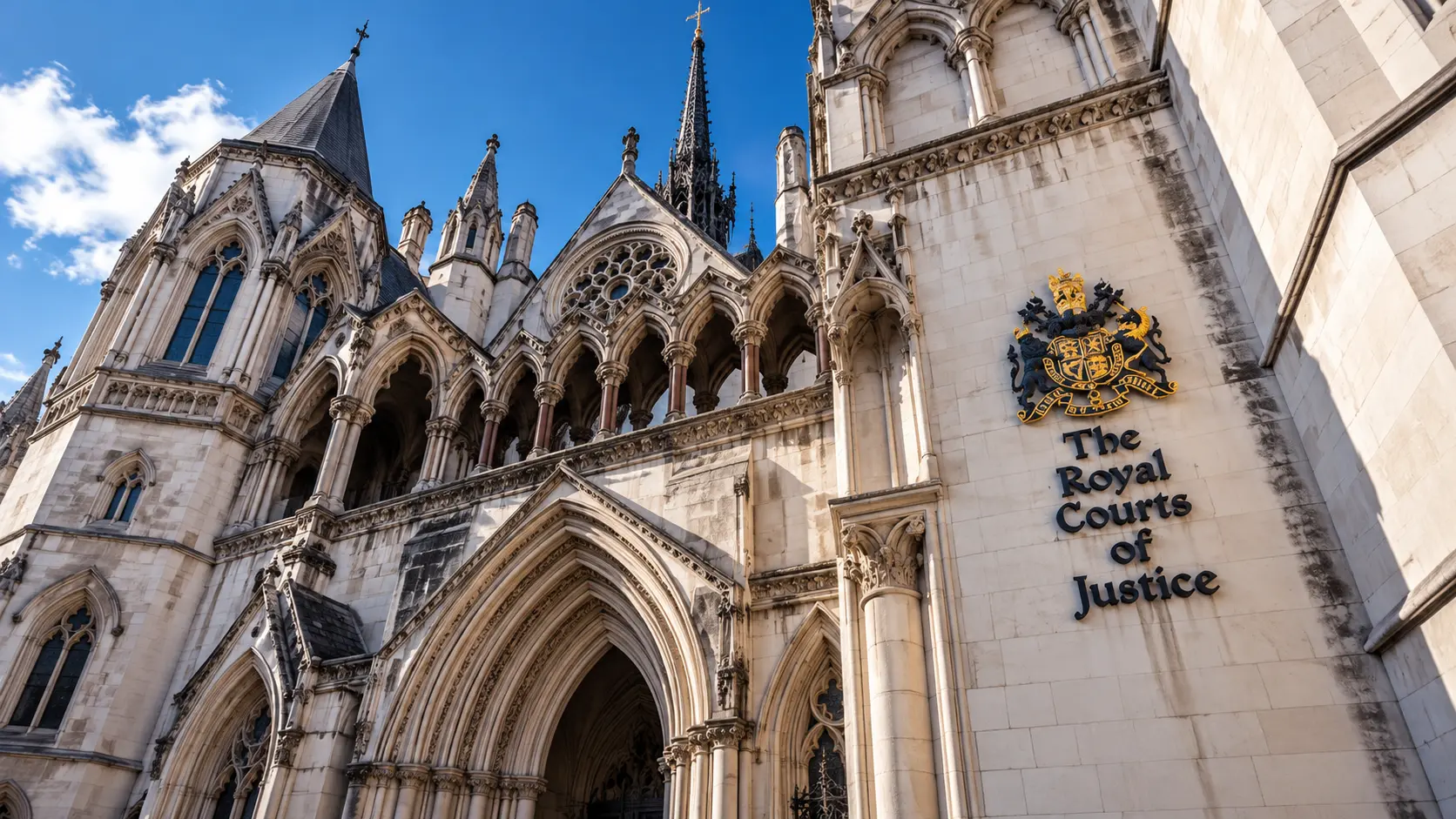

The High Court has ruled that serious procedural errors occurred after a County Court judge conducting an Early Neutral Evaluation went on to enter judgment in the underlying dispute. The Administrative Court found that confidential ENE information was improperly passed to and relied on by a Circuit Judge when refusing permission to appeal.
What did the High Court decide?
In R (on the application of Igor Mozolevsky) v The County Court at Newcastle Upon Tyne [2026] EWHC 2639 (Admin), Mrs Justice Hill allowed the judicial review claim. The judgment, handed down on 15 October 2026 following a hearing on 8 October, concerned a Circuit Judge’s decision of 4 July 2025 refusing permission to appeal against a District Judge’s order made after an ENE appointment on 11 June 2025.
The High Court held that the Circuit Judge should not have sought information about the ENE from the District Judge, that the District Judge should not have provided it, and that the Circuit Judge should not have relied on it. The resulting procedural failures meant the claimant had not received a fair hearing of his permission application before an independent and impartial tribunal, contrary to Article 6(1) of the European Convention on Human Rights and section 6 of the Human Rights Act 1998.
How did the dispute arise?
Northumbrian Water Ltd began a money claim against Igor Mozolevsky in late 2024. The claim was transferred to Newcastle County Court and allocated to the Small Claims Track. An order dated 10 April 2025 listed a conciliation appointment and ENE for 11 June 2025. It also stated that the judge conducting the ENE would not be the judge conducting the final hearing.
The District Judge conducted the ENE on 11 June 2025 but later that day entered judgment for Northumbrian Water Ltd, ordering Mr Mozolevsky to pay £288.54. He sought permission to appeal, arguing that the judge’s role as neutral evaluator was inconsistent with making a final order and that the process infringed his right to an independent and impartial tribunal.
- Northumbrian Water Ltd starts a money claim against Mr Mozolevsky.
- The claim is allocated to the Small Claims Track and an ENE appointment is listed.
- The ENE takes place; the District Judge then enters judgment for £288.54.
- The Circuit Judge refuses permission to appeal and certifies the application as totally without merit.
- Permission to bring judicial review proceedings is granted.
- The High Court allows the judicial review and grants permission to appeal the District Judge’s order.
Why was the ENE process confidential?
The judgment explains that Early Neutral Evaluation involves an independent person expressing an assessment of a dispute or particular issues. Its approach can be tailored to the case and may be conducted on written material, at an oral hearing, or through a combination of both.
Drawing on Telecom Centre (UK) Ltd v Thomas Sanderson Ltd (Early Neutral Evaluation) [2020] EWHC 368 (QB), the court noted that ENE is confidential. The judge conducting it should not ordinarily go on to try the case or deal with contentious applications, unless the parties agree. The outcome is normally without prejudice and non-binding unless the parties agree otherwise, and the papers considered during ENE are returned to the parties rather than retained on the court file.
Confidentiality and separation of roles are central safeguards in the ENE process.
In this case, the order of 10 April 2025 expressly provided that the judge conducting the ENE would not be the judge conducting the final hearing. Mrs Justice Hill held that the District Judge’s later final judgment was inconsistent with that arrangement and with the principles governing ENE.
Why did the judicial review succeed?
Judicial review of a Circuit Judge’s decision refusing permission to appeal is available only in very exceptional circumstances. The court considered authorities including Sivasubramaniam v Wandsworth County Court, R (Strickson) v Preston County Court and R (Cart) v The Upper Tribunal, which set a high threshold involving jurisdictional error or a fundamental collapse of fair procedure.
Mrs Justice Hill concluded that the threshold was met. The Circuit Judge had relied on information obtained from the ENE when deciding that the claimant had admitted the debt and that judgment had properly been entered. The High Court held that even if an admission had been made during the ENE, it should have remained confidential unless Mr Mozolevsky had agreed to be bound by it.
The court found that the Circuit Judge should not have asked the District Judge for information about the ENE, and the District Judge should not have supplied it. The Circuit Judge also erred in treating it as appropriate for the District Judge to enter final judgment as a result of the ENE. These failings amounted to jurisdictional error and, alternatively, a frustration of the judicial process and a wholly exceptional collapse of fair procedure.
The claim succeeded on grounds alleging procedural impropriety and irrationality in seeking and taking account of ENE information, as well as the resulting breach of the right to a fair hearing under Article 6(1). The court rejected the separate Article 8 argument and did not find that the Circuit Judge had failed to give adequate reasons, although those reasons did not withstand judicial review scrutiny.
What remedies did the court order?
The High Court quashed the Circuit Judge’s decision of 4 July 2025. It also substituted its own decision granting Mr Mozolevsky permission to appeal the District Judge’s order of 11 June 2025, finding that the only proper decision on the material before the Circuit Judge was that the appeal had a real prospect of success.
The court did not itself set aside the District Judge’s order. Instead, it directed that the appeal should be heard by a Circuit Judge from a different court centre who had not previously dealt with the case. Court staff were also ordered to remove all records of the 11 June 2025 ENE from the Newcastle County Court file.
Mrs Justice Hill declined to award the £10 in nominal damages sought for the alleged Convention breaches, finding that damages were not necessary to afford just satisfaction in light of the other relief granted. She also refused the claimant’s application for £1,477.50 in court fees and travel costs, applying the general approach where a court defendant adopts a neutral position in judicial review proceedings.
Frequently asked questions
What is Early Neutral Evaluation?
ENE is a process in which an independent evaluator, often a judge, gives an assessment of a dispute or particular issues to help the parties understand the merits and potentially settle the case.
Can the judge who conducts an ENE later decide the case?
Ordinarily, the ENE judge should not subsequently try the case or deal with contentious applications unless the parties agree. In this case, the court order expressly said the ENE judge would not conduct the final hearing.
What did the High Court order?
It quashed the Circuit Judge’s refusal of permission to appeal, substituted a decision granting permission, directed that the appeal be heard by a different Circuit Judge, and ordered the ENE records removed from the court file.
Did the High Court set aside the £288.54 judgment?
No. The High Court granted permission to appeal the District Judge’s order but held that the appeal itself should be heard by a Circuit Judge from a different court centre.
Were damages or costs awarded?
No. The court declined to award nominal damages and refused the requested costs against the County Court, which had adopted a neutral position in the judicial review proceedings.