
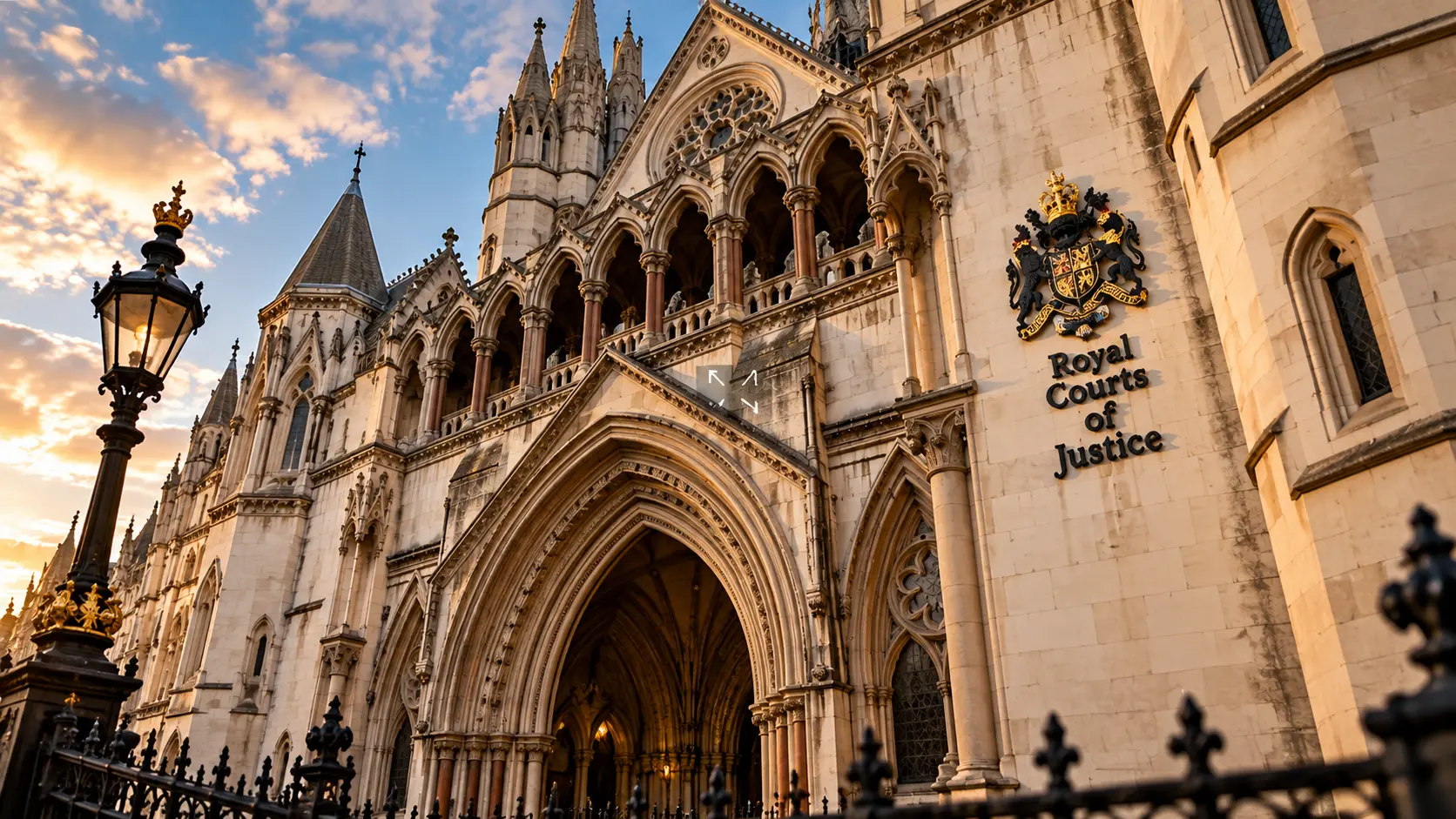

The Court of Appeal has clarified that people affected by wrongful allegations of cheating in an English-language test are not automatically entitled to indefinite leave to remain years later. In a judgment handed down on 15 October 2026, the court held that the Home Secretary was entitled to consider the full history of MD Shahadat Hossain’s immigration case.
What did the Court of Appeal decide?
In The Secretary of State for the Home Department v MD Shahadat Hossain [2026] EWCA Civ 1310, Lords Justice Newey, Singh and Baker allowed the Secretary of State’s appeal against an Upper Tribunal decision made by Judge Neville on 17 October 2025.
The Upper Tribunal had quashed the Home Office’s refusal of Mr Hossain’s ILR application, concluding that he should be treated as meeting the continuous lawful residence requirement in paragraph 276B of the Immigration Rules. The Court of Appeal disagreed with the tribunal’s interpretation of earlier case law and held that the Secretary of State’s decision to grant limited leave rather than ILR was within her discretion.
The court therefore set aside the order quashing the refusal decision and dismissed the judicial review. It emphasised, however, that Mr Hossain’s latest application for leave to remain and his current leave under section 3C of the Immigration Act 1971 were not affected by the appeal.
What is the background to the case?
Mr Hossain, a Bangladeshi national, entered the UK on 18 October 2009 with entry clearance as a Tier 4 General Student. His leave was later extended to 31 July 2014. An application for further leave was refused on 7 May 2014 because the Home Office alleged that he had obtained an English-language certificate by deception in the Test of English for International Communication (TOEIC).
He challenged the decision through judicial review, but permission was refused and the claim was certified as totally without merit. He was detained and later released on immigration bail. In December 2015, he failed to comply with reporting requirements and absconded from bail.
Following later immigration proceedings, the First-tier Tribunal found in March 2023 that Mr Hossain had not used deception in the English-language test. The Home Office granted him 30 months’ limited leave to remain in November 2023. He applied for ILR in December 2023, but the application was refused on 29 December 2023.
- — Mr Hossain enters the UK as a Tier 4 student.
- — Further leave is refused following the TOEIC deception allegation.
- — He absconds from immigration bail by failing to comply with reporting requirements.
- — The First-tier Tribunal finds that he did not use deception in the test.
- — The Home Office grants 30 months’ limited leave.
- — The ILR application is refused.
- — The Court of Appeal allows the Home Secretary’s appeal.
Why did the earlier TOEIC cases matter?
The appeal concerned the legal approach following the widespread TOEIC cheating allegations that emerged in 2014. In Ahsan v Secretary of State for the Home Department [2017] EWCA Civ 2009 and Khan v Secretary of State for the Home Department [2018] EWCA Civ 1684, the Court of Appeal addressed the remedies available to people who had been wrongly accused of cheating.
The Upper Tribunal treated that guidance as establishing that Mr Hossain should be put in substantially the same position as if the original decision had been quashed. The Court of Appeal held that this reading went too far. The guidance in Ahsan was expressly qualified, and the agreement recorded in Khan did not bind the Home Secretary in every future case regardless of its facts.
The central question was not whether the earlier allegation had been wrong, but how that injustice should be taken into account when deciding a later application for leave to remain.
— Summary of the Court of Appeal’s reasoning
The court said that the impact of a wrongful decision must be considered, but intervening events over the years may also be relevant. Later applications must be assessed on their own facts rather than by applying an automatic rule that disregards everything that happened after the original refusal.
Why was the Home Secretary’s appeal allowed?
The Secretary of State advanced two grounds: that the Upper Tribunal had misunderstood or misapplied Ahsan and Khan, and that it had impermissibly intruded into the discretion reserved to the Secretary of State.
The Court of Appeal accepted that the Upper Tribunal was wrong to conclude that Mr Hossain unquestionably belonged to the group entitled to the remedy discussed in Ahsan. His circumstances had to be considered as a whole, including the original wrongful TOEIC allegation, his failure to appeal the refusal of permission to challenge the 2014 decision, his absconding from immigration bail, and the significant delay before he took steps to regularise his immigration status.
The court rejected the argument that absconding had to be excused because Mr Hossain faced difficult options at the time. It said that the rule of law requires people to comply with legal obligations, including bail conditions, even where the underlying decision may later prove to have been wrong. The Secretary of State was entitled to take that conduct into account and the court found no basis for challenging the weight given to it.
The court also held that the Secretary of State was entitled to consider the delay in making further applications. Mr Hossain made an asylum claim in July 2018, later withdrew it, and did not make another application to regularise his status until 2021. The court concluded that the historical injustice had been properly considered and that granting 30 months’ limited leave was a rational exercise of discretion.
What happens next for Mr Hossain?
The Court of Appeal’s ruling does not decide the outcome of Mr Hossain’s latest application for leave to remain. His current section 3C leave also remains unaffected while that application is pending.
The court anticipated that the Home Secretary would take account of both the initial period of around four and a half years during which Mr Hossain lived in the UK as a student and the period of leave he had enjoyed since 2023. The decision on the pending application remains for the Secretary of State to make.
For immigration practitioners, the judgment underlines that a past administrative injustice is an important factor, but it does not automatically dictate the outcome of every later immigration application. The decision-maker must consider the injustice alongside the applicant’s subsequent history and all other relevant circumstances.
Frequently asked questions
Did the Court of Appeal grant Mr Hossain indefinite leave to remain?
No. The court allowed the Home Secretary’s appeal, set aside the order quashing the refusal, and dismissed the judicial review.
Why was the original refusal of leave important?
The 2014 refusal relied on an allegation that Mr Hossain had used deception in a TOEIC English-language test. A later tribunal found that he had not used deception, and the resulting historical injustice had to be considered in later decisions.
Did the court say the Home Office could ignore the earlier injustice?
No. The court said the historical injustice had to be taken into account, but it could be considered alongside later events, including absconding from immigration bail and delay in making further applications.
Does the ruling affect Mr Hossain’s current immigration application?
No. The court expressly stated that the appeal did not affect his latest application for leave to remain or his current section 3C leave. The pending application remains for the Secretary of State to determine.