
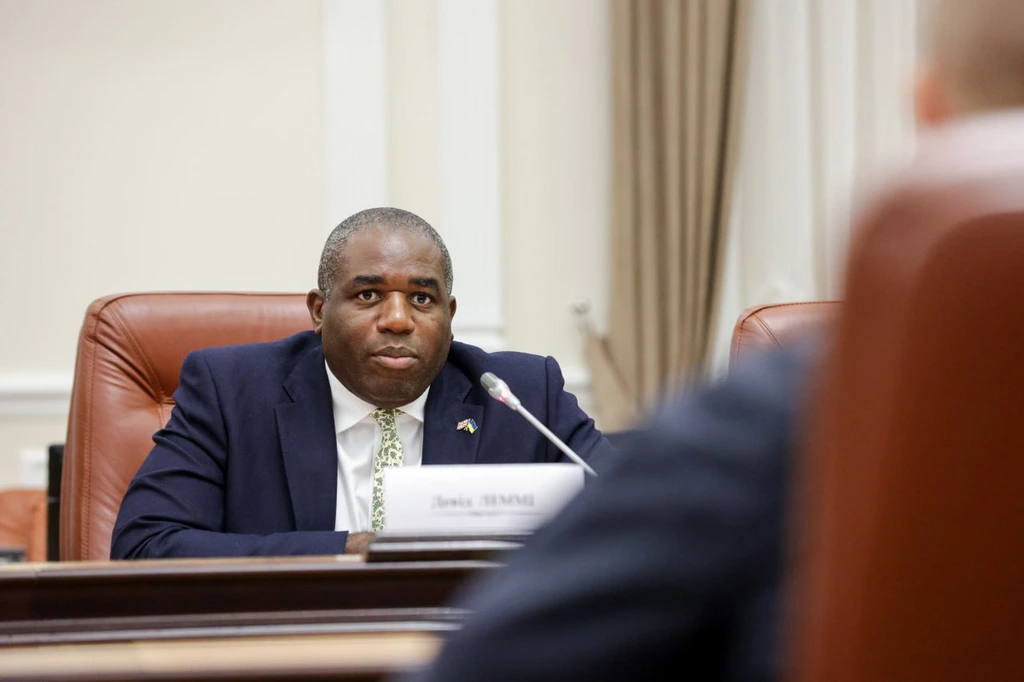

UK and Irish bars warn restricting jury trials risks public trust and will not cut court backlogs
The bars of England and Wales, Scotland, Northern Ireland and the Republic of Ireland have issued a rare joint statement condemning proposals by justice secretary and lord chancellor David Lammy to restrict the right to a jury trial.
The four professional bodies said they were “standing as one in opposition” to plans that would allow judges in England and Wales to sit alone in criminal cases carrying a possible sentence of up to three years. The proposal forms part of what Lammy has described as a response to a “courts emergency”.
Under the government’s so-called “swift courts” plan, cases currently heard before juries in the Crown court would instead be determined by a judge sitting without a jury. The change would require primary legislation and is expected to be pursued next year.
The proposal has already attracted criticism from within the legal profession. Now, the bars of England and Wales, Ireland, Northern Ireland and Scotland have collectively expressed what they described as “deep concern” and urged the government to reconsider its approach.
In a joint statement, Barbara Mills KC, chair of the Bar of England and Wales, Roddy Dunlop KC, dean of the Faculty of Advocates, Seán Guerin SC, chair of the Bar of Ireland, and Donal Lunny KC, chair of the Bar of Northern Ireland, said the plan represented a significant departure from established principles of criminal justice.
Embed from Getty Images“The four bars are deeply concerned that the UK government is planning to restrict the right to a jury trial in England and Wales,” the statement said. “Being tried by a jury of one’s peers is a fundamental cornerstone of the criminal justice system in our respective jurisdictions.”
The chairs added that there was no evidence the proposed reform would achieve its stated aim of reducing the Crown court backlog. They warned that limiting jury trials would risk damaging confidence in the justice system without delivering the promised efficiencies.
“There is no evidence that this fundamental change will bring down the existing Crown court backlog,” the statement said.
The joint intervention also highlighted that Lammy’s proposal goes beyond the recommendations made by Sir Brian Leveson in his review of the criminal courts. The bars said this raised further concerns about the proportionality and justification for the reform.
According to the statement, curtailing jury trials carries “predictable negative consequences”, including undermining public trust and confidence in criminal justice systems across the common law world.
The chairs emphasised the long-established role of juries, describing trial by jury as “respected throughout the common law world” for its democratic character and inclusiveness. They said juries reflect a broad cross-section of society in terms of age, gender and ethnicity, and bring an accumulation of life experience to the decision-making process.
“Jurors provide an accumulation of life experience which marginalises extreme or unrepresentative views and, through the majority, delivers balanced and rounded decisions on behalf of the society from which its members were drawn,” the statement said.
The bars also stressed the importance of maintaining the respective roles of citizens and judges in the administration of justice, arguing that jury trials play a central role in preserving that balance.
While the government has indicated it intends to legislate, the statement noted that legislation is “still some time away”. The four bars said this leaves room for further consideration and dialogue.
“The four bars stand as one in opposition to this proposal,” the statement concluded. “The government has time to listen to the views we express and to change course.”