
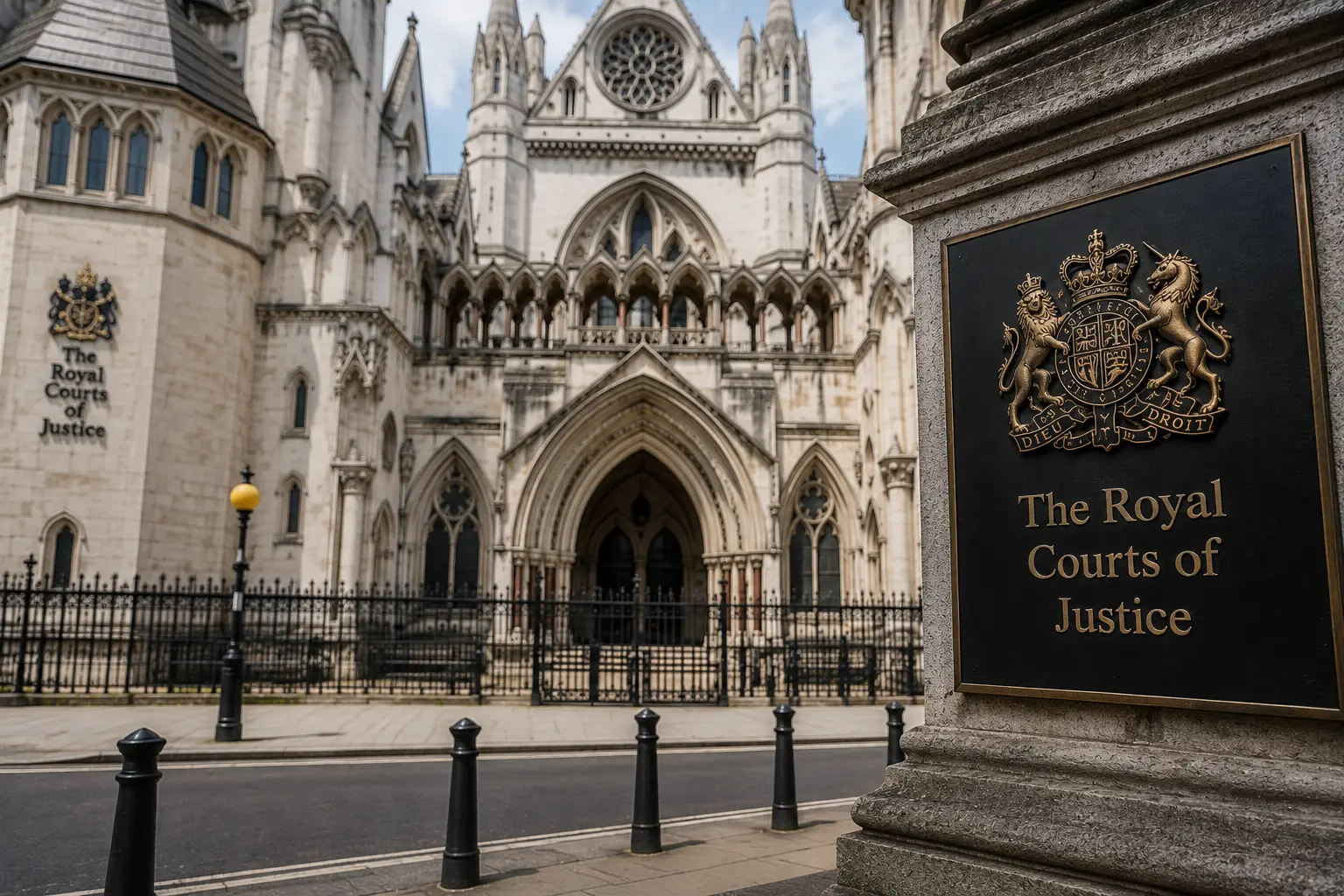

High Court dismisses two judicial reviews challenging restrictions on student entry clearance
Student Visa Brake was lawful, High Court rules. The High Court has dismissed two judicial review claims challenging the Student Visa Brake, which made nationals of Afghanistan, Cameroon, Myanmar and Sudan ineligible to obtain student entry clearance.
Mrs Justice Steyn DBE handed down judgment on 12 August 2026 in R (Sadat & others) v Secretary of State for the Home Department and R (Farah & others) v Secretary of State for the Home Department. The claims followed a rolled-up hearing from 27 to 29 July.
The Student Visa Brake was introduced through the Statement of Changes in Immigration Rules (HC 1691), laid before Parliament on 5 March 2026 and brought into effect on 26 March 2026.
Seven affected students brought the challenges. The four Sadat claimants were nationals of Afghanistan, Sudan and Cameroon, while the three Farah claimants were Sudanese nationals. The claimants included students with offers for postgraduate and undergraduate study.
The Farah claimants challenged, among other matters, the Home Secretary’s selection of the four countries and reliance on a “Conversion Rate”. The measure compared, for a given nationality and period, the number of asylum claims made by people previously granted student visas with the number of student visas issued.
The court accepted that the measure did not identify the exact proportion of student visa holders who later claimed asylum. However, it held that its limitations had been recognised and explained, and that using it as an indicator of the balance between visas granted and visa-linked asylum claims was within the range of reasonable methodologies open to the Secretary of State.
The court rejected the argument that the data could not indicate misuse of the student route. It found that the principal concern was forward-looking and involved predictive assessment. Given that the Student Visa Brake was temporary, the court was not satisfied that the Home Secretary had breached the duty of inquiry.
For solicitors handling affected student visa cases, the judgment also addresses leave outside the Immigration Rules. Despite the wording of Appendix Student ST 3.3, it was common ground that the Home Secretary retains a residual discretion to grant leave outside the rules.
The court found that the evidence did not establish that the Home Secretary had closed her mind to applications for leave outside the rules. It also held that the mechanism for seeking such leave was not practically impossible. An application could be made without a Confirmation of Acceptance for Studies, while the fee requirement was an ordinary incident of applying for entry clearance.
The Sadat claimants separately argued that the Home Secretary had failed to consider the discriminatory impact of the policy on women. The court recognised the removal of girls’ and women’s rights to education in Afghanistan and acknowledged gender-related inequality in Cameroon, Myanmar and Sudan.
However, it held that the Student Visa Brake was an inward-facing immigration measure rather than a policy implemented overseas. The Home Secretary was therefore not rationally obliged to regard the measure as an appropriate vehicle for addressing the consequences of discrimination abroad. The different position of women of the affected nationalities compared with men was not a consideration she was obliged to consider or investigate.
The court added that, if the Home Secretary had been obliged to consider the situation of Afghan women, she had done so.
Permission to apply for judicial review was granted on all grounds except Farah ground 3 and Sadat ground 5. Both claims were dismissed.
The judgment confirms that, despite the restrictions under Appendix Student ST 3.3, the Home Secretary retains a residual discretion to consider applications for leave outside the rules.