
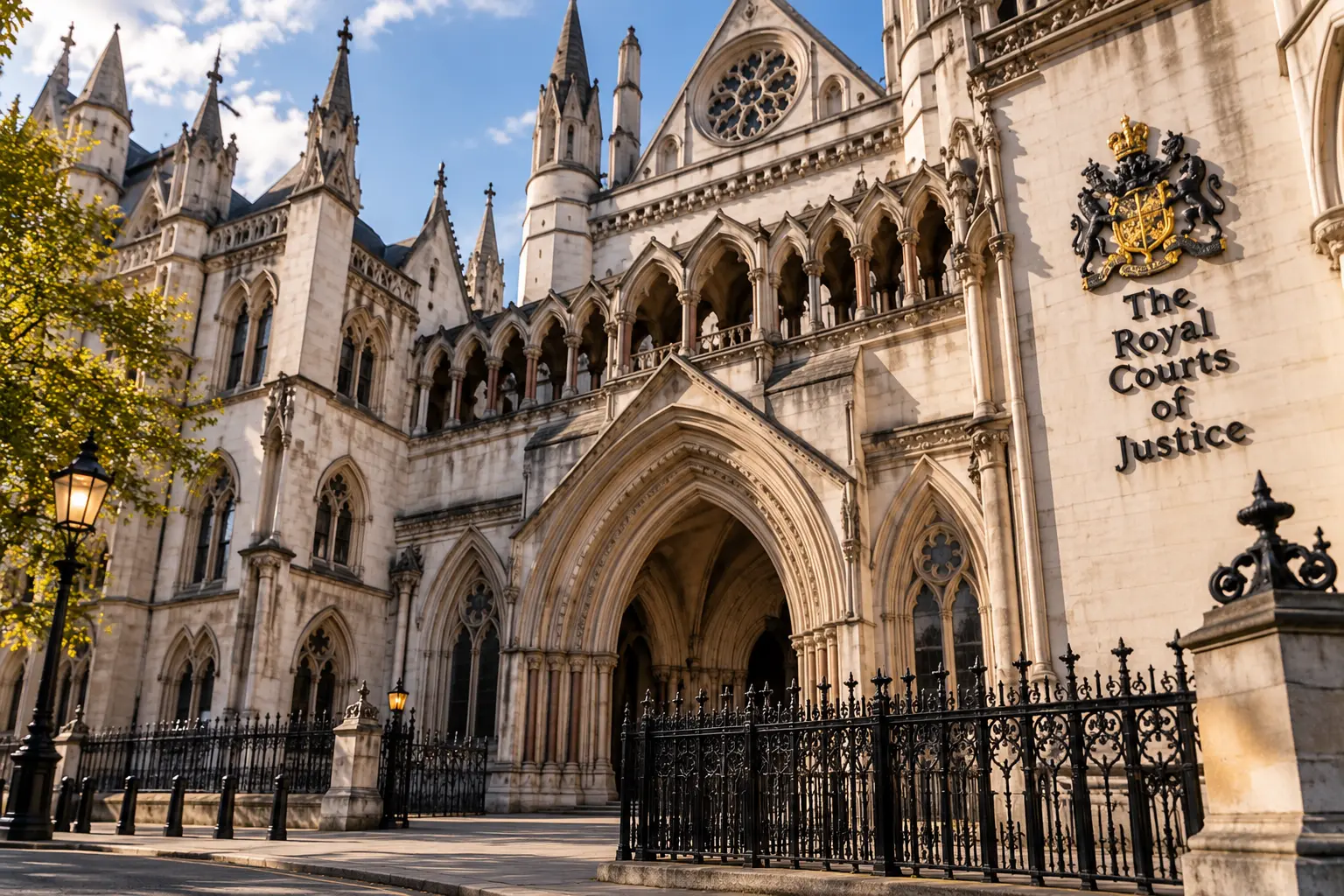

Costs Judge Leonard ruled that the offence should properly fall within Class H under the LGFS.
A High Court Costs Judge has dismissed an appeal by SVS Solicitors over the legal aid classification of an offence in the case of R v Wandel, leaving the firm’s claim classified as Class C for the purposes of the Litigators’ Graduated Fee Scheme (LGFS).
The appeal concerned the classification of an offence under Schedule 2 to the Criminal Legal Aid (Remuneration) Regulations 2013. The relevant representation order was dated 21 February 2025. SVS Solicitors had acted for Julia Wandel during a five-week Crown Court trial at Leicester.
Wandel had been charged with stalking causing serious alarm or distress, contrary to section 4A(1) of the Protection from Harassment Act 1997. The offence was not specifically listed in the LGFS Table of Offences and therefore initially fell within Class H, although the regulations allowed an application for reclassification.
The case concerned conduct directed towards the parents of Madeleine McCann. The judgment records that Wandel claimed to be Madeleine McCann and contacted her parents and others connected with the case on numerous occasions. The indictment included allegations of repeated calls and messages, attempts to make contact at the parents’ workplace and approaches to people connected with the investigation.
The prosecution also alleged that Wandel had used artificial intelligence to produce letters supporting her claim and to fabricate childhood memories. Her conduct included an incident outside the McCann family home in December 2024. She was ultimately convicted of the lesser offence of harassment under section 2 of the 1997 Act and sentenced to six months’ imprisonment.
SVS Solicitors argued that the offence should be classified as Class B, pointing to the seriousness of the underlying allegation, the five-week trial, extensive mobile phone evidence and the exceptional public and media interest surrounding the case. The firm also relied on the involvement of King’s Counsel and a High Court Judge, as well as the alleged complexity arising from the use of AI.
The Determining Officer had instead classified the case as Class C. The Lord Chancellor’s submissions supported that classification, while arguing that a section 4A offence was most closely comparable to offences already placed in Class H.
Costs Judge Leonard concluded that the LGFS operates in a largely formulaic and mechanistic way. The scheme already accounts for the weight and complexity of individual cases through factors including trial length and the number of pages of prosecution evidence.
The judge held that offence classification should be determined by the nature of the offence, rather than factors such as the level of public interest or the particular challenges arising in an individual case. The judge also found that the Advocates’ Graduated Fee Scheme banding document was irrelevant because it operates under a separate fee regime.
Costs Judge Leonard said a section 4A offence was readily comparable with a section 4 offence under the same legislation, which is classified as Class H. The judge therefore concluded that Class H was the obvious and correct classification, rather than Class C.
However, because the Respondent was content for the purposes of the appeal to uphold the Determining Officer’s decision, the particular case remained classified as Class C. The appeal was therefore dismissed.