
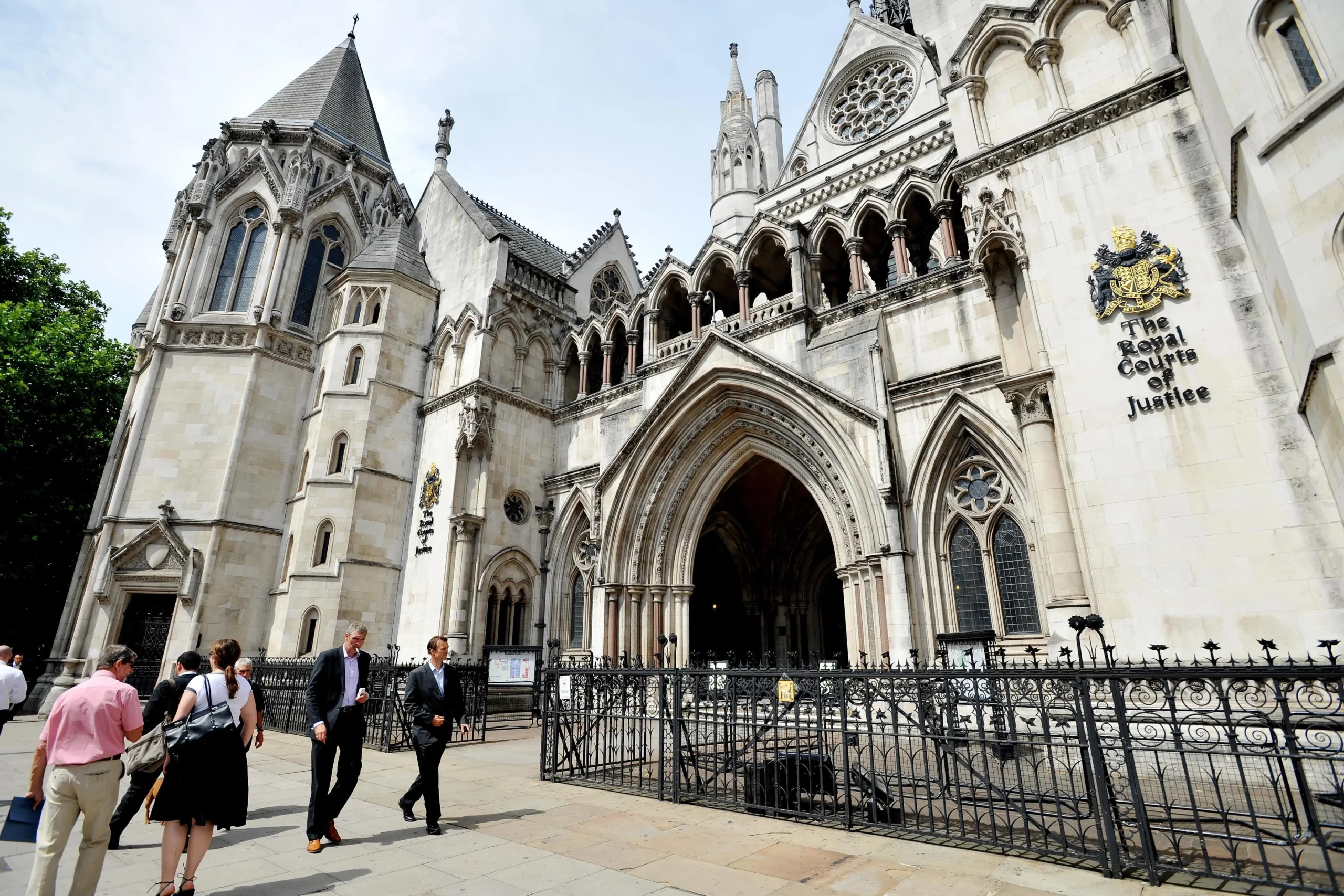

Seven claimants must pay Associated Newspapers’ costs on the indemnity basis, with £9.54 million due on account
An indemnity costs order has been made against seven claimants following their unsuccessful claims against Associated Newspapers Limited, with the High Court also ordering an interim payment of £9,544,355 towards the publisher’s costs.
Mr Justice Nicklin handed down the judgment on 21 August 2026 following a further hearing on 29 and 30 July to resolve outstanding costs issues arising from the main judgment, which was handed down on 7 July.
The claimants were Baroness Lawrence of Clarendon OBE, Elizabeth Hurley, Sir Elton John CH CBE, David Furnish, Sir Simon Hughes, Prince Harry, The Duke of Sussex, and Sadie Frost Law. The defendant was Associated Newspapers Limited.
The claimants accepted that, having lost their claims, they were required to pay Associated’s costs. The main issue was whether those costs should be assessed on the standard or indemnity basis.
The court concluded that the litigation had been pursued in a way that took it “well outside the norm” of ordinary civil proceedings. Mr Justice Nicklin said the conduct was unreasonable to a high degree and ordered the claimants to pay Associated’s costs of the action on the indemnity basis, subject to costs orders already made.
The judge stressed that the decision was not simply a consequence of the claimants losing at trial. The court considered the cumulative effect of a number of matters, including the breadth of the generic case, the evidential foundation for serious allegations, the continued maintenance of allegations that should have been narrowed or withdrawn, reliance on certain material, and the way allegations were advanced during the trial.
For solicitors, the key costs point is the effect of the indemnity basis on costs budgeting. The judgment explains that, although costs had been subject to budgeting, an indemnity costs order removes the ordinary restriction imposed by the approved costs budget. However, it does not mean that every cost incurred automatically becomes recoverable. Costs that were unreasonably incurred or unreasonable in amount can still be disallowed on detailed assessment. On the indemnity basis, proportionality does not limit recovery and any doubt about reasonableness is resolved in favour of the receiving party.
The court considered whether it could impose a cap on the costs Associated could ultimately recover. Mr Justice Nicklin concluded that the court has jurisdiction to impose such a limit in principle, but declined to do so in this case.
The decision records that Associated said it had incurred costs of £34,481,622.54 to 9 July 2026. That was substantially above the figures previously considered during costs management. The judge nevertheless concluded that a cap could not be justified on a principled basis in the circumstances. Detailed assessment would provide the necessary scrutiny of the costs claimed, including the reasonableness of the work undertaken, time spent, fee-earner levels, hourly rates and duplication.
The court then considered the amount to be paid on account. Associated sought £9,950,624.37. The court ordered £9,544,355, comprising 90% of Associated’s approved budgeted costs and 60% of its incurred pre-budget costs.
The payment must be made by 28 August 2026. The judge noted that the payment-on-account exercise was not a detailed assessment, but an assessment of what could reasonably be ordered on the material available at this stage. The final recoverable costs will remain subject to detailed assessment.
The judgment therefore highlights the potential consequences of an indemnity costs order in substantial litigation: the ordinary budgetary constraint may fall away, while detailed assessment remains an important safeguard against unreasonable costs.