
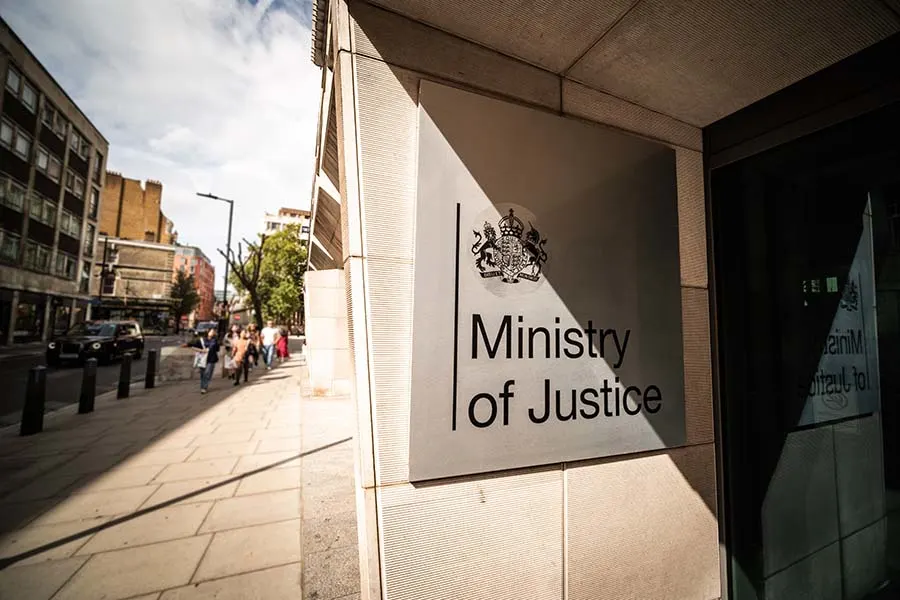

Solicitors have until 14 August to respond to proposed changes to cohabitation law
Cohabitation law reform proposals are reaching a key deadline today, with the Government’s consultation on financial protections for unmarried couples closing on 14 August 2026.
The Ministry of Justice launched the consultation, A Fairer End to Relationships, on 5 June 2026. It seeks views on proposed reforms covering financial remedies when relationships end, including protections for cohabitants on separation and inheritance rights when a cohabiting partner dies.
The consultation applies to England and Wales and is particularly relevant to family law practitioners, who are among the groups invited to respond.
Under the proposals, the Government would introduce a statutory framework of rights and responsibilities for eligible cohabiting couples when they separate. The proposed framework would remain narrower than the financial remedies available to married couples on divorce and would preserve the distinct legal status of marriage.
The Government proposes that the framework should apply to couples living together as a couple in an enduring family relationship. It is intended to cover committed, long-term and interdependent relationships rather than arrangements involving flatmates or siblings.
A proposed minimum duration rule would also apply. Couples without children would need to have lived together for at least three years to access the proposed cohabitation framework, while the Government is also considering eligibility where couples have a child together.
The proposed framework would apply automatically to eligible couples, although both partners could agree to opt out.
The consultation also considers inheritance law. Under the current law, a cohabitant has no automatic right to inherit when their partner dies without a valid will. The Government is seeking views on extending intestacy rights to qualifying cohabitants, subject to a clear definition and minimum duration requirement.
The proposals would also align rights to administer a deceased partner’s estate with any new inheritance entitlement. Views are additionally sought on removing the qualifying time period for cohabitants to apply for financial provision from a deceased partner’s estate where the surviving partner and deceased had children together.
For solicitors, the immediate point is that none of these proposals has changed the law yet. The consultation is seeking evidence and views that will inform the development of legislation. The Government states that any legislation will be introduced when parliamentary time allows.
The consultation forms part of a wider package covering three connected areas: financial remedies on divorce and dissolution, financial provision for cohabitants on separation, and inheritance provision for cohabitants on death.
The Government is also seeking views on a proposed “codification-plus” approach to financial remedies on divorce and dissolution. This would place established case law principles, including “needs” and “sharing”, into statutory form. It is also considering qualifying nuptial agreements that could allow couples to make binding financial arrangements before divorce or dissolution.
The Ministry of Justice says the proposals respond to gaps in the existing legal framework. Its consultation document notes that 3.5 million couples live together without marrying or entering into a civil partnership, more than double the number 30 years ago.
The consultation also asks whether courts should give greater weight to the impact of domestic abuse, including controlling, coercive and economic abuse, when determining financial needs and outcomes in divorce and cohabitation cases.
Responses to A Fairer End to Relationships must be submitted by 14 August 2026. The consultation is being conducted by the Ministry of Justice and is aimed at legal professionals, family lawyers, family mediators, the judiciary, academics, support organisations and members of the public with an interest in the proposed reforms.
The Government says responses will inform the development of legislation intended to provide clearer financial protections for couples and their children when relationships end.