
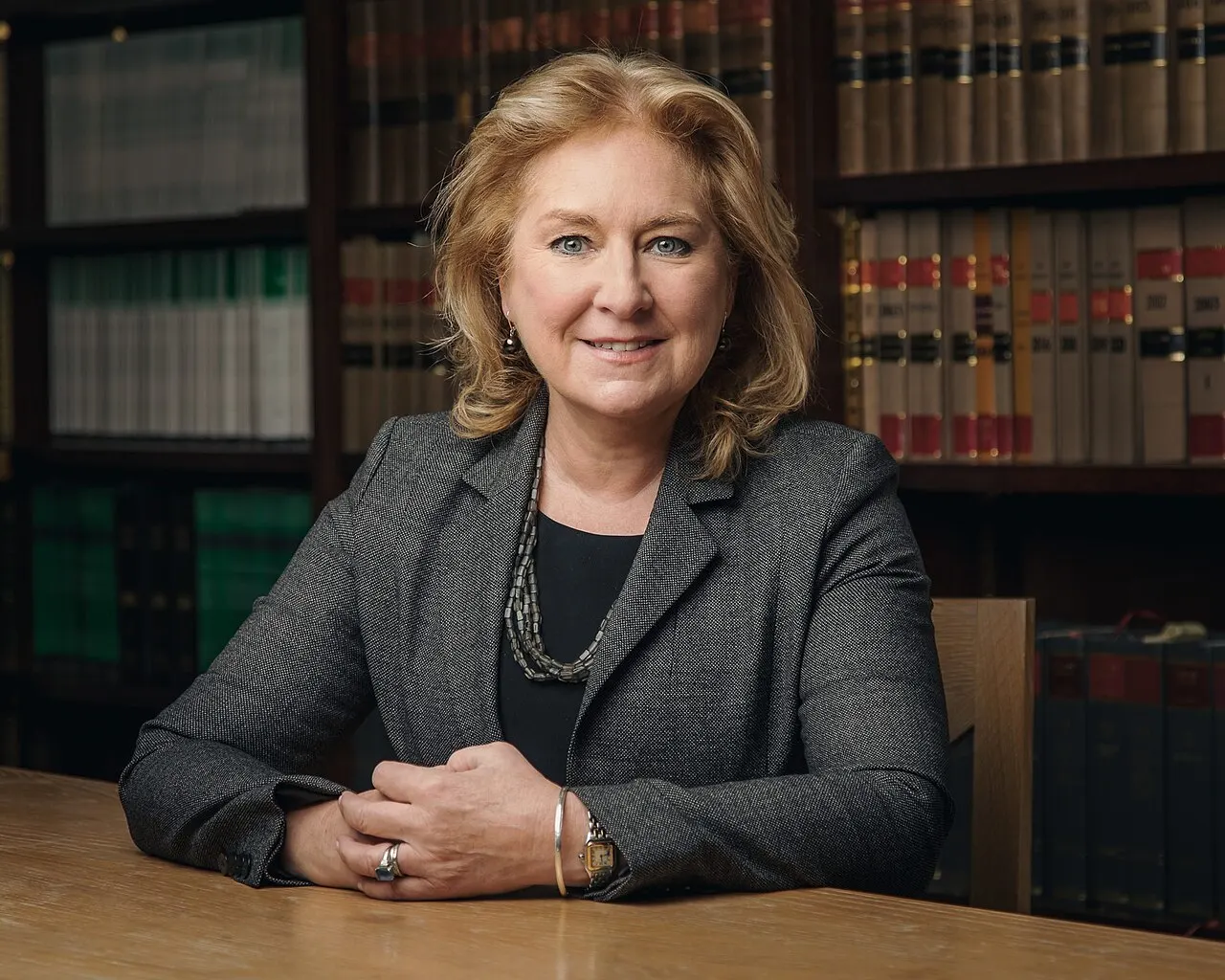


Baroness Carr highlights AI’s potential to improve access to justice while warning of severe court backlogs and growing pressures on the justice system
Judges are finding AI-assisted submissions from litigants in person easier to follow than documents prepared without the technology, the Lady Chief Justice has told peers, as she warned that parts of the justice system remain under “extraordinary acute pressures”.
Giving evidence to the House of Lords Constitution Committee, Baroness Carr of Walton-on-the-Hill said artificial intelligence had the potential to improve access to justice for unrepresented parties while helping courts manage growing workloads. She said the judiciary’s approach to AI was “cautiously positive” and that England and Wales had developed one of the most advanced frameworks for managing the technology’s use in the justice system.
“AI, we are seeing, can really help litigants in person have access to justice because they can get support in drafting their submissions,” she told peers.
“We as judges are trained to look out for fake hallucinations, fake cases and the like, but many judges are saying to me that they find AI-assisted submissions from litigants in person more helpful, easier to digest, than submissions that are drafted without the support of AI.”
Baroness Carr stressed that AI would not replace judges and was instead being explored as a tool to support judicial work and court administration.
“We are not talking about AIs doing the judging,” she said. “We are talking about AI doing the laundry so that judges can do the art.”
The Lady Chief Justice said AI was already being piloted in immigration tribunals and could be used to assist with judgment preparation, identify cases ready for trial, improve listings and support translation services. She suggested the technology could help ease administrative burdens while allowing judges to focus on decision-making.
Her comments came as she highlighted the challenges posed by the growing number of litigants in person appearing before the courts. While acknowledging that the lack of legal representation can affect efficiency and slow proceedings, she said there were “mitigating steps” that could be taken and praised both the legal profession and judiciary for supporting unrepresented parties.
“I also think actually if you go up and down the courts and if you have the chance to go and sit with a district judge in court, you cannot but be impressed by how able they are at dealing with litigants in person and helping them through the process,” she said.
Baroness Carr also used her annual appearance before the committee to emphasise the importance of the sub judice rule and the relationship between Parliament and the judiciary.
She said: “We know that the sub judice rule is a critical safeguard both to judicial independence and parliamentary privilege. We, the independent judiciary, play our part by not commenting on policy matters, by developing the common law and applying it in a way that is respectful of the separation of powers and, as I said in my evidence to the Commons Procedure Committee, it is a two-way street.
“Parliament in turn needs to respect the work of the judges and the courts and to respect that fundamental principle of comity. I understand all too well that respect begins with understanding, and here some of the work that we can do together comes into play.
“I recognise that there is still an enormous amount of work to do in terms of improving parliamentary understanding and a wider public understanding about many things, including the work of the judiciary.
“I’ve increased the number of parliamentary liaison judges very recently. I’m going to make it a sub-committee of the Judges’ Council to really increase the focus of the work that we do in this area. It’s a really important priority for me at the moment.”
In opening remarks, Baroness Carr also referred to the London Legal Walk the previous evening, saying she had managed 10 kilometres on a “hot, sunny London evening” and that the event had raised “almost a million pounds for legal advice charities”
Turning to court backlogs, Baroness Carr said the criminal courts and tribunal system were the two areas “where we are still running up the down escalator”, describing both jurisdictions as facing “pretty extraordinary acute pressures”.
She noted that the Crown Court backlog had exceeded 80,000 cases and said some non-custody criminal matters were now being listed as far ahead as 2029 and, in a small number of cases, 2030.
The Lady Chief Justice referred to a recent amendment concerning judicial training, saying it demonstrated ‘an absolute lack of familiarity’ with the Constitutional Reform Act 2005.