
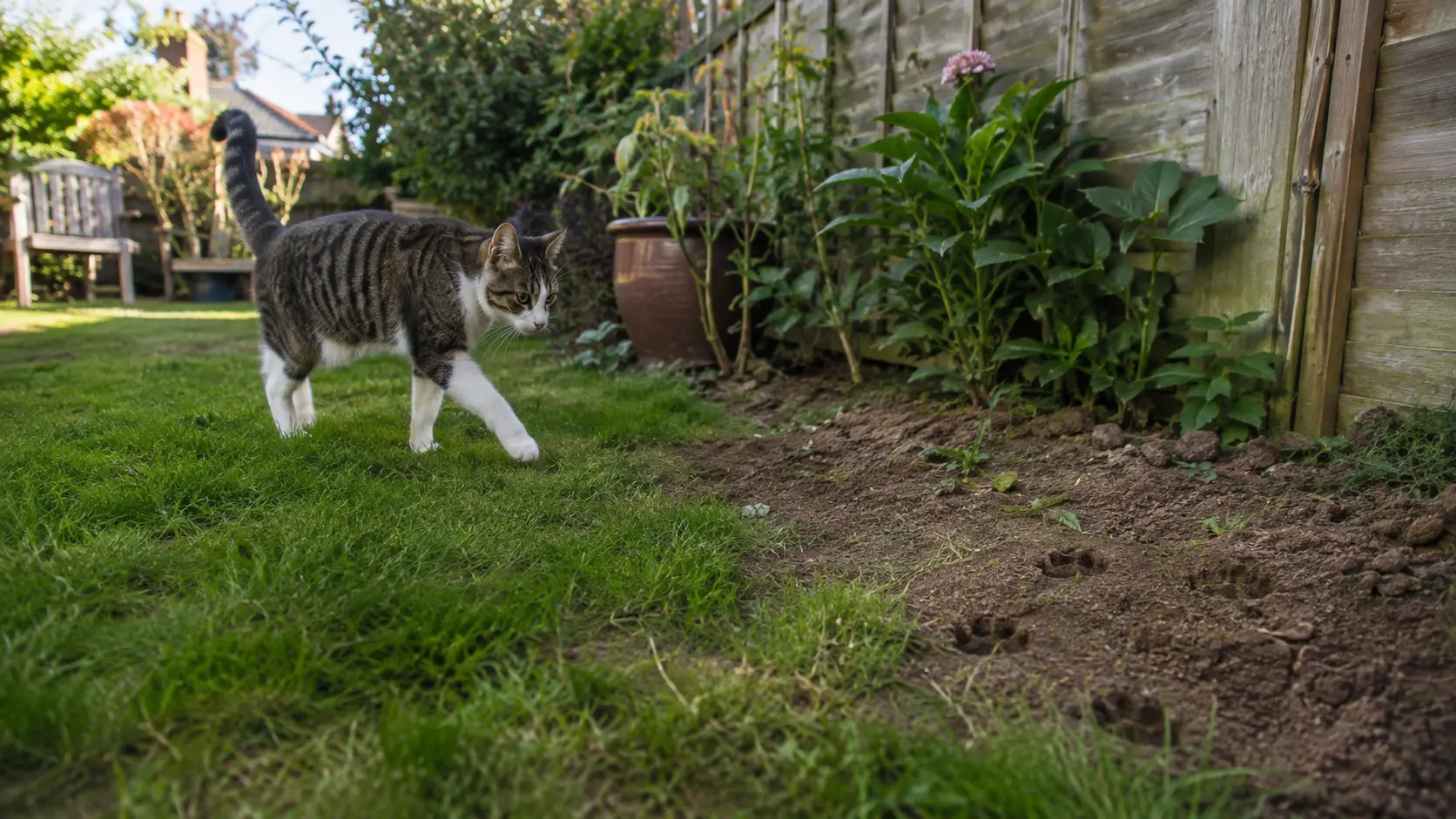

Local authorities investigating complaints about animal fouling must distinguish between whether material on land is capable of constituting a statutory nuisance and who may ultimately be responsible for it. The Court of Appeal has clarified that the definition of an “accumulation or deposit” under the Environmental Protection Act 1990 does not depend on proof of a deliberate act of depositing.
What was the dispute about?
In Caerphilly County Borough Council v R (Williamson) [2026] EWCA Civ 1402, the respondent, Richard James Williamson, complained that his neighbours’ cats repeatedly entered his front garden and left faeces. He said the fouling had continued for months, raised concerns about risks to his health and that of his young child, and asked the council to investigate whether the circumstances amounted to a statutory nuisance.
Mr Williamson supplied CCTV footage and explained that the cameras did not cover every part of the garden. Some footage showed cats entering areas where fresh faeces were subsequently found, although it did not always capture the act of fouling itself.
The council initially considered that freely roaming cats could not constitute a statutory nuisance under section 79(1)(f) of the 1990 Act. It later opened an investigation and carried out a site visit. In an email dated 11 November 2024, the council concluded that there was no statutory nuisance, referring to the arrangements made by the cats’ owners and the cats’ ability to roam.
Mr Williamson challenged that determination. The central complaint was that the council had concentrated on how the cats were kept, rather than properly considering whether the faeces left in his garden could amount to a deposit prejudicial to health under section 79(1)(e).
What did the High Court decide?
Following a judicial review hearing, His Honour Judge Jarman KC, sitting as a judge of the High Court, concluded that the council had not lawfully discharged its duties under section 80 of the Environmental Protection Act 1990. The judgment was handed down on 19 December 2025, and the court subsequently made its order on 14 January 2026.
The High Court held that the complaint should have been considered on the basis that the cat faeces deposited in the garden might fall within section 79(1)(e), which covers “any accumulation or deposit which is prejudicial to health or a nuisance”. The fact that the respondent had not expressly cited subsection (1)(e) did not prevent the council from having to address the substance of his complaint.
The judge also considered that the council had failed to assess the health concerns and had wrongly declined to take account of some CCTV material showing cats entering areas where faeces were later found. The court quashed the council’s determination and required it to reconsider the complaint in accordance with the legal principles set out in the judgment.
Importantly, the High Court did not find that a statutory nuisance had been established. It decided that the complaint was capable in principle of falling within the statutory definition and required a lawful investigation.
What was the council’s appeal about?
Caerphilly County Borough Council appealed on four grounds. These concerned whether the complaint could be considered under section 79(1)(e), whether it should instead have been considered under section 79(1)(f) concerning animals kept in a prejudicial manner, the council officer’s approach to the CCTV evidence, and the relevance of common law principles relating to cats roaming freely.
The council’s principal argument was that a “deposit” for the purposes of section 79(1)(e) required a purposeful or wilful act. It contended that the provision should not cover material unless someone had deliberately deposited it. At the appeal hearing, the council accepted that if this central ground failed, the other grounds would not independently justify allowing the appeal.
The appeal was heard on 20 October 2026 by Lord Justice Males, Lord Justice Nugee and Lord Justice Miles. The approved judgment was handed down on 3 November 2026.
Why did the Court of Appeal reject the appeal?
Giving the leading judgment, Lord Justice Miles rejected the argument that a deposit under section 79(1)(e) must result from a purposeful or wilful act. The wording of the provision contains no such requirement. It identifies physical matters or states of affairs and asks whether they are prejudicial to health or a nuisance; it does not make intention part of the definition.
The court also considered the language of the subsection. The word “deposit” is used as a noun alongside “accumulation”. Read in context, the provision concerns the existence of the material, rather than the way it came to be present or the agency responsible for it.
“The question whether something falls within the category of a statutory nuisance is separate from that of the responsibility of any person who may have caused or suffered the existence of the relevant matter.”
The judgment referred to earlier statutory nuisance authorities, including Draper v Sperring (1861), which concerned sheep dung left on a pavement. The Court of Appeal considered that the case supported the proposition that animal droppings can amount to a deposit or accumulation and, if the other statutory requirements are met, a statutory nuisance.
The court also examined the distinction between identifying a statutory nuisance and determining responsibility for it. It explained that the council’s initial investigation under section 79 is concerned with whether a nuisance exists. The question of who is responsible arises at the next stage under section 80, when an abatement notice may be served.
For those reasons, the court dismissed the council’s appeal. Lord Justice Nugee and Lord Justice Males agreed with Lord Justice Miles.
How do sections 79 and 80 of the Environmental Protection Act 1990 work?
The judgment emphasises that the statutory scheme involves two distinct stages. Section 79 defines the matters that may constitute statutory nuisances and places duties on local authorities to inspect their areas and investigate complaints made by people living within them, taking such steps as are reasonably practicable.
Section 79(1)(e) includes an accumulation or deposit that is prejudicial to health or a nuisance. Section 79(7) defines the “person responsible” by reference to the person to whose act, default or sufferance the nuisance is attributable.
Where the authority is satisfied that a statutory nuisance exists, or is likely to occur or recur, section 80 provides for the service of an abatement notice. The notice is generally served on the person responsible, subject to the statutory exceptions.
| Stage | Provision | What the authority must consider |
|---|---|---|
| Identify and investigate | Section 79 | Whether the relevant matter, including an accumulation or deposit, is prejudicial to health or a nuisance; and whether a complaint has been reasonably investigated. |
| Address responsibility | Section 80 | If a statutory nuisance is established or likely to recur, whether an abatement notice should be served and on whom it should be served under the statutory responsibility test. |
The Court of Appeal considered that importing a separate requirement of purposeful or wilful depositing into section 79(1)(e) would confuse these stages and create a responsibility test different from the one Parliament expressly provided.
Frequently asked questions
Can animal faeces amount to a statutory nuisance?
They can, in principle. The Court of Appeal confirmed that animal droppings are capable of amounting to an accumulation or deposit under section 79(1)(e), provided the other statutory requirements are established.
Does a deposit have to be made deliberately?
No. The court held that section 79(1)(e) does not require proof of a purposeful or wilful act. The provision concerns the existence of an accumulation or deposit, not the intention behind its creation.
Does the judgment mean cat owners are automatically liable?
No. The existence of a statutory nuisance and the identity of the person responsible are separate questions. Responsibility is considered under the statutory scheme, including section 79(7) and section 80.
Did the Court of Appeal decide that the cats in this case caused a statutory nuisance?
No. The court made clear that it was not expressing a view on the outcome of the council’s redetermination. The judgment required the complaint to be considered using the correct legal principles.
What was the outcome of the appeal?
The Court of Appeal dismissed Caerphilly County Borough Council’s appeal. The declaration made by the High Court therefore remained in place.