

The High Court has refused to strike out a Taylor Wimpey company’s claim over alleged fire-safety defects at a Cardiff residential development, ruling that the claim can proceed despite an earlier related arbitration involving another company in the Taylor Wimpey group.
What did the High Court decide?
In Taylor Wimpey UK Ltd v Taylor Woodrow Construction & Anor [2026] EWHC 2526 (TCC), dated 7 October 2026, Mr Justice Pepperall dismissed an application by Taylor Woodrow Construction to strike out Taylor Wimpey UK Ltd’s claims under the Defective Premises Act 1972 and for a contribution under the Civil Liability (Contribution) Act 1978 as an abuse of process.
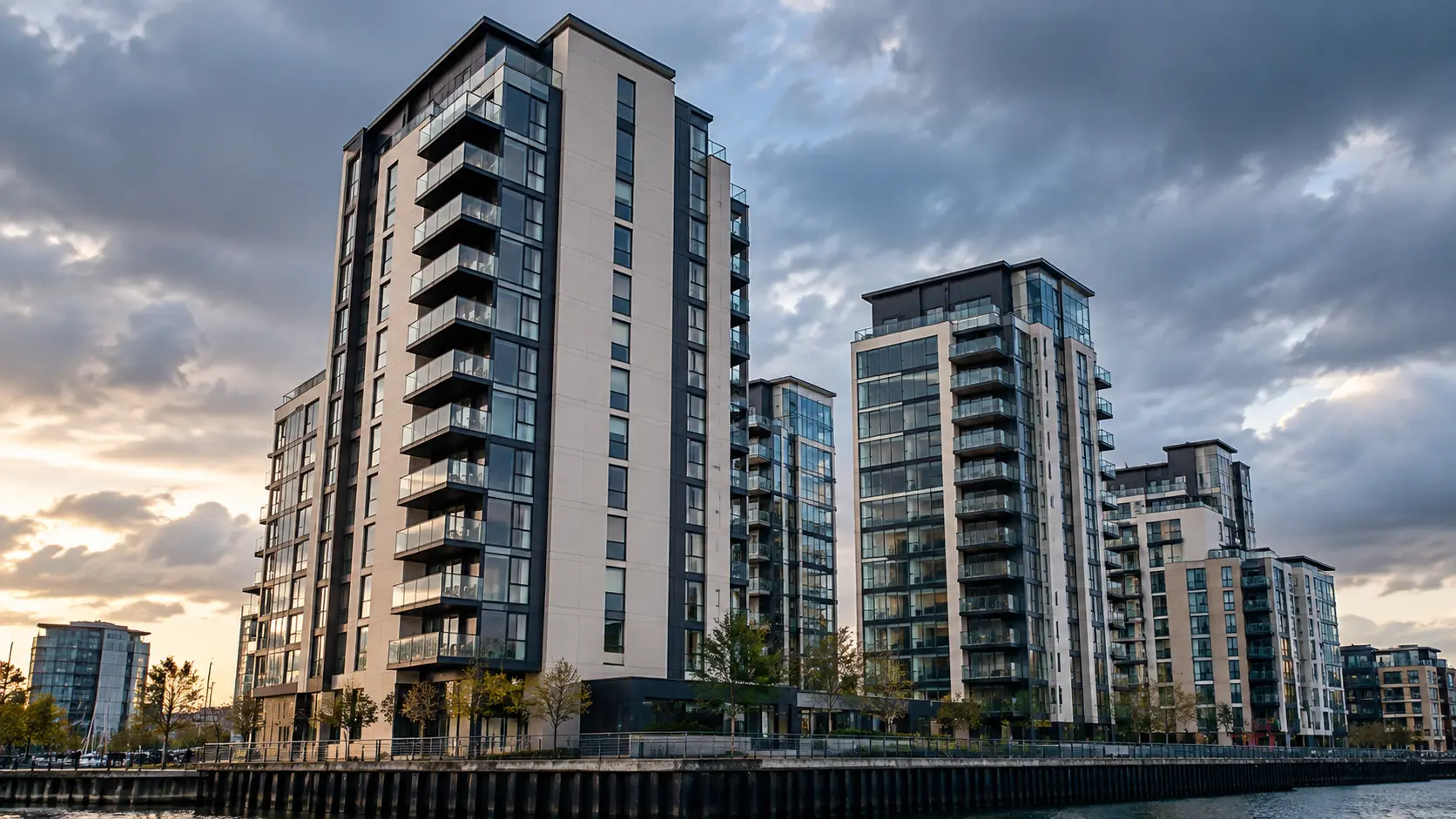
The dispute arose from alleged fire-safety defects at Victoria Wharf, a residential development in Cardiff comprising seven high-rise buildings. Taylor Wimpey UK Ltd brought its own claim under section 1(1)(b) of the Defective Premises Act 1972 and also sought a building liability order against Vinci Construction Holding Ltd under section 130 of the Building Safety Act 2022.
Taylor Woodrow argued that the proceedings amounted to an abuse of process because substantially the same defects had previously been considered in arbitration in proceedings brought by Taylor Wimpey Developments Ltd. Mr Justice Pepperall rejected that argument.
What was the background to the dispute?
In or around 2005, Taylor Wimpey Developments Ltd appointed Taylor Woodrow Construction to design and build Victoria Wharf. The contracts covered a development of seven high-rise residential blocks, with practical completion taking place between November 2005 and July 2008.
Following the Grenfell Tower fire, fire-safety defects were identified at the development. A letter before action was sent in October 2020 on behalf of Taylor Wimpey Developments Ltd, Taylor Woodrow UK Ltd and Taylor Wimpey Holdings Ltd.
By August 2021, Taylor Wimpey Developments Ltd had commenced arbitration against Taylor Woodrow seeking the cost of remedial works. Its case included contractual, negligence and Defective Premises Act claims.
At the time, Taylor Woodrow successfully argued that the contractual and DPA claims were out of time. An award dated 12 May 2022 determined that those claims were statute-barred.
The legal position then changed. Section 135 of the Building Safety Act 2022 amended the Limitation Act 1980 and retrospectively extended the limitation period for certain claims under section 1 of the Defective Premises Act to 30 years.
However, the arbitrator subsequently concluded that the statutory extension could not revive Taylor Wimpey Developments Ltd’s DPA claim because that claim had already been finally determined before section 135 came into force.
Why was the earlier arbitration important?
The earlier arbitration became central to Taylor Woodrow’s strike-out application. Taylor Woodrow argued that Taylor Wimpey UK Ltd was attempting to relitigate substantially the same dispute through a closely connected company.
The companies were closely linked within the Taylor Wimpey group. Taylor Wimpey Developments Ltd was Taylor Wimpey UK Ltd’s immediate parent company and the two companies shared directors. Taylor Woodrow therefore argued that allowing the later claim to proceed would undermine the finality of the earlier arbitration.
Taylor Wimpey UK Ltd, however, argued that its claim was legally distinct. Taylor Wimpey Developments Ltd had brought its claim as the employer under section 1(1)(a) of the DPA, while Taylor Wimpey UK Ltd relied on section 1(1)(b) as an entity that had acquired an interest in the development.
The High Court accepted that distinction.
- Taylor Wimpey Developments Ltd appoints Taylor Woodrow Construction to design and build Victoria Wharf in Cardiff.
- Practical completion takes place across the seven high-rise blocks.
- Taylor Wimpey Developments Ltd commences arbitration seeking remedial costs.
- The arbitrator determines that the contractual and DPA claims are statute-barred.
- Section 135 of the Building Safety Act 2022 comes into force, extending the relevant DPA limitation period retrospectively.
- The remaining tort claim in the arbitration is dismissed.
- Taylor Wimpey UK Ltd issues the High Court claim.
- Mr Justice Pepperall dismisses Taylor Woodrow’s application to strike out the proceedings.
Why did the court reject the abuse of process argument?
The court considered both relitigation abuse under the rule in Henderson v Henderson and the separate principle concerning collateral attacks on previous decisions.
Mr Justice Pepperall emphasised that the threshold for striking out proceedings as an abuse of process is high. The question was whether allowing Taylor Wimpey UK Ltd’s claim to proceed would be manifestly unfair to Taylor Woodrow or bring the administration of justice into disrepute.
The judge concluded that it would not.
A central factor was that Taylor Wimpey UK Ltd had its own independent cause of action under section 1(1)(b) of the Defective Premises Act. Taylor Wimpey Developments Ltd’s earlier claim arose from its position as employer under the building contract, whereas Taylor Wimpey UK Ltd’s claim arose from its interest in the development.
The court also noted that Taylor Wimpey UK Ltd had not been a party to the arbitration. It was therefore not in a position to insist upon being joined to the arbitral proceedings or to bring its own freestanding claim there.
The earlier arbitration had not determined the merits of the DPA claim.
Instead, the claim had failed at the limitation stage.
That distinction was important. The arbitrator had determined that Taylor Wimpey Developments Ltd’s DPA claim was statute-barred, but had not determined whether the underlying allegations of defective workmanship and materials were established on their merits.
What did the court say about the Defective Premises Act?
Section 1 of the Defective Premises Act can impose duties on a builder towards more than one person. The duty may be owed to the person to whose order the dwelling is provided and, separately, to a person who acquires a legal or equitable interest in the dwelling.
Mr Justice Pepperall held that Taylor Wimpey Developments Ltd and Taylor Wimpey UK Ltd therefore had separate causes of action. The dismissal of Taylor Wimpey Developments Ltd’s claim did not extinguish Taylor Woodrow’s potential liability to other persons who had acquired interests in the affected dwellings.
The judge also rejected the argument that the passage of time itself justified striking out the claim. Parliament had expressly extended the relevant limitation period retrospectively to 30 years through section 135 of the Building Safety Act. Delay that Parliament had expressly contemplated could not, by itself, justify striking out a claim brought within that extended period.
The earlier arbitration was also relevant to the question of prejudice. Rather than placing Taylor Woodrow at an unfair disadvantage, the judge noted that the previous proceedings meant that Taylor Woodrow had already investigated much of the material now relied upon.
What does the ruling mean for construction disputes?
The decision provides an important illustration of how the courts may approach later DPA proceedings following earlier arbitration involving a related company.
A close corporate relationship between claimants does not automatically mean that their causes of action are identical. The court will examine the legal basis of each claim, the claimant’s interest in the property and the circumstances of the earlier proceedings.
The decision also highlights the significance of the Building Safety Act’s retrospective extension of the DPA limitation period. A claim that was previously defeated on limitation grounds may raise different issues where another claimant possesses an independent cause of action that falls within the extended limitation regime.
For construction and property litigators, the judgment demonstrates that an earlier arbitration does not necessarily prevent subsequent litigation by a non-party where that later claimant has an independent statutory cause of action.
At the same time, the judgment does not establish that every subsequent claim following arbitration will be allowed to proceed. Mr Justice Pepperall confirmed that a prior arbitration award can, in appropriate circumstances, support an abuse-of-process argument. The outcome depends on a close, merits-based assessment of the particular facts.
Frequently asked questions
What did the High Court decide in Taylor Wimpey v Taylor Woodrow?
The High Court dismissed Taylor Woodrow Construction’s application to strike out Taylor Wimpey UK Ltd’s claim. The court held that the proceedings were not an abuse of process.
Why was the claim not considered relitigation abuse?
Taylor Wimpey UK Ltd had its own independent cause of action under section 1(1)(b) of the Defective Premises Act. It was not a party to the earlier arbitration and could not reasonably have pursued its separate claim through that arbitration.
What happened to the earlier DPA claim?
Taylor Wimpey Developments Ltd’s DPA claim was dismissed as statute-barred in the earlier arbitration. The arbitrator subsequently concluded that the Building Safety Act’s retrospective limitation extension did not revive that already determined claim.
Does the judgment mean every later claim after an arbitration can proceed?
No. The court confirmed that a prior arbitration can in appropriate circumstances support an abuse-of-process argument. The question must be determined by examining the circumstances of the particular case.
What was the significance of the Building Safety Act 2022?
Section 135 of the Building Safety Act amended the limitation regime for certain Defective Premises Act claims, retrospectively extending the relevant period to 30 years. That legislative change formed an important part of the court’s reasoning.
Was Taylor Wimpey UK Ltd’s underlying DPA claim finally determined?
No. The High Court was dealing with the strike-out application. Mr Justice Pepperall dismissed Taylor Woodrow’s application, meaning the claim was not stopped at that stage.