
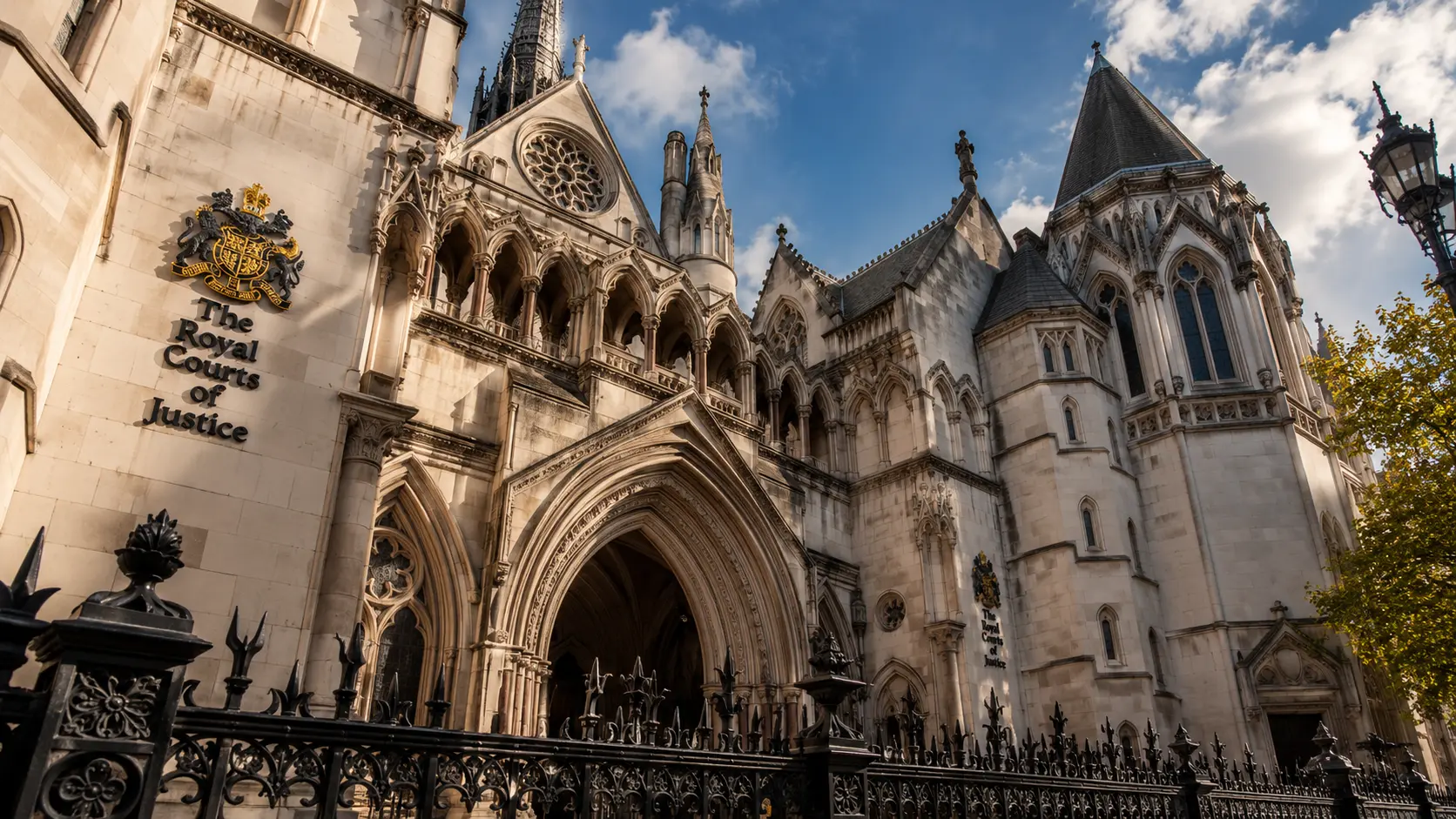

The Court of Appeal has ruled that English law governs whether a prior foreign judgment creates an issue estoppel in English copyright proceedings, allowing an appeal by Aviator against Spribe and rejecting a broader application of the Rome II Regulation.
What did the Court of Appeal decide?
In Aviator LLC & Ors v Spribe OÜ [2026] EWCA Civ 1224, handed down on 2 October 2026, the Court of Appeal considered what law applies when a party relies on a foreign judgment to prevent an issue from being re-litigated in English proceedings.
The appeal concerned issue estoppel arising from related proceedings in Georgia. Aviator argued that English law should apply because the question concerned the effect of a previous judgment in proceedings before an English court. Spribe argued that the law applicable to the underlying copyright claims should instead govern the issue under the Rome II Regulation.
Lord Justice Arnold, giving the leading judgment, concluded that Aviator was correct. The question was properly characterised as one concerning the effect of a previous foreign judgment, rather than as a question of substantive copyright liability. The appeal was therefore allowed.
What was the dispute about?
The dispute concerns online “crash games”, in which players bet on a multiplier that increases rapidly before randomly “crashing”. The longer a player waits before cashing out, the greater the potential return, but a crash before cash-out results in the loss of the bet.
A company associated with Aviator launched a crash game in Georgia in January 2019. Aviator asserted copyright in the associated Aviator Image and in an aeroplane device contained within it. Spribe subsequently distributed its own crash game, including in the United Kingdom, using its own Aviator Image and Aeroplane Device.
Aviator brought copyright infringement claims covering the UK, Gibraltar and other countries. Spribe denied that Aviator owned copyright in the relevant works and maintained that its own designs had been created independently.
The dispute also included trade mark and passing off issues. Spribe counterclaimed in relation to Aviator’s proposed UK launch of its own crash game and obtained an interim injunction preventing the launch pending trial.
The issue estoppel argument arose from earlier proceedings in Georgia. Aviator and Spribe had been parties to those proceedings, in which Aviator successfully challenged the validity of a Georgian trade mark registered by Spribe on the basis that its use would infringe Aviator’s copyrights. The proceedings ultimately reached the Supreme Court of Georgia.
- A company associated with Aviator launches a crash game in Georgia.
- Bambuk Design Studio produces the artworks later relied upon in the dispute.
- Spribe begins distributing its crash game in the United Kingdom.
- The Supreme Court of Georgia hands down a ruling following the Georgian proceedings.
- The High Court holds that Spribe is correct on the applicable law issue.
- The Court of Appeal hears Aviator’s appeal.
- The Court of Appeal allows the appeal.
Why does English law apply to issue estoppel?
The Court of Appeal began with the nature of issue estoppel under English law. Issue estoppel prevents a party from re-litigating an issue that was necessarily decided in earlier proceedings, even where the later proceedings involve a different cause of action.
Lord Justice Arnold emphasised that issue estoppel is not a doctrine specific to copyright or intellectual property. It sits alongside cause of action estoppel, the Henderson v Henderson abuse of process doctrine and merger as part of the wider principles concerned with limiting duplicative litigation.
The court therefore considered the relevant question to be the preclusive effect of a previous judgment. That is different from determining the substantive rights and obligations arising from the copyright claims themselves.
The judgment explained that questions concerning recognition and the effect of a foreign judgment are inherently matters for the receiving state. In English private international law, the relevant rules therefore operate according to the law of the forum — the lex fori.
The Court of Appeal also noted that English law already provides rules for determining when a foreign judgment can give rise to an issue estoppel. These include recognition of the foreign judgment, identity of the parties or their privies, and identity of the issue decided.
What does the ruling say about Rome II?
Spribe relied on Article 8(1) of the Rome II Regulation, which provides that the law applicable to a non-contractual obligation arising from an intellectual property infringement is the law of the country for which protection is claimed.
The Court accepted that this means the substantive copyright claims concerning countries outside the UK may be governed by the law of the relevant country. However, the court rejected the argument that this also determines the effect of a previous foreign judgment.
Article 15 of Rome II sets out matters governed by the law applicable to a non-contractual obligation, including the basis and extent of liability, grounds for exemption, damage and remedies. The Court of Appeal held that the effect of a prior judgment did not fall within those substantive matters.
The court also relied on Article 1(3), which excludes evidence and procedure from the Regulation. Lord Justice Arnold considered that the better view was that issue estoppel arising from a previous foreign judgment fell outside Rome II altogether. If that conclusion were wrong, he considered that the issue would fall within Article 1(3).
“The issue is properly characterised as being as to the effect of a prior foreign judgment on the claim before the court.”
The Court considered that this approach avoided the unusual result of different laws applying to issue estoppel depending on the underlying cause of action. It would also avoid a situation in which the effect of an English judgment itself could be governed by a foreign law simply because the later proceedings concerned a claim falling within Rome II.
What does the ruling mean for cross-border copyright disputes?
The decision separates two questions that can arise in international copyright litigation: the substantive law governing the infringement claim and the law governing the effect of a previous judgment.
For copyright claims falling within Article 8(1) of Rome II, the relevant country’s law may govern the substantive infringement question. But where a party relies on an earlier foreign judgment and seeks to prevent an issue from being re-litigated, the Court of Appeal has confirmed that the question is one for the law of the forum.
That means parties seeking to rely on foreign judgments in English proceedings will need to consider the English rules governing recognition and issue estoppel, rather than assuming that the law governing the underlying intellectual property claim will determine the judgment’s preclusive effect.
The ruling also provides a degree of consistency where a previous judgment is relied upon across different types of claims. The Court considered that the same law should ordinarily govern the question of issue estoppel regardless of the nature of the underlying claim or the country in which the earlier judgment was delivered.
The Court of Appeal’s conclusion was limited to the applicable-law issue before it. The judgment did not itself determine whether Aviator had established the substantive elements of its copyright claims or whether the Georgian proceedings ultimately created the issue estoppels alleged by Aviator.
Frequently asked questions
What is issue estoppel?
Issue estoppel prevents a party from re-litigating an issue that was necessarily decided in earlier proceedings. The doctrine can apply where the later proceedings involve a different cause of action.
What did the Court of Appeal decide in Aviator v Spribe?
The Court held that English law governs the effect of a prior foreign judgment when issue estoppel is relied upon in the English proceedings. It allowed Aviator’s appeal.
Does Rome II determine the effect of a foreign judgment?
No. The Court of Appeal held that the effect of a prior foreign judgment is not governed by the substantive rules in Article 15 of Rome II. The issue was considered to fall outside the Regulation or, alternatively, within Article 1(3).
Does Rome II still apply to international copyright claims?
Yes. The judgment accepted that Article 8(1) determines the law applicable to non-contractual obligations arising from intellectual property infringement by reference to the country for which protection is claimed.
Did the Court of Appeal decide the underlying copyright dispute?
No. The appeal concerned the law applicable to the issue of estoppel arising from the earlier Georgian proceedings. The Court of Appeal allowed the appeal on that issue.