
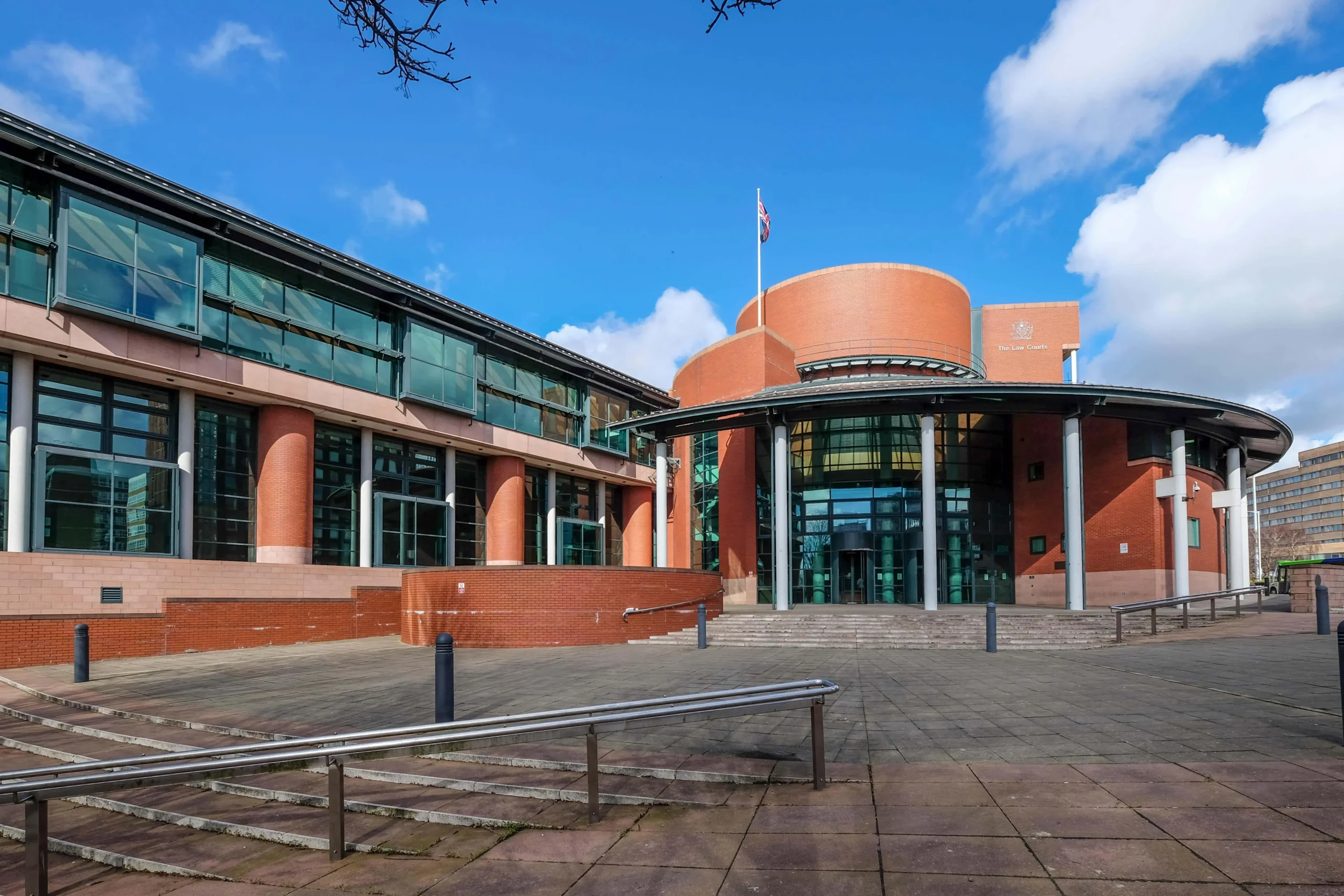

HHJ Altham rejects section 69 aggravation after ruling damage was not legally “serious”
Barclays bank damage did not meet terrorism threshold, judge rules, after five defendants were convicted of criminal damage following an incident at a Burnley branch.
HHJ Altham ruled on 21 August 2026 that section 69 of the Sentencing Act 2020 did not apply, despite accepting that the defendants’ actions were politically motivated and connected to concerns about the conflict in Palestine.
The defendants—Brendan O’Hagan, Amanda Kelly, Humeera Atiq Nisar, Mohammed Malik and Alma Yaniv—were convicted on 15 June 2026 after a trial before HHJ Parry. The incident took place at a Barclays branch in Burnley town centre shortly after 2am on 5 August 2024.
The Crown’s case was that the defendants wore face coverings, carried hammers, damaged numerous windows and threw large quantities of red paint over the building. The cost of repairs and cleaning was approximately £177,337, rising to slightly more than £200,000 including VAT.
Section 69 requires a court to treat a terrorist connection as an aggravating factor when sentencing certain offences. The provision applies where an offence is, or takes place during, an act of terrorism, or is committed for the purposes of terrorism. The term “terrorism” takes its meaning from section 1 of the Terrorism Act 2000.
Under section 1, the relevant action must include, among other things, serious damage to property, and must be designed to influence government or intimidate the public or a section of the public while advancing a political, religious, racial or ideological cause.
The Crown argued that the damage was serious and that the offending was designed to influence government or intimidate the public. The prosecution also relied on evidence given during the trial by four defendants, who said they were members of, or affiliated with, Palestine Action and had received training from the organisation. They said the incident formed part of a wider campaign concerning Barclays. Ms Yaniv’s position was factually distinct.
The defence argued that the damage did not meet the statutory threshold. It also submitted that applying section 69 after conviction would be procedurally unfair because the Crown had not alleged a terrorist connection before trial or sought a preparatory hearing.
HHJ Altham rejected those arguments. He found that the relevant evidence about the wider campaign and the defendants’ alleged links to Palestine Action only emerged through their trial evidence. The Crown and the court therefore did not have the information in admissible form that would have triggered the need for a preparatory hearing.
The judge also held that section 69 did not create a separate offence or alter the statutory maximum sentence. It identified a terrorist connection as an aggravating feature of the offence proved. He rejected the argument that its application would amount to sentencing the defendants for a more serious offence than the one of which they had been convicted.
However, the judge concluded that the damage was not “serious damage” within the meaning of section 1 of the Terrorism Act 2000. He said the statutory threshold was high and that the court had to consider both the monetary value and the quality of the act, including the nature and sensitivity of the property affected.
Although the damage was significant, the judge distinguished the case from R v Head and Others, where damage exceeded £1 million and an arms factory, drones and technical equipment were targeted.
HHJ Altham noted that a bank had significance for local residents and could contain financial records and cash reserves. Nevertheless, on the facts of this case, the damage did not satisfy the statutory test.
The ruling’s practical significance is that a substantial repair bill alone will not automatically establish a terrorist connection for sentencing purposes. The court must assess whether the damage is “serious” in the specific statutory context, considering the nature of the property and the quality of the offending as well as its financial cost.
The court did not decide whether the defendants intended to influence government or intimidate a section of the public. It recorded that the political or ideological purpose of the action was conceded. Section 69 did not apply, and the defendants’ cases were adjourned for sentence on 4 September 2026.