
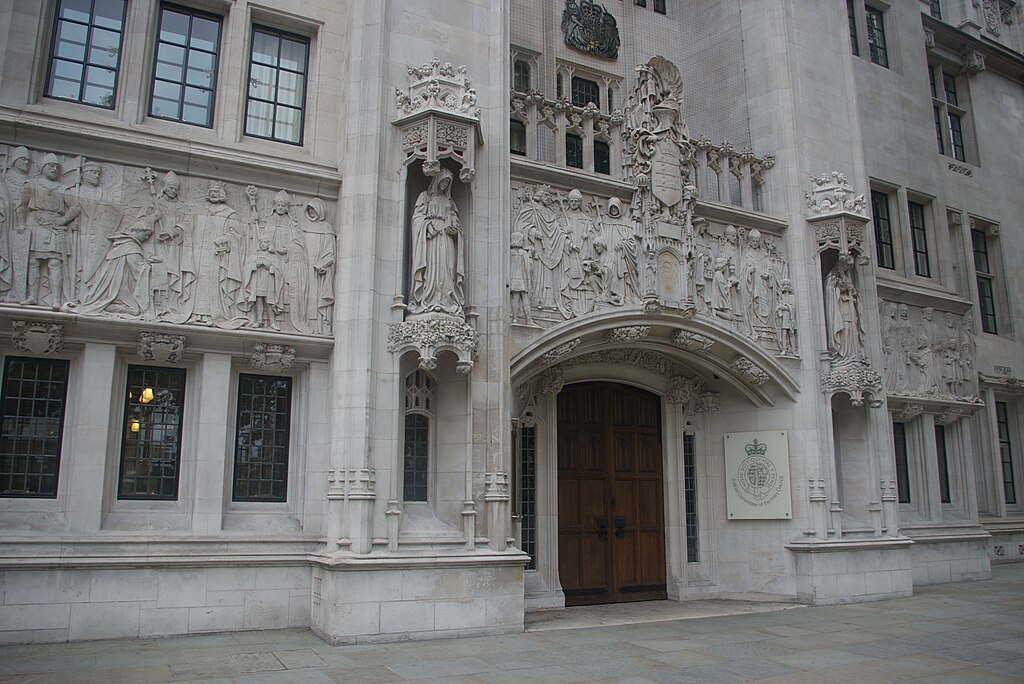


Supreme Court rules illegality defence bars negligence claims despite insanity verdict
The UK Supreme Court has delivered a landmark ruling clarifying the limits of the illegality defence in civil negligence claims involving serious unlawful conduct and mental health failures.
In Lewis-Ranwell v G4S Health Services (UK) Ltd, the Court unanimously allowed the defendants’ appeal, holding that a claimant cannot recover damages where the loss flows directly from their own serious unlawful acts, even if they were found not guilty by reason of insanity.
The claimant, Alexander Lewis-Ranwell, was charged with murder after killing three people during a psychotic episode. He was later acquitted on the grounds of insanity and detained under the Mental Health Act. Following his detention, he brought civil proceedings against multiple defendants, including G4S Health Services (UK) Limited, Devon Partnership NHS Trust, and Devon County Council.
Lewis-Ranwell alleged that failures in mental health assessment and care prior to his release had led to the events that followed. He sought damages for losses arising from the consequences of his actions, arguing that he lacked criminal responsibility due to insanity and should therefore not be barred from recovery.
The central legal issue before the Supreme Court was whether the illegality defence applies where a claimant has been found not criminally responsible due to insanity, but where the civil claim depends on losses arising from serious unlawful conduct.
The Supreme Court held that the claim was barred. The Court emphasised that the illegality defence is not confined to questions of moral blameworthiness or criminal culpability. Instead, the key consideration is whether the civil claim relies upon the claimant’s own unlawful conduct.
In its judgment, the Court concluded that permitting recovery in such circumstances would undermine the coherence and integrity of the legal system. The losses claimed arose directly from acts of extreme violence, and public policy prevented the claimant from shifting responsibility for those consequences onto others through civil litigation.
The Court rejected the argument that the absence of criminal responsibility due to insanity should allow the claim to proceed. It held that maintaining consistency between criminal and civil law requires that claims founded on serious unlawful acts remain barred, even where criminal liability is excluded.
The decision provides important clarification for solicitors advising on clinical negligence, mental health litigation, public authority liability and the scope of the illegality defence in tort. It confirms that insanity does not, of itself, remove the operation of the defence where the claim depends upon serious unlawful conduct.